1

Desktop Support Jobs (NOW HIRING)

Desktop Support

Malvern, PA · On-site

$19.75 - $25.25/hr

Role Name - Deskside Support Engineer ROLE_DESCRIPTION - î„“ Experience Required Technology requirements Desktop Support L2/L3 desktop support Excellent analytical & troubleshooting skills Good ...

LaBine and Associates is a technology-focused company, and they are seeking a Desktop Support professional. The role involves providing technical support for users, troubleshooting various hardware ...

Desktop Support Engineer Location: Ludington, MI Assignment Type: Contract-to-Hire Compensation: $65-85k - depending on experience Work Schedule: Onsite Benefits: This position is eligible for ...

Secret The Desktop Support IT professional is responsible for providing advanced technical support and troubleshooting for end-user devices, software, and network connectivity. This role involves ...

Secret The Desktop Support IT professional is responsible for providing advanced technical support and troubleshooting for end-user devices, software, and network connectivity. This role involves ...

Desktop Support

Salt Lake City, UT · On-site

$19.50 - $25/hr

Desktop Support Location: Sal Lake City UT Duties include (but not limited to) 1. Accurately testing, identifying, repairing, resolving, and documenting end user technical issues regarding basic ...

Secret The Desktop Support IT professional is responsible for providing advanced technical support and troubleshooting for end-user devices, software, and network connectivity. This role involves ...

Showing results 21-40

Desktop Support information

See salary details

$13

$22

$32

How much do desktop support jobs pay per hour?

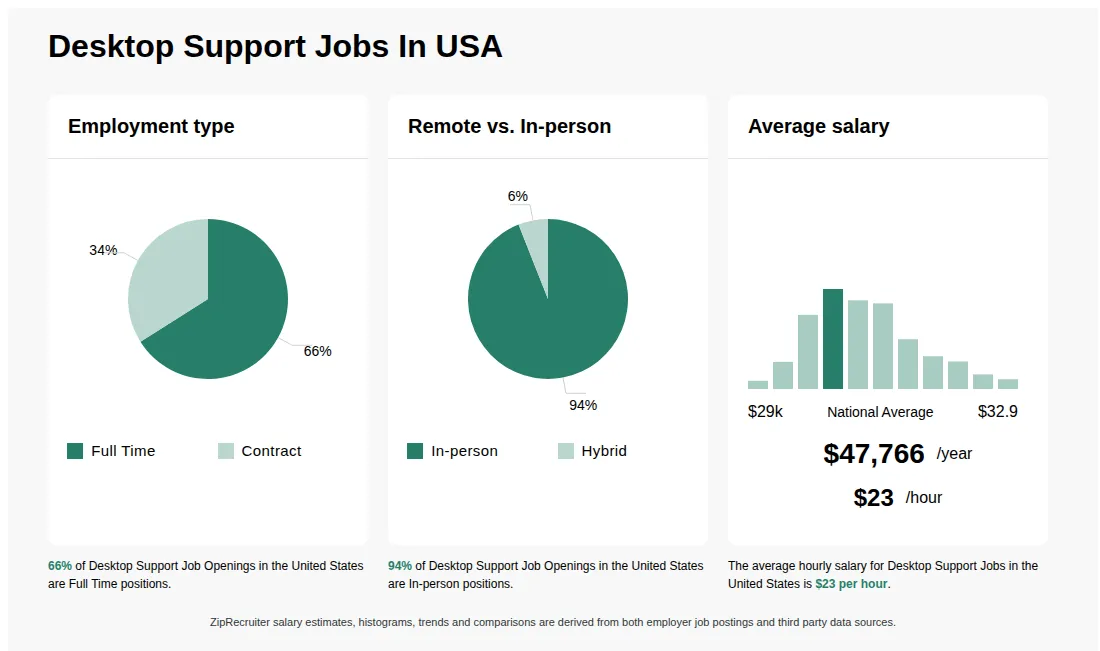
As of Jul 27, 2026, the average hourly pay for desktop support in the United States is $22.96, according to ZipRecruiter salary data. Most workers in this role earn between $19.47 and $24.76 per hour, depending on experience, location, and employer.

What are some common challenges faced by Desktop Support professionals, and how can they be overcome?

Desktop Support professionals often encounter challenges such as troubleshooting complex technical issues under time pressure, managing high volumes of support tickets, and communicating with users who have varying levels of technical knowledge. To overcome these, it's important to prioritize tasks effectively, develop strong problem-solving skills, and maintain clear, patient communication with end-users. Continuous learning about new technologies and common system updates can also help Desktop Support staff stay ahead of recurring issues and provide efficient solutions.

What are the key skills and qualifications needed to thrive as a Desktop Support specialist, and why are they important?

To thrive as a Desktop Support specialist, you need a solid understanding of computer hardware, operating systems, and troubleshooting techniques, often supported by a relevant IT degree or certifications like CompTIA A+ or Microsoft Certified Desktop Support Technician (MCDST). Familiarity with ticketing systems, remote desktop tools, and Active Directory is commonly required in this role. Strong communication, patience, and problem-solving abilities help you effectively assist users and resolve technical issues. These skills are crucial for minimizing downtime, ensuring smooth IT operations, and providing excellent user support in any organization.

What Is a Desktop Support Job?

A desktop support job involves helping users to solve problems they may be having with their computers. Desktop support often requires you to help users with both hardware and software issues. This help comes in the form of walking the user through basic troubleshooting or by taking control of the terminal through remote computer desktop software. A desktop support worker specializes in troubleshooting desktops, laptops, and mobile devices. Typically, your duties include speaking to customers through a headset, listening to their issue, and recommending a course of action.


What is the work of desktop support?

Desktop support professionals troubleshoot, repair, and maintain computer hardware, software, and network issues for users. They often assist with installing systems, configuring devices, and providing technical help, typically working in office environments and using tools like remote support software. Strong problem-solving skills and knowledge of operating systems are essential for this role.

What is the difference between Desktop Support vs Help Desk Technician?

AspectDesktop SupportHelp Desk Technician
CertificationsCompTIA A+, Microsoft CertifiedCompTIA A+, ITIL
Work EnvironmentOn-site, hands-on troubleshootingRemote or on-site, customer support
Primary ResponsibilitiesFixing hardware/software issues, maintaining desktopsResponding to user inquiries, ticket management
Industry UsageIT support teams, corporate environmentsHelp desks, IT service providers

While both roles support end-users with technical issues, Desktop Support focuses on hands-on hardware and software troubleshooting on desktops, often on-site. Help Desk Technicians primarily handle user inquiries via phone or remote access, managing support tickets. Both roles require similar certifications and are integral to IT support teams, but their daily tasks and work environments differ slightly.

What are Desktop Support professionals?

Desktop Support professionals are IT specialists who provide technical assistance and support for computer systems, hardware, and software within an organization. They help users troubleshoot issues, install and configure equipment, and maintain the smooth operation of desktops, laptops, and related peripherals. Their responsibilities often include resolving technical problems, setting up new devices, and ensuring security protocols are followed. Desktop Support professionals play a crucial role in minimizing downtime and keeping employees productive.

Is helpdesk a good entry-level IT job?

Helpdesk roles in desktop support are considered good entry-level IT jobs because they provide foundational experience in troubleshooting hardware and software issues, customer service, and using tools like ticketing systems. These positions often require basic technical knowledge and certifications such as CompTIA A+ and can serve as a stepping stone to more advanced IT roles.

How do I get into desktop support?

To enter a desktop support role, candidates typically need a high school diploma or equivalent, along with basic knowledge of computer hardware, operating systems, and troubleshooting skills. Certifications such as CompTIA A+ can improve job prospects, and experience with common tools like remote support software is beneficial. Entry-level positions often require strong communication skills and the ability to work in a team environment.

What are the career paths in desktop support?

Career paths in desktop support typically start with entry-level roles such as help desk technician or support specialist. With experience, professionals can advance to positions like systems administrator, network technician, or IT manager, often gaining certifications such as CompTIA A+ or Network+ to support career growth. Specializing in areas like cybersecurity or cloud services can also open new opportunities within IT support roles.
What cities are hiring for Desktop Support jobs? Cities with the most Desktop Support job openings:
What are the most commonly searched types of Desktop Support jobs? The most popular types of Desktop Support jobs are:
What states have the most Desktop Support jobs? States with the most job openings for Desktop Support jobs include:
Infographic showing various Desktop Support job openings in the United States as of July 2026, with employment types broken down into 12% Locum Tenens, 64% Full Time, 10% Part Time, 1% Temporary, and 13% Contract. Highlights an 70% Physical, 3% Hybrid, and 27% Remote job distribution, with an average salary of $47,766 per year, or $23 per hour.

Desktop Support

ConfigUSA

Malvern, PA • On-site

$19.75 - $25.25/hr

Contractor

Posted 14 days ago


Job description

Role Name - Deskside Support Engineer
ROLE_DESCRIPTION -
î„“
Experience Required
Technology requirements
Desktop Support
L2/L3 desktop support
Excellent analytical & troubleshooting skills
Good knowledge in desktop operating systems and troubleshooting issues.
Strong communication skills, Good Personality / Present ability
Client-side Mail system (MS Outlook), MS Office and other Industry standard applications
Experience in managing VIP clients
Printer Support and Troubleshooting.
Device Validation
Visual inspection of devices as requested
Device Inventory capabilities and physical comparison to inventory lists
Roles & Responsibilities
Basic troubleshooting and repair of IT equipment failures
Power on/power off devices
Reset Remote Management connection ID's and Passwords
Reseat cables
General Troubleshooting and visual verification to assist remote troubleshooting efforts
Check power connections
Provide feedback on console display (e.g. stop errors, blue screen, etc.)
Identify and report audible errors and system failures
Is good Team player to work collaboratively with other team member
Good Customer/Vendor handling skills