1

Music Producer Jobs (NOW HIRING)

Music producers oversee and direct recording projects for musical artists. Although their roles vary, in this project producerswill work with the recording engineer and weigh in on decisions about ...

We are the world's leading music company. In everything we do, we are committed to artistry ... We identify and develop recording artists and songwriters, and we produce, distribute and promote ...

If you're a musician, producer, DJ, sound engineer, or music educator who loves talking shop, geeking out over gear, and helping people discover what's possible, you'll fit right in. Join us at the ...

If you're a musician, producer, DJ, sound engineer, or music educator who loves talking shop, geeking out over gear, and helping people discover what's possible, you'll fit right in. Join us at the ...

next page

Showing results 1-20

Music Producer information

See salary details

$5

$81

$192

How much do music producer jobs pay per hour?

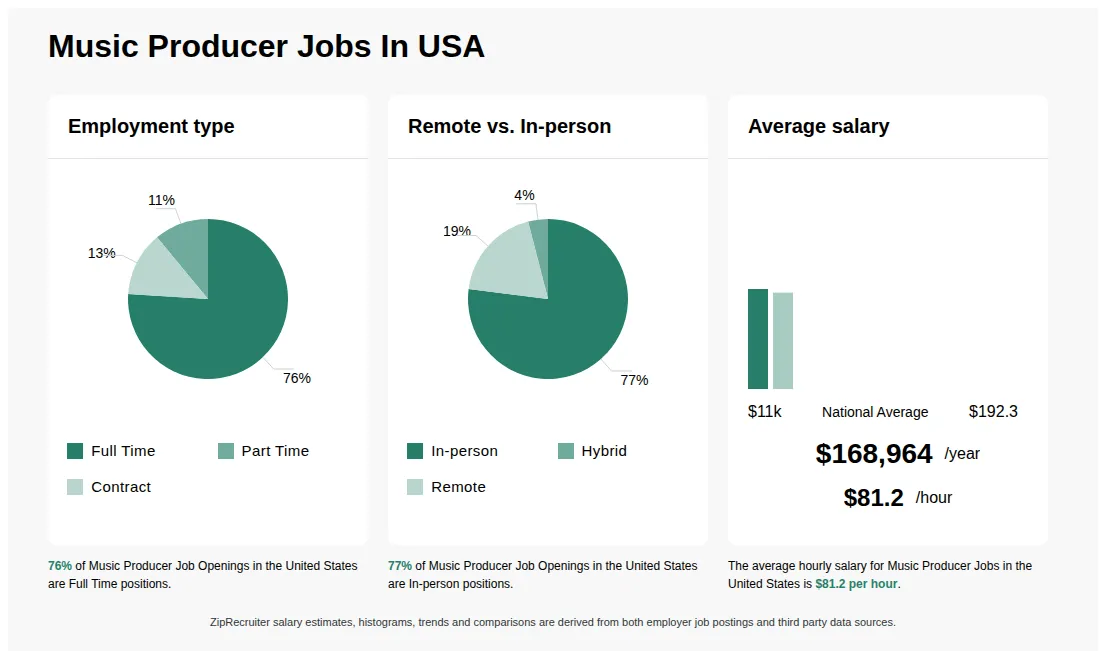
As of Jul 4, 2026, the average hourly pay for music producer in the United States is $81.23, according to ZipRecruiter salary data. Most workers in this role earn between $15.62 and $192.31 per hour, depending on experience, location, and employer.

What Do Music Producers Do?

The duties of a Music Producer can vary depending on the person, but generally a Music Producer oversees all aspects of the creation of a song or album. Much like a film director, a Music Producer conveys the creative vision of the song to all involved parties. This can involve listening and giving approval or working the soundboard and various recording equipment. They also are resonsible for booking necessary studio time and arranging for talent to arrive. Music Producers make sure that the end result is of high-quality and knows how to find solutions should problems arise.

What is the difference between Music Producer vs Sound Engineer?

AspectMusic ProducerSound Engineer
CredentialsMusic production courses, industry experienceAudio engineering certifications, technical training
Work EnvironmentStudio, recording sessions, artist collaborationStudio, live sound, post-production
Industry UsageOversees entire music project, creative directionHandles technical aspects, recording, mixing

While both roles work closely in music production, a Music Producer focuses on the overall creative direction and project management, whereas a Sound Engineer specializes in technical audio recording and mixing. Understanding these differences helps artists and studios choose the right professional for their needs.

How do I get a job as a music producer?

To become a music producer, develop strong skills in music theory, recording, and mixing using digital audio workstations like Ableton Live or Pro Tools. Gain experience through internships, freelance projects, or creating a portfolio of your work, and network within the industry to find opportunities.

What are some common challenges faced by music producers when working with artists and how can they be managed?

Music producers often encounter challenges such as balancing creative input with the artist's vision, managing tight deadlines, and navigating differing opinions within a project. Effective communication is key—setting clear expectations and fostering a collaborative atmosphere helps to ensure everyone is aligned. Additionally, strong organizational skills and adaptability enable producers to manage changes and resolve conflicts efficiently, ultimately leading to a more productive and harmonious working environment.

What work does a music producer do?

A music producer oversees the creation of music recordings, managing tasks such as arranging, recording, mixing, and mastering tracks. They collaborate with artists, select or create sounds, and use digital audio workstations (DAWs) to shape the final product, often requiring technical skills and industry knowledge.

What does a music producer do?

A music producer oversees the creation and development of songs or albums, guiding both the artistic and technical aspects of a recording project. They work closely with artists, songwriters, and audio engineers to shape the sound, select songs, arrange compositions, and manage recording sessions. Producers also help with mixing and mastering, ensuring the final product meets industry standards. Their role can vary from hands-on involvement in recording to more supervisory or creative direction, depending on the project and the producer’s style.

What jobs do music producers have?

Music producers typically work as audio engineers, recording engineers, mixing engineers, or studio managers. They are responsible for overseeing the recording process, editing, mixing, and mastering music tracks, often using digital audio workstations and other production tools. Their work environment is usually a recording studio, and strong technical skills and musical knowledge are essential.

How much money can a music producer make?

Music producers' earnings vary widely based on experience, reputation, and project scope. Entry-level producers may earn from $30,000 to $50,000 annually, while established professionals can make over $100,000 or more per year, especially when working on high-profile projects or owning their own studios. Income can also come from royalties, licensing, and other revenue streams related to their work.

What are the key skills and qualifications needed to thrive as a Music Producer, and why are they important?

To thrive as a Music Producer, you need a solid understanding of music theory, audio engineering, and arrangement, often backed by experience or a relevant degree. Familiarity with digital audio workstations (DAWs) like Ableton Live or Pro Tools, as well as proficiency in sound mixing and mastering plugins, is essential. Strong communication, creative vision, and project management skills help producers collaborate effectively with artists and guide projects from concept to completion. These skills and qualities are vital for crafting high-quality music, meeting client expectations, and succeeding in a fast-paced, creative industry.
What cities are hiring for Music Producer jobs? Cities with the most Music Producer job openings:
What are the most commonly searched types of Music Producer jobs? The most popular types of Music Producer jobs are:
What states have the most Music Producer jobs? States with the most job openings for Music Producer jobs include:
What job categories do people searching Music Producer jobs look for? The top searched job categories for Music Producer jobs are:
What are popular job titles related to Music Producer jobs? For Music Producer jobs, the most frequently searched job titles are:
Infographic showing various Music Producer job openings in the United States as of June 2026, with employment types broken down into 1% As Needed, 47% Full Time, 48% Part Time, 2% Temporary, 1% Contract, and 1% Nights. Highlights an 90% Physical, 2% Hybrid, and 8% Remote job distribution, with an average salary of $168,964 per year, or $81.2 per hour.

EXTRACURRICULAR ADVISOR POSITION AVAILABLE - MUSICAL DIRECTOR/PRODUCER

Pequannock Township School District

Pompton Plains, NJ • On-site

Full-time

This job post has expired today. Applications are no longer accepted.


Job description

Position Type:
High School Teaching
Date Posted:
6/12/2026
Location:
Pequannock Township High School
Closing Date:
07/02/2026
EXTRACURRICULAR ADVISOR POSITION AVAILABLE - MUSICAL DIRECTOR/PRODUCER
The Spring Musical Director/Producer is responsible for overseeing all artistic and organizational aspects of Pequannock Township High School's theatrical production.
Duties include:
  • Planning and leading auditions, rehearsals, and performances alongside the Music Director Assistant
  • Guiding student actors and stage crew; collaborating with music, choreography, and production staff
  • Fostering a positive, inclusive, and educational experience for students.

The Director ensures the production is well-organized, student-centered, and aligned with district policies and school expectations.
Please submit a letter of interest.
Stipend per PTEA Collective Bargaining Unit