2

Entry Level Electrical Engineer Jobs in Florida (NOW HIRING)

... entry-level position responsible for assisting in the design, development, and maintenance of electrical systems and components within our organization. Working closely with senior engineers and ...

We are currently seeking an entry level Graduate Engineer- Electrical with 0-2 years of experience to be part of our MEP Engineering team in the Tampa, FL office. At WGI, you will find talented ...

next page

Showing results 1-20

Entry Level Electrical Engineer information

See Florida salary details

$30.3K

$64.6K

$106.5K

How much do entry level electrical engineer jobs pay per year?

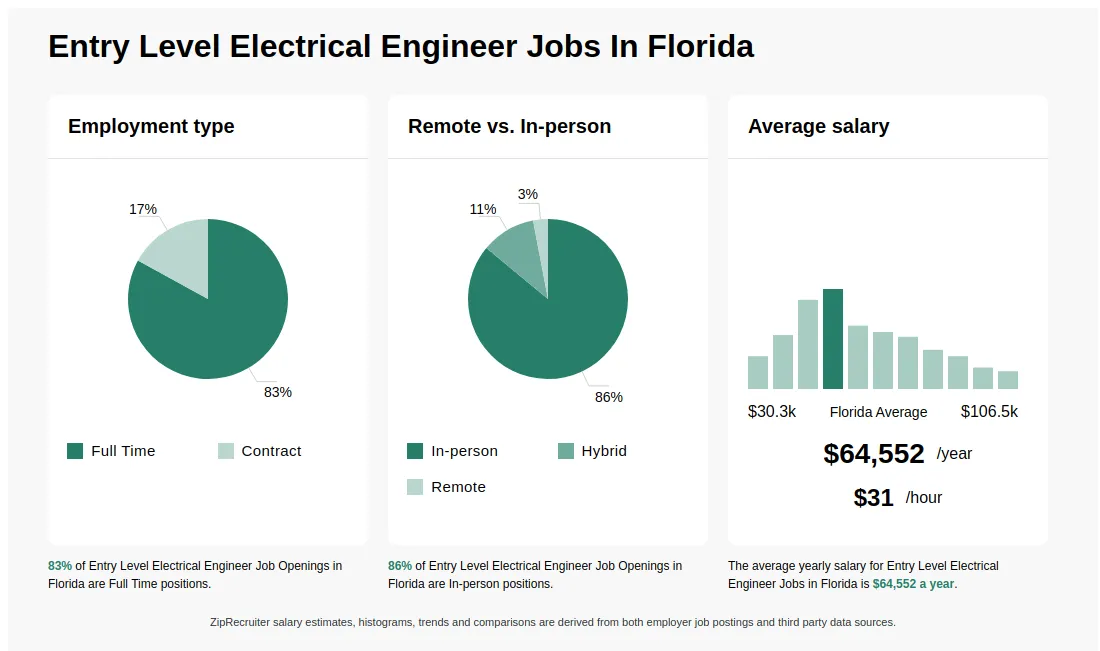
As of Jun 14, 2026, the average yearly pay for entry level electrical engineer in Florida is $64,552.00, according to ZipRecruiter salary data. Most workers in this role earn between $48,600.00 and $77,300.00 per year, depending on experience, location, and employer.

Can you make $500,000 as an electrical engineer?

Entry level electrical engineers typically earn between $60,000 and $80,000 annually, with higher salaries possible with experience, advanced skills, or working in specialized industries. Reaching a $500,000 salary generally requires many years of experience, senior roles, or working in high-paying sectors such as power systems, aerospace, or consulting firms. Certifications like PE licensure and expertise in advanced tools can also contribute to higher compensation.

How to get into electrical engineering with no experience?

Entry level electrical engineers typically start by earning a bachelor's degree in electrical engineering or a related field. Gaining practical skills through internships, personal projects, or certifications in tools like MATLAB or circuit design can improve employability; developing a strong understanding of fundamental concepts is essential.

What Does an Entry Level Electrical Engineer Do?

An entry-level engineer performs a variety of tasks as part of their job. In this career, your main duties are to design, build, and test electronics, electrical systems, and electrical equipment, such as electric motors or navigation systems. Some electrical engineers design new industrial products, while others work on improving existing systems of products. You are responsible for creating all the standards and specifications, such as manufacturing blueprints, which the production staff reads and carries out. You also ensure that all systems or products meet safety and design standards.


What engineers make $300,000 a year?

Highly experienced engineers in specialized fields such as petroleum, aerospace, or software engineering can earn $300,000 or more annually. These roles often require advanced skills, certifications, and years of experience, and may involve leadership responsibilities or working in high-demand industries.

What types of projects and responsibilities can an Entry Level Electrical Engineer expect during their first year on the job?

As an Entry Level Electrical Engineer, you'll often assist with designing electrical systems, drafting technical documents, and conducting tests under the supervision of senior engineers. You'll likely work on project teams, contributing to tasks such as circuit design, schematic reviews, and troubleshooting. Early responsibilities typically include supporting senior staff, learning company standards, and participating in client meetings or site visits. This hands-on experience helps new engineers develop practical skills and gain exposure to various aspects of electrical engineering projects.

What does an entry level electrical engineer do?

An entry level electrical engineer typically assists in the design, development, testing, and maintenance of electrical systems and components. They work under the supervision of senior engineers, helping to create schematics, perform calculations, and run simulations. Their responsibilities may also include preparing technical reports, conducting site visits, and troubleshooting issues in existing systems. Entry level roles are a great way to gain hands-on experience and learn industry-specific tools and standards.

What is the difference between Entry Level Electrical Engineer vs Electrical Technician?

AspectEntry Level Electrical EngineerElectrical Technician
Required CredentialsBachelor's degree in electrical engineeringAssociate degree or technical certification
Work EnvironmentDesign, development, and testing of electrical systemsInstallation, maintenance, and troubleshooting of electrical equipment
Employer & Industry UsageEngineering firms, manufacturing, power generationConstruction, maintenance, and repair services

While both roles involve electrical systems, Entry Level Electrical Engineers focus on designing and analyzing electrical projects, often requiring a bachelor's degree. Electrical Technicians typically handle installation and maintenance tasks with technical certifications. Understanding these differences helps job seekers identify the right career path based on their skills and credentials.

What engineers make $500,000?

Highly experienced engineers in specialized fields such as petroleum, aerospace, or certain senior roles in software engineering can earn $500,000 or more annually. These positions often require advanced skills, extensive experience, and sometimes leadership or management responsibilities.

What are the key skills and qualifications needed to thrive as an Entry Level Electrical Engineer, and why are they important?

To thrive as an Entry Level Electrical Engineer, you need a solid grasp of electrical engineering fundamentals, problem-solving skills, and a relevant bachelor's degree. Familiarity with technical tools such as CAD software (e.g., AutoCAD), circuit simulation programs, and industry standards, as well as an EIT (Engineer-in-Training) certification, is often expected. Strong teamwork, attention to detail, and effective communication skills help you contribute effectively to projects and collaborate with diverse teams. These abilities are crucial for delivering accurate engineering solutions, meeting project requirements, and supporting professional growth within the field.
What are the most commonly searched types of Electrical Engineer jobs in Florida? The most popular types of Electrical Engineer jobs in Florida are:
What cities in Florida are hiring for Entry Level Electrical Engineer jobs? Cities in Florida with the most Entry Level Electrical Engineer job openings:
What are popular job titles related to Entry Level Electrical Engineer jobs in FL? For Entry Level Electrical Engineer jobs in FL, the most frequently searched job titles are:
Infographic showing various Entry Level Electrical Engineer job openings in Florida as of June 2026, with employment types broken down into 76% Full Time, 16% Part Time, 2% Temporary, and 6% Contract. Highlights an 96% In-person, and 4% Hybrid job distribution, with an average salary of $64,552 per year, or $31 per hour.
Electrical Engineer-EPLAN detailer

Electrical Engineer-EPLAN detailer

Tait

Orlando, FL

Full-time

Medical, Dental, Vision, Life, Retirement, PTO

Posted 4 days ago


Job description

TAIT partners with artists, brands, IP holders and place makers to bring culture-defining, never-before-seen experiences to life. With a legacy of innovation spanning over 45 years, TAIT has grown from pioneering in rock ‘n’ roll concert staging to setting the global standard for extraordinary live events and experiences through cutting-edge technology, precision engineering, and creative design. TAIT’s 20 global offices have developed iconic productions and experiences in over 30 countries, all seven continents, and even outer space for renowned performers, theme parks, exhibits, and venues across the globe, including partnerships with Taylor Swift, Cirque Du Soleil, Royal Opera House, Nike, NASA, Bloomberg, Google, Beyoncé, and The Olympics
Position Purpose 
The Electrical Engineer I is an entry-level position responsible for assisting in the design, development, and maintenance of electrical systems and components within our organization. Working closely with senior engineers and project teams, you will contribute to the creation of electrical schematics, assist in troubleshooting electrical issues, and conduct tests to ensure the functionality and safety of electrical systems.
 
This role requires a foundational understanding of electrical engineering principles, a commitment to adhering to safety standards, and effective collaboration within a multidisciplinary engineering environment. As an Electrical Engineer I, you will have the opportunity to learn and grow within the organization while contributing to the success of our projects.    
 
 
Responsibilities 
  • Design control systems which meet or exceed client specifications while providing maximum value for our portable and fixed install clients.
  • Works with a lead designer to or directly performs engineering analyses of electrical loads, component layout, and functional safety of the control system.
  • Perform optimization and value engineering reviews of both existing and new equipment for improvements in manufacturing cost and efficiency. This includes the research and specification of components from industry manufacturers for electrical designs. This also includes re-use and modification of existing designs.
  • Prepare bills of materials for finished electrical assemblies and assist in the procurement of outside vendor parts and services.
  • Central responsibility in the creation of finished electrical assembly and fabrication drawings, contribution to O&M manuals, and final client submittal packages.
  • Continue to expand our application of emerging technologies for the purpose of designing and producing leading edge controls technology.
  • Perform assigned duties according to the policies and expectations prescribed by the company.
  • Adhere to all company safety policies and procedures.
  • Attend meetings, seminars, and training sessions as required   
 
Position Requirements
  • BS in electrical engineering or technical theatre degree with emphasis in electrical design.
  • 2 plus years in Electrical Design and Engineering role or in experience in relevant field.
  • Basic level of CAD experience required. 
 
Preferred Knowledge 
  • UL508A and NEC/NFPA concepts.
  • Industrial control system knowledge (IE PLC’s and VFD’s).
  • Beckhoff knowledge is a plus.
  • Siemens knowledge is a plus. 
TAIT Benefits:
  • Competitive medical, dental, and vision insurance plans
  • Health Savings Account (HSA) with employer contributions (HDHP plans)
  • Flexible Spending Accounts (Medical & Dependent Care)
  • Employer-paid life insurance with optional supplemental coverage
  • Employer-paid Short-term with optional long-term disability insurance
  • 401(k) retirement plan with company match
  • Paid parental leave
  • Employee Assistance Program (EAP)
  • Wellness stipends
  • Voluntary benefits (e.g., accident, critical illness)
  • Paid vacation and 12 holidays
 
#JH-LI1
TAIT is an equal opportunity employer fully committed to diversity and inclusion in the workplace. All qualified applicants will receive consideration for employment without regard to race, color, religion, sex, sexual orientation, gender identity, national origin, disability, or status as a protected veteran or any other protected characteristic as outlined by international, national, state, or local laws.