1

Hypnosis Jobs (NOW HIRING)

$391K/yr

Training in Complementary and Alternative Medicine, including clinical hypnosis or acupuncture, preferred. Physical Requirements: OCCASIONALLY: Bend/twist, Blood and/or Bodily Fluids, Chemicals ...

$391K/yr

Training in Complementary and Alternative Medicine, including clinical hypnosis or acupuncture, preferred. Physical Requirements: OCCASIONALLY: Bend/twist, Blood and/or Bodily Fluids, Chemicals ...

next page

Showing results 1-20

hypnosis information

See salary details

$18

$42

$66

How much do hypnosis jobs pay per hour?

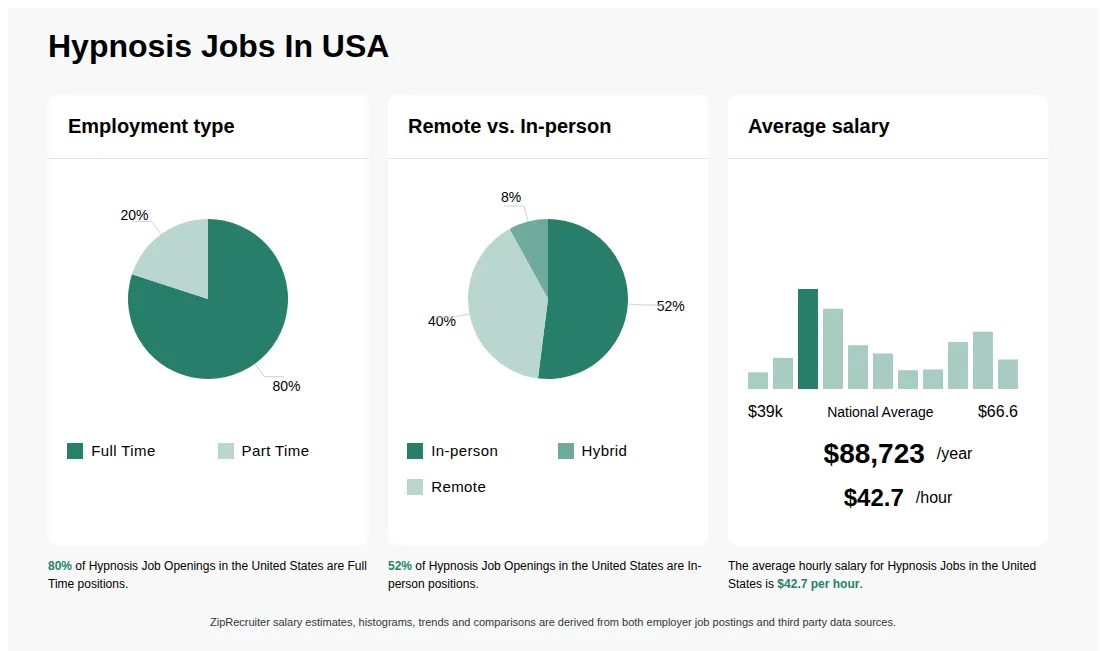
As of Aug 20, 2026, the average hourly pay for hypnosis in the United States is $42.66, according to ZipRecruiter salary data. Most workers in this role earn between $31.25 and $56.97 per hour, depending on experience, location, and employer.

What is hypnosis and how does it work?

Hypnosis is a trance-like state of focused attention and heightened suggestibility, often used for therapeutic purposes. During hypnosis, a trained practitioner guides an individual into a relaxed state where they are more open to positive suggestions and changes in perception or behavior. It is not mind control, and individuals remain aware of their surroundings and in control at all times. Hypnosis can be used to help with issues like stress, pain management, and breaking unwanted habits. The effectiveness of hypnosis varies from person to person.

What are the qualifications to get a hypnosis job?

The qualifications and skills that you need to start a career in hypnosis depend on the responsibilities of your job. If you use hypnosis for clinical purposes, you need an advanced degree in most states. The American Society of Clinical Hypnosis only offers certification for doctors, psychologists, and nurses with a master’s degree. Another professional organization, the American Association of Professional Hypnotherapists, requires classroom work for certification but does not have educational or professional requirements. Hypnotherapists without a medical background can still practice hypnosis, but they cannot offer any medical services or diagnose clients.

What are the key skills and qualifications needed to thrive as a hypnotist, and why are they important?

To thrive as a Hypnotist, you need a solid understanding of human psychology, hypnosis techniques, and often a certification from a recognized hypnosis or hypnotherapy organization. Familiarity with tools such as guided scripts, audio recording devices, and client management systems is also common. Exceptional interpersonal skills, empathy, and strong communication abilities help build trust and rapport with clients. These competencies are crucial for creating a safe and effective environment, enabling clients to achieve their therapeutic or behavioral goals through hypnosis.

What are some common challenges faced by professional hypnotists when working with clients?

Professional hypnotists often encounter challenges such as building trust and rapport with clients who may be skeptical or anxious about hypnosis. It is also common to face varying levels of client responsiveness, which requires adaptability in technique and communication. Additionally, hypnotists must maintain clear ethical boundaries and be well-versed in recognizing when a client's needs exceed the scope of hypnosis, necessitating a referral to another healthcare professional. Working collaboratively with clients and sometimes coordinating with other practitioners is essential for effective outcomes.

What is the difference between Hypnosis vs Hypnotherapist?

AspectHypnosisHypnotherapist
CredentialsTypically no formal certification required for self-hypnosis or general practiceRequires certification or licensing from accredited hypnotherapy programs
Work EnvironmentSelf-practice, clinical settings, or workshopsClinics, private practices, wellness centers
Industry UsageUsed as a technique within therapy, entertainment, or self-helpProfessionally trained practitioner providing therapy or coaching

Hypnosis is a technique or state of focused attention, often used for self-improvement or entertainment. A hypnotherapist is a trained professional who uses hypnosis as a therapeutic tool to help clients with various issues. While anyone can practice self-hypnosis, hypnotherapists have specialized training to guide others safely and effectively.

How do I become a hypnosis?

To become a hypnotist, you typically need to complete specialized training or certification programs in hypnosis or hypnotherapy, which may be offered by professional organizations or educational institutions. Gaining practical experience and developing strong communication skills are also important for practicing safely and effectively in this field.

Is hypnosis a good career?

Hypnosis is a legitimate profession involving helping clients manage stress, habits, or health issues through guided relaxation and suggestion techniques. Successful practitioners often require certification, strong communication skills, and adherence to ethical standards. The career can be flexible but may have variable income depending on experience and client base.

What cities are hiring for Hypnosis jobs?

Cities with the most Hypnosis job openings:

What are the most commonly searched types of Hypnosis jobs?

The most popular types of Hypnosis jobs are:

What states have the most Hypnosis jobs?

States with the most job openings for Hypnosis jobs include:

Infographic showing various Hypnosis job openings in the United States as of August 2026, with employment types broken down into 60% Full Time, and 40% Part Time. Highlights an 100% In-person job distribution, with an average salary of $88,723 per year, or $42.7 per hour.

SEEKING Licensed Mental Health Professional part time telehealth

Mind Body Program

Neenah, WI • Remote

$75K - $150K/yr

Part-time

Re-posted 13 days ago


Job description

Seeking Licensed Mental Health Professional, (Licensed Professional Counselor LPC, Licensed Clinical Social Worker LCSW, psychologist, psychotherapist, Licensed Marriage and Family Therapist LMFT) to work remotely through telehealth on a part time basis. Join a growing and thriving group. Make your own hours. Competitive Pay. No more wasted time commuting. Work remotely. All referrals supplied and billing provided. Candidates must hold a current state license as a mental health provider. Candidates with experience in EMDR/Brain Spotting/Hypnosis preferred but not required. Candidate already credentialed with insurance companies preferred but not required. Bonus pay structure included.