... remote or hybrid position out of one of our six office locations. This position supports our ... As a national leader in noise and vibration analysis, HMMH offers opportunities to work on some of ...
... remote or hybrid position out of one of our six office locations. This position supports our ... As a national leader in noise and vibration analysis, HMMH offers opportunities to work on some of ...
Senior Managing Consultant - Surface Transportation
Burlington, MA · On-site +1
$95K - $130K/yr
... remote or hybrid position out of one of our six office locations. This position supports our ... As a national leader in noise and vibration analysis, HMMH offers opportunities to work on some of ...
Senior Managing Consultant - Surface Transportation
Burlington, MA · On-site +1
$95K - $130K/yr
... remote or hybrid position out of one of our six office locations. This position supports our ... As a national leader in noise and vibration analysis, HMMH offers opportunities to work on some of ...
Senior Managing Consultant - Surface Transportation
Burlington, MA · On-site +1
$95K - $130K/yr
... remote or hybrid position out of one of our six office locations. This position supports our ... As a national leader in noise and vibration analysis, HMMH offers opportunities to work on some of ...
Quick apply
Senior Managing Consultant - Surface Transportation
Burlington, MA · On-site +1
$95K - $130K/yr
... remote or hybrid position out of one of our six office locations. This position supports our ... As a national leader in noise and vibration analysis, HMMH offers opportunities to work on some of ...
HMMH is nationally recognized for its expertise in noise and vibration analysis. HMMH is seeking a ... Location: Remote in Southeast U.S. or hybrid from one of our offices in Burlington, MA ...
Quick apply
HMMH is nationally recognized for its expertise in noise and vibration analysis. HMMH is seeking a ... Location: Remote in Southeast U.S. or hybrid from one of our offices in Burlington, MA ...
HMMH is nationally recognized for its expertise in noise and vibration analysis. HMMH is seeking a ... Remote in Southeast U.S. or hybrid from one of our offices in Burlington, MA, Washington DC, Dallas ...
HMMH is nationally recognized for its expertise in noise and vibration analysis. HMMH is seeking a ... Remote in Southeast U.S. or hybrid from one of our offices in Burlington, MA, Washington DC, Dallas ...
Sr. Associate, Mechanical Engineer
Rochester, NY · On-site +1
$59K - $110K/yr
Structural Dynamics and Vibration Analysis: Performing structural dynamics and vibration analysis ... Knowledge of astrodynamics principles relevant to remote sensing. Familiarity with space mission ...
Sr. Associate, Mechanical Engineer
Rochester, NY · On-site +1
$59K - $110K/yr
Structural Dynamics and Vibration Analysis: Performing structural dynamics and vibration analysis ... Knowledge of astrodynamics principles relevant to remote sensing. Familiarity with space mission ...
HMMH is nationally recognized for its expertise in noise and vibration analysis. HMMH is seeking a ... Remote in Southeast U.S. or hybrid from one of our offices in Burlington, MA, Washington DC, Dallas ...
HMMH is nationally recognized for its expertise in noise and vibration analysis. HMMH is seeking a ... Remote in Southeast U.S. or hybrid from one of our offices in Burlington, MA, Washington DC, Dallas ...
Associate, Mechanical Engineer
Rochester, NY · On-site +1
$59K - $110K/yr
Structural Dynamics and Vibration Analysis: Performing structural dynamics and vibration analysis ... Knowledge of astrodynamics principles relevant to remote sensing. Familiarity with space mission ...
Associate, Mechanical Engineer
Rochester, NY · On-site +1
$59K - $110K/yr
Structural Dynamics and Vibration Analysis: Performing structural dynamics and vibration analysis ... Knowledge of astrodynamics principles relevant to remote sensing. Familiarity with space mission ...

Senior Noise Analyst
Boston, MA · On-site +1
... environmental noise and vibration analysis. * Demonstrated experience leading projects ... Ability to work in a combination of office, remote, and field environments, including periodic ...
Senior Noise Analyst
Boston, MA · On-site +1
... environmental noise and vibration analysis. * Demonstrated experience leading projects ... Ability to work in a combination of office, remote, and field environments, including periodic ...
Senior Noise Analyst
Boston, MA · On-site +1
... environmental noise and vibration analysis. * Demonstrated experience leading projects ... Ability to work in a combination of office, remote, and field environments, including periodic ...
Senior Noise Analyst
Boston, MA · On-site +1
... environmental noise and vibration analysis. * Demonstrated experience leading projects ... Ability to work in a combination of office, remote, and field environments, including periodic ...

FHIR Analyst - Remote
Jersey City, NJ · On-site +1
FHIR Analyst Location: Remote Duration: 12+ months Note: We need more of an analyst not an integration engineer. This will be a conversion project from FHIR to CCDA. * Strong knowledge on FHIR,IHE ...
FHIR Analyst - Remote
Jersey City, NJ · On-site +1
FHIR Analyst Location: Remote Duration: 12+ months Note: We need more of an analyst not an integration engineer. This will be a conversion project from FHIR to CCDA. * Strong knowledge on FHIR,IHE ...

Solutions Architect
Indianapolis, IN · On-site +1
$85K - $110K/yr
Location: United States - Remote Reports To: Director of OnTrak Business Compensation: $85,000 ... Ultrasound Level I/II, Vibration Analyst Category I/II, and/or comparable reliability certification
Solutions Architect
Indianapolis, IN · On-site +1
$85K - $110K/yr
Location: United States - Remote Reports To: Director of OnTrak Business Compensation: $85,000 ... Ultrasound Level I/II, Vibration Analyst Category I/II, and/or comparable reliability certification
Solutions Architect
Indianapolis, IN · Remote
$85K - $110K/yr
Location: United States - Remote Reports To: Director of OnTrak Business Compensation: $85,000 ... Ultrasound Level I/II, Vibration Analyst Category I/II, and/or comparable reliability certification
Quick apply
Solutions Architect
Indianapolis, IN · Remote
$85K - $110K/yr
Location: United States - Remote Reports To: Director of OnTrak Business Compensation: $85,000 ... Ultrasound Level I/II, Vibration Analyst Category I/II, and/or comparable reliability certification

Sr. Engineer - Nuclear Power Engineer, Plant
Tallahassee, FL · Remote
$99K - $136K/yr
Vibration analysis capabilities/certification * Familiarity with nuclear plant administrative ... Remote LI-CJ1
Sr. Engineer - Nuclear Power Engineer, Plant
Tallahassee, FL · Remote
$99K - $136K/yr
Vibration analysis capabilities/certification * Familiarity with nuclear plant administrative ... Remote LI-CJ1
Sr. Engineer - Nuclear Power Engineer, Plant
Los Angeles, CA · Remote
$112K - $154K/yr
Vibration analysis capabilities/certification * Familiarity with nuclear plant administrative ... Remote LI-CJ1
Sr. Engineer - Nuclear Power Engineer, Plant
Los Angeles, CA · Remote
$112K - $154K/yr
Vibration analysis capabilities/certification * Familiarity with nuclear plant administrative ... Remote LI-CJ1
Sr. Engineer - Nuclear Power Engineer, Plant
Albany, NY · Remote
$103K - $142K/yr
Vibration analysis capabilities/certification * Familiarity with nuclear plant administrative ... Remote LI-CJ1
Sr. Engineer - Nuclear Power Engineer, Plant
Albany, NY · Remote
$103K - $142K/yr
Vibration analysis capabilities/certification * Familiarity with nuclear plant administrative ... Remote LI-CJ1
Sr. Engineer - Nuclear Power Engineer, Plant
Tucson, AZ · Remote
$99K - $136K/yr
Vibration analysis capabilities/certification * Familiarity with nuclear plant administrative ... Remote LI-CJ1
Sr. Engineer - Nuclear Power Engineer, Plant
Tucson, AZ · Remote
$99K - $136K/yr
Vibration analysis capabilities/certification * Familiarity with nuclear plant administrative ... Remote LI-CJ1
Sr. Engineer - Nuclear Power Engineer, Plant
Charlotte, NC · Remote
$98K - $134K/yr
Vibration analysis capabilities/certification * Familiarity with nuclear plant administrative ... Remote LI-CJ1
Sr. Engineer - Nuclear Power Engineer, Plant
Charlotte, NC · Remote
$98K - $134K/yr
Vibration analysis capabilities/certification * Familiarity with nuclear plant administrative ... Remote LI-CJ1
Sr. Engineer - Nuclear Power Engineer, Plant
Houston, TX · Remote
$101K - $139K/yr
Vibration analysis capabilities/certification * Familiarity with nuclear plant administrative ... Remote LI-CJ1
Sr. Engineer - Nuclear Power Engineer, Plant
Houston, TX · Remote
$101K - $139K/yr
Vibration analysis capabilities/certification * Familiarity with nuclear plant administrative ... Remote LI-CJ1

Sr. Engineer - Nuclear Power Engineer, Plant
Houston, TX · On-site +1
$101K - $139K/yr
Vibration analysis capabilities/certification * Familiarity with nuclear plant administrative ... Group. #LI-Remote LI-CJ1 Equal Opportunity Employer/Protected Veterans/Individuals with ...
Sr. Engineer - Nuclear Power Engineer, Plant
Houston, TX · On-site +1
$101K - $139K/yr
Vibration analysis capabilities/certification * Familiarity with nuclear plant administrative ... Group. #LI-Remote LI-CJ1 Equal Opportunity Employer/Protected Veterans/Individuals with ...
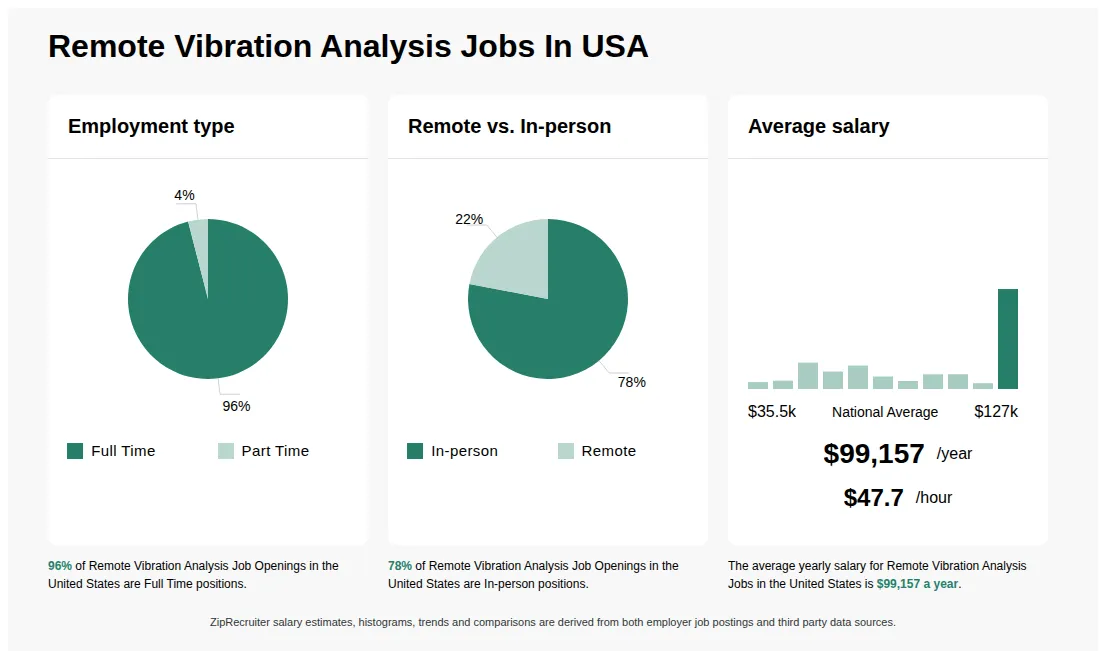
Remote Vibration Analysis information
See salary details
$35.5K - $43.8K
2% of jobs
$43.8K - $52.1K
3% of jobs
$52.1K - $60.5K
12% of jobs
$60.5K - $68.8K
7% of jobs
$69.5K is the 25th percentile. Wages below this are outliers.
$68.8K - $77.1K
9% of jobs
$77.1K - $85.4K
5% of jobs
$85.4K - $93.7K
3% of jobs
$93.7K - $102K
6% of jobs
The median wage is $104.1K / yr.
$102K - $110.4K
6% of jobs
$110.4K - $118.7K
2% of jobs
$122.2K is the 75th percentile. Wages above this are outliers.
$118.7K - $127K
43% of jobs
$35.5K
$99.2K
$127K
How much do remote vibration analysis jobs pay per year?
As of Sep 9, 2026, the average yearly pay for remote vibration analysis in the United States is $99,157.00, according to ZipRecruiter salary data. Most workers in this role earn between $72,000.00 and $126,500.00 per year, depending on experience, location, and employer.
What is remote vibration analysis?
A Remote Vibration Analysis job involves monitoring and analyzing vibration data from machinery and equipment remotely. Specialists use advanced sensors and software to detect potential mechanical issues, helping prevent failures and optimize performance. This role is common in industries like manufacturing, energy, and transportation. It typically involves data interpretation, reporting, and recommending maintenance actions based on vibration trends. Remote analysts work off-site, relying on cloud-based systems and IoT technology to assess machine health.
What does a remote vibration analyst do?
Professionals in Remote Vibration Analysis typically spend their days collecting and interpreting vibration data from machinery using specialized software and remote sensing tools. They analyze trends, identify potential faults or imbalances, and prepare detailed reports with recommendations for maintenance teams. Regular communication with onsite staff and engineers is common to ensure findings are clearly understood and acted upon. Additionally, you may participate in virtual team meetings, continuous training on new analysis techniques, and assist with developing predictive maintenance strategies for clients.
What skills and qualifications are needed for remote vibration analysis?
To excel in Remote Vibration Analysis, you need a strong background in mechanical engineering or a related field, solid analytical skills, and experience in diagnosing and monitoring machinery vibrations. Competence with vibration analysis software (such as SKF, CSI, or Emerson), data acquisition systems, and relevant certifications like Category I or II Vibration Analyst (ISO 18436) are highly valued. Exceptional attention to detail, effective communication, and problem-solving abilities distinguish top performers in this field. These skills are crucial for accurately identifying and addressing potential equipment failures to maximize reliability and minimize downtime in remote industrial environments.
More about Remote Vibration Analysis jobs
What cities are hiring for Remote Vibration Analysis jobs?
Cities with the most Remote Vibration Analysis job openings:
What are the most commonly searched types of Vibration Analysis jobs?
The most popular types of Vibration Analysis jobs are:
What states have the most Remote Vibration Analysis jobs?
States with the most job openings for Remote Vibration Analysis jobs include:
What job categories do people searching Remote Vibration Analysis jobs look for?
The top searched job categories for Remote Vibration Analysis jobs are:
What other helpful pages are available for Remote Vibration Analysis?
Other pages related to Remote Vibration Analysis:
Senior Managing Consultant - Surface Transportation
Burlington, MA • On-site, Remote
HARRIS MILLER MILLER & HANSON INC.
Full-time
Re-posted 13 days ago
Job description
Harris Miller Miller & Hanson Inc. (HMMH) is a trusted leader in the study, assessment, and mitigation of the impacts of new and existing major infrastructure projects. We provide consulting services to government and private sector clients across aviation, highway, rail, transit, industrial, energy-generation, construction, military, recreational, and entertainment sectors. Since our founding in 1981, HMMH has addressed environmental impacts from projects throughout the country.
We have an immediate opening for a Senior Managing Consultant to join our Surface Transportation Group in either a remote or hybrid position out of one of our six office locations.
This position supports our growing transportation planning and environmental practice through technical leadership, project delivery, and strategic business development for the Surface Transportation Group. We are seeking a senior professional who can lead complex rail and highway projects, mentor staff, strengthen client relationships, and help expand HMMH's presence.
Approximately one week per month of travel is expected to support project delivery, business development efforts, and industry engagement. This role requires building and maintaining strong relationships with clients and professional organizations such as the American Council of Engineering Companies (ACEC), National Association of Environmental Professionals (NAEP), Transportation Research Board (TRB), and Institute of Noise Control Engineering (INCE). Projects range from local efforts to major metropolitan initiatives nationwide. As a national leader in noise and vibration analysis, HMMH offers opportunities to work on some of the most technically complex and high-profile infrastructure projects in the U.S.
Position Responsibilities
- Successfully manage large and complex noise and vibration analysis projects from start to finish, including scope, schedule, budget, staffing, quality control, and client communication.
- Serve as a senior technical resource in environmental acoustics, applying advanced quantitative analysis to evaluate highway and rail noise and vibration impacts, mitigation strategies, and abatement alternatives.
- Develop and oversee highway noise analyses using the Federal Highway Administration's (FHWA's) Traffic Noise Model (TNM) and conduct railroad and transit noise and vibration analyses using Federal Transit Administration (FTA) guidance and Federal Railroad Administration (FRA) methodologies, as applicable.
- Design, conduct, and supervise noise and vibration measurement programs, including selecting instrumentation, developing field methodologies, and interpreting results.
- Prepare and review complex technical reports involving noise, vibration, and related environmental analyses; provide report structure guidance and quality review for staff-prepared deliverables.
- Review and supervise staff-prepared TNM models, FTA noise and vibration assessment inputs, and related technical analyses.
- Supervise subconsultants and coordinate technical work across multidisciplinary project teams.
- Provide technical mentorship to staff, identify project technical requirements, and coach team members on technical methods, project management best practices, and professional development.
- Conduct research on transportation, environmental, sustainability, and related regulatory topics.
- Lead and/or support proposal development for large and complex projects, including strategy, technical approach, scope development, staffing plans, and cost estimates.
- Develop and execute business development plans in established markets while identifying and pursuing strategic growth opportunities.
- Build and maintain strong client relationships and contribute directly to securing new work.
- Partner closely with marketing and business development teams to support strategic growth initiatives and drive execution.
- Lead one or more internal corporate initiatives that strengthen HMMH's technical capabilities, operational excellence, or strategic growth.
- Travel to client sites, conferences, and industry events up to 25% of the time.
- Other duties as assigned.
Minimum Requirements
- BA or BS in a technical field such as acoustics, engineering, physics, mathematics, environmental sciences, or a related discipline.
- 8 or more years of relevant experience in environmental noise and vibration consulting or a related technical field.
- Demonstrated expertise in highway and rail noise and vibration analysis.
- Strong project management experience, including successfully managing large and complex projects through completion.
- Experience creating and executing business development plans and contributing directly to new work generation.
- Advanced experience with FHWA Traffic Noise Model (TNM).
- Advanced experience with commercial noise modeling software such as SoundPLAN.
- Experience designing and conducting noise and vibration measurement programs.
- Strong quantitative, analytical, written, and verbal communication skills.
- Ability to manage multiple priorities and lead projects effectively.
- Ability to work independently and collaboratively within multidisciplinary teams.
- Experience preparing proposals and cost estimates.
- Familiarity with relevant professional organizations and industry practices.
- Willingness to travel up to 25% for project work, conferences, and client meetings.
Preferred Qualifications
- Experience supervising and developing technical staff.
- Considered an emerging expert in environmental acoustics, noise and vibration, or a related technical discipline.
- Strong knowledge of FTA noise and vibration impact assessment methods and vibration propagation from rail and transit lines.
- Experience with Federal Railroad Administration (FRA) vibration assessment approaches.
- Knowledge of the National Environmental Policy Act (NEPA) and related environmental regulatory programs.
- Experience using ArcGIS.
- Data management and programming experience (e.g., Python, SQL, or GIS-based analysis).
- Experience with air quality models such as MOVES or AERMOD.
- Active participation or leadership in industry associations, technical committees, or conference presentations.
- Experience mentoring staff in technical methods, project management, and business development.
- Expertise in the financial and contractual aspects of project management.
Location:
- Remote, U.S.A.
- Burlington, MA: Hybrid
- New York, NY: Hybrid
- Washington D.C.: Hybrid
- Dallas, TX: Hybrid
- San Diego, California: Hybrid
- Anaheim, California: Hybrid
HMMH offers competitive salaries, a comprehensive benefits package, and a positive work atmosphere. Our firm provides opportunities for professional development and career growth for dedicated and strong performers. HMMH is an equal opportunity employer. All qualified applicants will receive consideration for employment without regard to race, color, religion, sex, disability, age, national origin, veteran status, genetic information, or any other status protected by applicable law. HMMH is committed to providing access, equal opportunity, and reasonable accommodation for individuals with disabilities and other protected needs in employment, its services, programs, and activities. To request a reasonable accommodation, contact us through our website at https://hmmh.com/contact/.