1

Electronic & Telecommunication Engineering Jobs (NOW HIRING)

next page

Showing results 1-20

Electronic Telecommunication Engineering information

See salary details

$29.5K

$60.8K

$95.5K

How much do electronic & telecommunication engineering jobs pay per year?

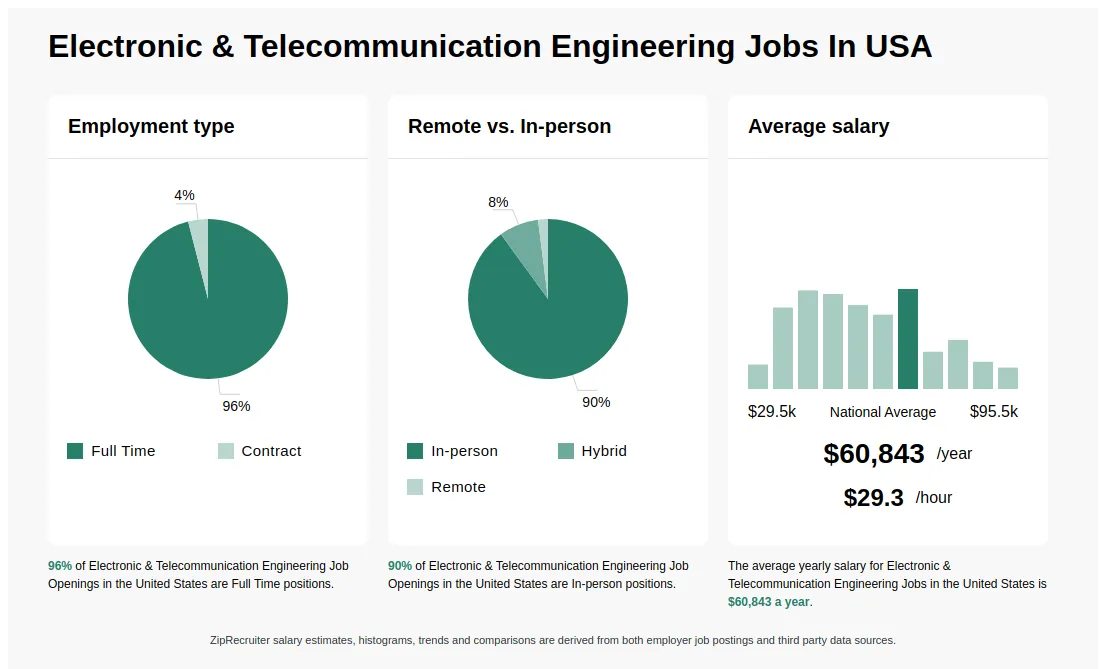
As of Jun 28, 2026, the average yearly pay for electronic & telecommunication engineering in the United States is $60,843.00, according to ZipRecruiter salary data. Most workers in this role earn between $46,000.00 and $70,000.00 per year, depending on experience, location, and employer.

What jobs can a telecommunication engineer do?

A telecommunication engineer can work in designing, installing, and maintaining communication systems such as telephone networks, internet infrastructure, wireless and satellite communications, and data transmission systems. They often work with network hardware, software, and protocols, and may hold roles in network planning, system integration, or technical support. Certifications like Cisco or CompTIA can enhance job prospects in this field.

What engineers make $500,000?

In electronic and telecommunication engineering, high-level engineers such as senior systems engineers, lead design engineers, or those in executive technical roles can earn $500,000 or more annually, especially with extensive experience, specialized skills, and leadership responsibilities. These roles often require advanced certifications, expertise in complex systems, and work in high-demand industries like aerospace, defense, or large tech companies.

What are the key skills and qualifications needed to thrive as an Electronic & Telecommunication Engineer, and why are they important?

To thrive as an Electronic & Telecommunication Engineer, you need a solid understanding of electronics, signal processing, and communication networks, typically supported by a bachelor's degree in electrical, electronics, or telecommunication engineering. Familiarity with design and simulation tools such as MATLAB, CAD software, and network analyzers, as well as relevant certifications like CCNA or IEEE credentials, is often required. Strong problem-solving skills, attention to detail, and effective teamwork and communication abilities set standout professionals apart. These skills and qualifications are crucial to designing, implementing, and maintaining complex communication systems in a rapidly evolving technological landscape.

What is the job of an electronic and telecommunication engineer?

An electronic and telecommunication engineer designs, develops, and maintains electronic systems and communication networks, including devices like transmitters, receivers, and data transmission systems. They work with hardware, software, and signal processing tools, often requiring knowledge of industry standards and certifications, and typically operate in office or lab environments. Their role ensures reliable communication infrastructure and electronic device functionality.

Is EEe a high paying job?

Electronic and Telecommunication Engineering is generally considered a well-paying field, especially for those with specialized skills in circuit design, signal processing, or telecommunications systems. Salaries vary based on experience, location, and certifications, but the profession often offers competitive compensation compared to other engineering disciplines.

What is Electronic & Telecommunication Engineering?

Electronic & Telecommunication Engineering is a branch of engineering that focuses on the design, development, and maintenance of electronic devices, systems, and communication networks. Professionals in this field work on technologies such as mobile phones, satellites, radar, fiber optics, and wireless communication. The discipline blends electronic engineering principles with communication technologies to enable the transfer and processing of information over distances. Graduates can pursue careers in telecommunications companies, electronics manufacturing, broadcasting, and IT industries.

What are some common challenges faced by Electronic & Telecommunication Engineers when working on multidisciplinary teams?

Electronic & Telecommunication Engineers often collaborate with professionals from software, mechanical, and civil engineering backgrounds on large projects. One common challenge is ensuring clear communication across disciplines, as each field may use different technical jargon and methodologies. Balancing project requirements, such as integrating hardware with software or managing signal interference in complex environments, also requires adaptability and strong problem-solving skills. Proactively engaging in regular team meetings and fostering open communication can help address these challenges and ensure project success.

What is the difference between Electronic & Telecommunication Engineering vs Electrical Engineering?

AspectElectronic & Telecommunication EngineeringElectrical Engineering
CredentialsBachelor's or Master's in Electronic & Telecommunication EngineeringBachelor's or Master's in Electrical Engineering
Work EnvironmentTelecom companies, electronics manufacturing, network providersPower plants, manufacturing, electrical systems design
Industry UsageTelecommunications, electronics, signal processingPower systems, electrical machinery, control systems

Electronic & Telecommunication Engineering focuses on communication systems, signal processing, and electronics, while Electrical Engineering covers power systems, electrical machinery, and broader electrical infrastructure. Both fields share foundational knowledge but serve different industry needs and applications.

More about Electronic Telecommunication Engineering jobs
What states have the most Electronic & Telecommunication Engineering jobs? States with the most job openings for Electronic & Telecommunication Engineering jobs include:
What job categories do people searching Electronic & Telecommunication Engineering jobs look for? The top searched job categories for Electronic & Telecommunication Engineering jobs are:
Infographic showing various Electronic & Telecommunication Engineering job openings in the United States as of June 2026, with employment types broken down into 96% Full Time, and 4% Part Time. Highlights an 88% Physical, 3% Hybrid, and 9% Remote job distribution, with an average salary of $60,843 per year, or $29.3 per hour.

Telematics SW Lead

TiltEdge Solutions LLC

Mountain View, CA • On-site

Full-time

Posted 23 days ago


Job description

Position: Telematics SW Lead
Work Location: Mountain View, CA, 94043
Salary: $140K/Annum
Duration: Fulltime/Direct Hire

Job Description:

Experience: 10+ Years
Qualification: B.Tech/M.Tech (Electronics & telecommunication Engineering)

1) Min 10 yrs experience in Automotive Software with min 2 yrs in Infotainment or/and Telematics

2) Non-Autosar platform - Bootloader, Diagnostics, peripheral drivers development and integration, BSP integration

3) Telematics application development using Embedded C on Micro controllers from NXP & Infineon

Skills:

1) Min 10 yrs experience in Automotive Software with min 2 yrs in Infotainment or/and Telematics

2) Non-Autosar platform - Bootloader, Diagnostics, peripheral drivers development and integration, BSP integration

3) Telematics application development using Embedded C on Micro controllers from NXP & Infineon