1

Elderly Companion Jobs (NOW HIRING)

Homemaker/Companion

Groton, CT · On-site

$13.50 - $17/hr

Experience working with elderly or disabled individuals. Responsibilities: * Provide companionship and emotional support to clients, engaging in conversation and activities. * Assist clients with ...

Homemaker/Companion

Hartford, CT · On-site

$13.50 - $17.25/hr

Experience working with elderly or disabled individuals. Responsibilities: * Provide companionship and emotional support to clients, engaging in conversation and activities. * Assist clients with ...

Homemaker/Companion

Norwich, CT · On-site

$13.50 - $17/hr

Experience working with elderly or disabled individuals. Responsibilities: * Provide companionship and emotional support to clients, engaging in conversation and activities. * Assist clients with ...

Showing results 41-60

Elderly Companion information

See salary details

$14

$17

$18

How much do elderly companion jobs pay per hour?

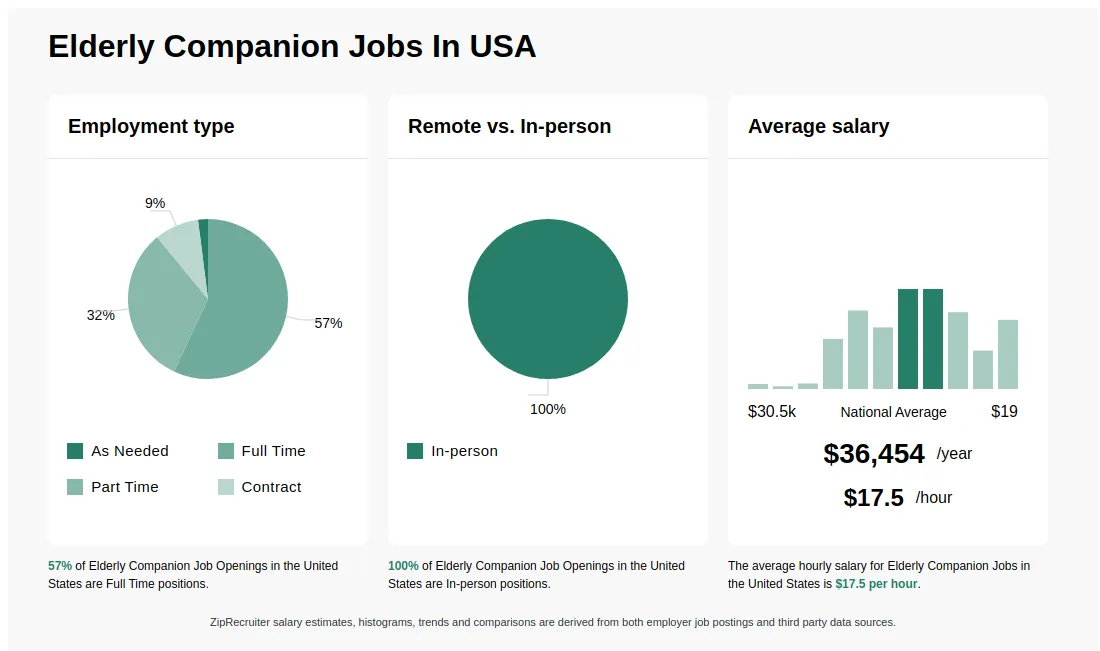
As of Sep 2, 2026, the average hourly pay for elderly companion in the United States is $17.53, according to ZipRecruiter salary data. Most workers in this role earn between $16.83 and $18.27 per hour, depending on experience, location, and employer.

What is an elderly companion?

Elderly companions are individuals who provide non-medical support and companionship to seniors. Their primary role is to offer social interaction, help with daily activities such as light housekeeping, meal preparation, and sometimes transportation to appointments. Elderly companions do not perform medical tasks but focus on improving the quality of life and emotional well-being of older adults. They can work in private homes, assisted living facilities, or through home care agencies. This service helps seniors remain independent and reduces feelings of loneliness or isolation.

What is elderly companion care?

Elderly Companion care is a non-medical care service for seniors so that they can remain in their homes rather than moving into a residential facility. As an Elderly Care Companion, your responsibilities and duties include providing conversation and companionship to your clients, reminding them to take their medications, providing transportation to appointments, running errands, and other tasks. You may assist with some light housework and meal preparation. You may also need to communicate with the client’s loved ones or a team of caregivers to keep them up to date on their condition and wellbeing.

What are the key skills and qualifications needed to thrive as an elderly companion, and why are they important?

To thrive as an Elderly Companion, you need a basic understanding of senior care, safety protocols, and often a high school diploma or relevant experience. Familiarity with scheduling tools, basic health monitoring devices, and sometimes CPR or first aid certification is beneficial. Compassion, patience, and strong communication skills help build trust and create supportive relationships with clients. These skills are crucial for enhancing the well-being and quality of life of elderly individuals while ensuring their comfort and safety.

What are the most common challenges faced by elderly companions, and how can they be addressed?

Elderly Companions often face challenges such as managing clients with memory loss, adapting to varying emotional needs, and establishing trust. Building strong communication skills and showing patience are essential to overcoming these hurdles. Companions should also be prepared to coordinate with family members and healthcare professionals to ensure comprehensive care. Continuous learning about age-related conditions and self-care strategies can help companions provide the best support while maintaining their own well-being.

What is the difference between Elderly Companion vs Personal Care Assistant?

AspectElderly CompanionPersonal Care Assistant
CredentialsMinimal; often no formal certification requiredCertifications often preferred or required, such as CPR or caregiving courses
Work EnvironmentHome settings, senior living communitiesHome care, assisted living, sometimes facilities
Job DutiesCompanionship, light household tasks, social engagementPersonal hygiene, mobility assistance, medication reminders
Employer & IndustrySenior care agencies, private familiesHome health agencies, caregiving services

While both roles involve caring for seniors, an Elderly Companion primarily provides companionship and social support, whereas a Personal Care Assistant offers more hands-on personal and health-related assistance. The choice depends on the level of care needed and the required credentials.

What qualifications do I need to be an elderly companion?

To be an elderly companion, there are typically no formal educational requirements, but relevant skills include patience, good communication, and empathy. Some employers prefer candidates with previous caregiving experience or certifications such as CPR or first aid. A background check is often required, and a reliable, compassionate attitude is essential for the role.

What cities are hiring for Elderly Companion jobs?

Cities with the most Elderly Companion job openings:

What are the most commonly searched types of Elderly Companion jobs?

The most popular types of Elderly Companion jobs are:

What states have the most Elderly Companion jobs?

States with the most job openings for Elderly Companion jobs include:

What are popular job titles related to Elderly Companion jobs?

For Elderly Companion jobs, the most frequently searched job titles are:

Infographic showing various Elderly Companion job openings in the United States as of August 2026, with employment types broken down into 3% As Needed, 66% Full Time, 29% Part Time, and 2% Contract. Highlights an 99% Physical, and 1% Remote job distribution, with an average salary of $36,454 per year, or $17.5 per hour.

$13.50 - $17/hr

Full-time

Re-posted 21 days ago


Job description

About the Role:

The Homemaker/Companion plays a vital role in enhancing the quality of life for individuals in need of support within their homes. This position involves providing companionship, assistance with daily living activities, and ensuring a safe and comfortable environment for clients. The primary goal is to foster independence while offering emotional support and companionship to enhance the overall well-being of those served. The Homemaker/Companion will also engage clients in meaningful activities that promote mental and physical health. Ultimately, this role is about creating a nurturing atmosphere that allows clients to thrive in their daily lives.

Minimum Qualifications:

  • High school diploma or equivalent.
  • Previous experience in a caregiving or companion role.

Preferred Qualifications:

  • Certification in first aid and CPR.
  • Experience working with elderly or disabled individuals.

Responsibilities:

  • Provide companionship and emotional support to clients, engaging in conversation and activities.
  • Assist clients with daily living tasks such as meal preparation, light housekeeping, and personal care.
  • Monitor clients' well-being and report any changes or concerns to family members or healthcare professionals.
  • Plan and participate in recreational activities that promote physical and mental engagement.
  • Ensure a safe living environment by identifying and addressing potential hazards.

Skills:

The required skills for this position include strong communication and interpersonal abilities, which are essential for building rapport with clients and understanding their needs. Organizational skills are crucial for managing daily tasks and ensuring that clients receive the necessary support in a timely manner. Empathy and patience are vital in providing compassionate care, especially when assisting clients with personal tasks. Preferred skills such as first aid knowledge can be invaluable in emergency situations, ensuring the safety and well-being of clients. Overall, a combination of these skills will enable the Homemaker/Companion to create a positive and supportive environment for those they serve.