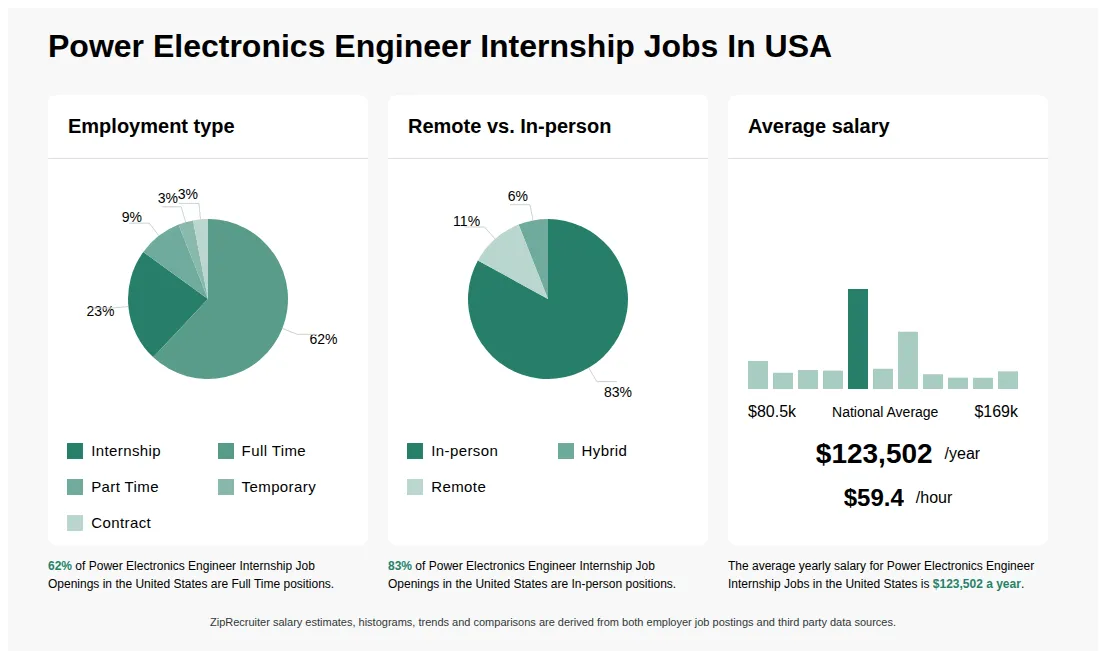
As a Power Electronics Engineer Intern, you’ll typically support the design, testing, and troubleshooting of power converters, inverters, or other electronic circuits under the guidance of senior engineers. Common daily tasks include performing simulations, assisting with PCB layout and assembly, collecting and analyzing lab data, and documenting results for technical reports. You may also participate in team meetings, design reviews, and collaborative problem-solving sessions, giving you exposure to real-world engineering workflows. These experiences provide hands-on learning and help you build practical skills that are highly valued in the power electronics industry.