1

Pneumatic Engineer Jobs (NOW HIRING)

Ensure clean, secure, and safe pneumatic routing 2. Commissioning Support * Assist engineers with air-up and leak testing * Adjust pressure regulators, flow controls, and cushioning valves * Support ...

New

next page

Showing results 1-20

Pneumatic Engineer information

See salary details

$33K

$89.2K

$142K

How much do pneumatic engineer jobs pay per year?

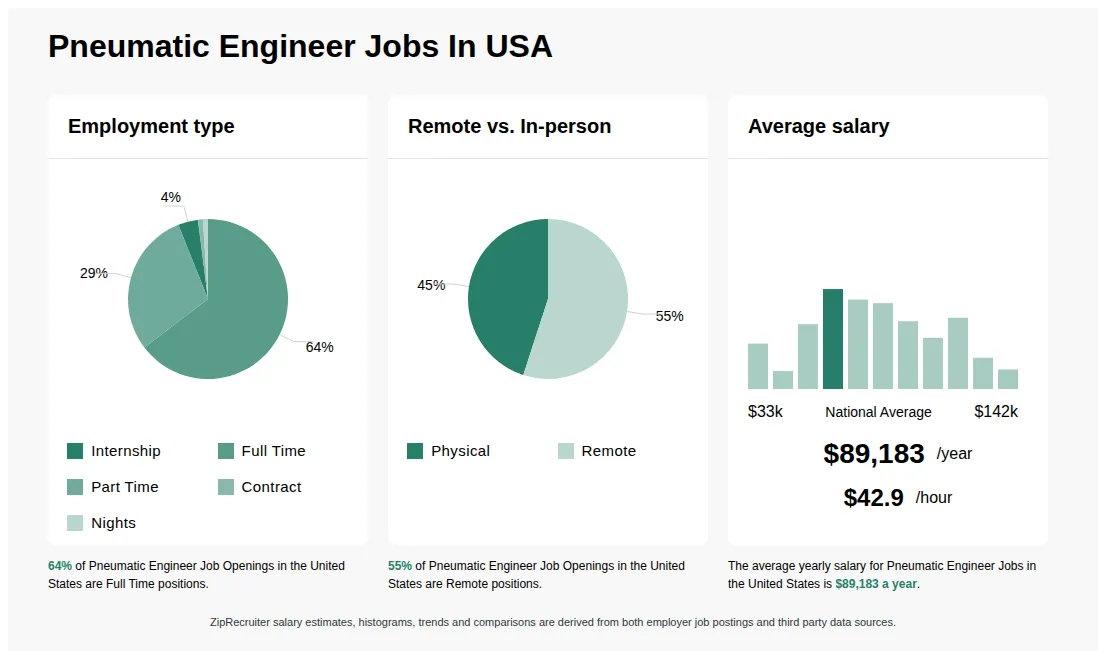
As of Jun 6, 2026, the average yearly pay for pneumatic engineer in the United States is $89,183.00, according to ZipRecruiter salary data. Most workers in this role earn between $66,500.00 and $109,000.00 per year, depending on experience, location, and employer.

What is the difference between Pneumatic Engineer vs Mechanical Engineer?

AspectPneumatic EngineerMechanical Engineer
CredentialsBachelor's in Mechanical or Pneumatics, certifications in pneumaticsBachelor's in Mechanical Engineering, Professional Engineer (PE) license
Work EnvironmentManufacturing plants, automation systems, fluid power labsDesign offices, manufacturing facilities, research labs
Industry UsageAutomation, machinery, fluid power systemsAutomotive, aerospace, manufacturing, product design

While both roles involve mechanical principles, Pneumatic Engineers specialize in pneumatic systems and fluid power, working primarily with compressed air and automation. Mechanical Engineers have a broader scope, focusing on various mechanical systems and design. The two roles often collaborate but differ in their specific technical focus and work environments.

What is a Pneumatic Engineer?

A Pneumatic Engineer is a professional who specializes in designing, developing, and maintaining systems and equipment that use compressed air or gases to transmit and control energy. They work on machinery and industrial processes that rely on pneumatic technology, such as automation systems, robotics, and manufacturing lines. Pneumatic Engineers are responsible for ensuring these systems operate efficiently, safely, and reliably, often collaborating with other engineers and technicians. Their work is essential in industries like automotive, aerospace, pharmaceuticals, and food processing. They also troubleshoot and optimize existing pneumatic systems to improve performance and reduce energy consumption.

What are some common challenges a Pneumatic Engineer might face when collaborating with cross-functional teams?

Pneumatic Engineers often work closely with mechanical, electrical, and controls engineers, which can present challenges in aligning requirements and technical specifications across disciplines. Effective communication is essential to ensure that pneumatic systems integrate seamlessly with broader automation or manufacturing processes. Additionally, balancing the priorities of different teams while adhering to project deadlines and safety standards requires strong organizational and interpersonal skills. Being proactive in addressing potential issues and fostering open dialogue can help smooth collaboration and drive successful project outcomes.

What are the key skills and qualifications needed to thrive as a Pneumatic Engineer, and why are they important?

To thrive as a Pneumatic Engineer, you need a solid background in mechanical engineering, fluid dynamics, and pneumatic system design, generally supported by a relevant engineering degree. Familiarity with CAD software, PLC programming, and pneumatic simulation tools, along with certifications like Professional Engineer (PE), is often required. Strong problem-solving skills, attention to detail, and effective communication are essential soft skills for this role. These abilities ensure the safe, efficient, and innovative design and maintenance of pneumatic systems in industrial settings.
More about Pneumatic Engineer jobs
What states have the most Pneumatic Engineer jobs? States with the most job openings for Pneumatic Engineer jobs include:
What job categories do people searching Pneumatic Engineer jobs look for? The top searched job categories for Pneumatic Engineer jobs are:
Infographic showing various Pneumatic Engineer job openings in the United States as of May 2026, with employment types broken down into 97% Full Time, and 3% Contract. Highlights an 99% Physical, and 1% Remote job distribution, with an average salary of $89,183 per year, or $42.9 per hour.

Hydraulic/Pneumatic Product Design Engineer

Globe Machine

Tacoma, WA • On-site

Full-time

Posted 14 days ago


Job description

Since 1917, Globe Machine has been a manufacturer of industrial machines, systems, and plants for advanced composites, building products, and pulp & paper.

Our Hydraulic/ Pneumatic Design Engineers are responsible for designing pneumatic and hydraulic systems to support mechanical and electrical requirements. This role works autonomously reporting to the Technical Director of Engineering. This position serves as an integral role within a design team of engineers and designers in conceptualization of robust, varied, and cost-effective systems that function in real world environments.

ESSENTIAL DUTIES AND RESPONSIBILITIES:

Technical Design

  • Utilize AutoCAD computer-aided design (CAD), including AutoCAD Inventor (3D) system and peripheral equipment to support new product development as well as standard existing product lines.
  • Perform mechanical engineering design and analysis, redress and modification of hydraulically actuated machinery in conformance to customer specifications meeting company and industry standards.
  • Develop testing procedures and lead data collecting during shop testing pertaining to hydraulic and pneumatic systems.
  • Prepare and direct preparation of hydraulic and pneumatic schematics and detailed drawings.
  • Edit and oversee the preparation of operating manuals for designed equipment and systems.
  • Interpret customer specifications and prepare cost estimates to meet those requirements.
  • Support manufacturing with on machine/off machine routing.
  • Prepare BOM's and manufacturing drawing packages for hydraulic power units as well as hydraulic and pneumatic circuits.
  • Interface with end user regarding system performance/production requirements, delivery and installation planning.

QUALIFICATIONS:

  • BSME preferred with a minimum of 3 years hydraulic/pneumatic design experience.
  • Experience with 3D CAD preferred, Inventor or SolidWorks.
  • Experience with AutoCAD required.
  • Minimum of seven years' experience in a manufacturing environment desired.
  • Demonstrated knowledge of industrial handling/packaging machinery design preferred.
  • Demonstrated knowledge of mechanical, electrical, hydraulic, pneumatic, motion and control components.
  • Proven track record of creative thinking and the application of engineering principles and solutions to technical and performance problems.
  • Proven attention to detail with an emphasis on drawing specifications required.
  • Strong written and verbal business communication skills a must.
  • Proven track record of being self-motivated, working with minimal supervision, and leading and partnering with diverse team members required.
  • Ability to handle multiple priorities efficiently, retain a sense of urgency and meet strict timelines required.
  • Conduct oneself with the highest level of professionalism and ethical standards.