CRJ-200 PIC TYPE RATED
Phoenix, AZ · On-site
Description Are you an experienced pilot looking to elevate your career with a premier on-demand ... Candidates are required to hold a PIC Type Rating for the CRJ-200 . If you choose to have the ...
Phoenix, AZ · On-site
Description Are you an experienced pilot looking to elevate your career with a premier on-demand ... Candidates are required to hold a PIC Type Rating for the CRJ-200 . If you choose to have the ...
Phoenix, AZ · On-site
Description Are you an experienced pilot looking to elevate your career with a premier on-demand ... Candidates are required to hold a PIC Type Rating for the CRJ-200 . If you choose to have the ...
Fort Wayne, IN · On-site
The Second-in-Command reports functionally to the Pilot-in-Command during the assigned flight and ... CL30 Type Rating strongly preferred * 3500 Hours Total Flight Time Steel Dynamics, Inc., and all ...
Fort Wayne, IN · On-site
The Second-in-Command reports functionally to the Pilot-in-Command during the assigned flight and ... CL30 Type Rating strongly preferred * 3500 Hours Total Flight Time Steel Dynamics, Inc., and all ...
Norristown, PA · On-site
Falcon 50/900 Type Rated Corporate Pilot At Globus Medical, we move with a sense of urgency to deliver innovations that improve the quality of life of patients with musculoskeletal disorders. Our ...
Norristown, PA · On-site
Falcon 50/900 Type Rated Corporate Pilot At Globus Medical, we move with a sense of urgency to deliver innovations that improve the quality of life of patients with musculoskeletal disorders. Our ...
Norristown, PA · On-site
Falcon 50/900 Type Rated Corporate Pilot At Globus Medical, we move with a sense of urgency to deliver innovations that improve the quality of life of patients with musculoskeletal disorders. Our ...
Norristown, PA · On-site
Falcon 50/900 Type Rated Corporate Pilot At Globus Medical, we move with a sense of urgency to deliver innovations that improve the quality of life of patients with musculoskeletal disorders. Our ...
Queens, NY · On-site
$164K - $280K/yr
G650 Type Rating highly preferred. * Valid FAA Class I medical certificate. * A preferred background of 5000 total flying hours, including 2000 in turbine aircraft, 1500 as Pilot in Command, and 500 ...
Quick apply
Queens, NY · On-site
$164K - $280K/yr
G650 Type Rating highly preferred. * Valid FAA Class I medical certificate. * A preferred background of 5000 total flying hours, including 2000 in turbine aircraft, 1500 as Pilot in Command, and 500 ...
Boston, MA · On-site
$164K - $280K/yr
G650 Type Rating highly preferred. * Valid FAA Class I medical certificate. * A preferred background of 5000 total flying hours, including 2000 in turbine aircraft, 1500 as Pilot in Command, and 500 ...
Boston, MA · On-site
$164K - $280K/yr
G650 Type Rating highly preferred. * Valid FAA Class I medical certificate. * A preferred background of 5000 total flying hours, including 2000 in turbine aircraft, 1500 as Pilot in Command, and 500 ...
Boston, MA · On-site
$164K - $280K/yr
G650 Type Rating highly preferred. * Valid FAA Class I medical certificate. * A preferred background of 5000 total flying hours, including 2000 in turbine aircraft, 1500 as Pilot in Command, and 500 ...
Quick apply
Boston, MA · On-site
$164K - $280K/yr
G650 Type Rating highly preferred. * Valid FAA Class I medical certificate. * A preferred background of 5000 total flying hours, including 2000 in turbine aircraft, 1500 as Pilot in Command, and 500 ...
Philadelphia, PA · On-site
$164K - $280K/yr
G650 Type Rating highly preferred. * Valid FAA Class I medical certificate. * A preferred background of 5000 total flying hours, including 2000 in turbine aircraft, 1500 as Pilot in Command, and 500 ...
Quick apply
Philadelphia, PA · On-site
$164K - $280K/yr
G650 Type Rating highly preferred. * Valid FAA Class I medical certificate. * A preferred background of 5000 total flying hours, including 2000 in turbine aircraft, 1500 as Pilot in Command, and 500 ...
The Second-in-Command reports functionally to the Pilot-in-Command during the assigned flight and ... CL30 Type Rating strongly preferred * 3500 Hours Total Flight Time Steel Dynamics, Inc., and all ...
The Second-in-Command reports functionally to the Pilot-in-Command during the assigned flight and ... CL30 Type Rating strongly preferred * 3500 Hours Total Flight Time Steel Dynamics, Inc., and all ...
Fort Wayne, IN · On-site
The Second-in-Command reports functionally to the Pilot-in-Command during the assigned flight and ... CL30 Type Rating strongly preferred * 3500 Hours Total Flight Time Steel Dynamics, Inc., and all ...
Fort Wayne, IN · On-site
The Second-in-Command reports functionally to the Pilot-in-Command during the assigned flight and ... CL30 Type Rating strongly preferred * 3500 Hours Total Flight Time Steel Dynamics, Inc., and all ...
Baltimore, MD · On-site
$164K - $280K/yr
G650 Type Rating highly preferred. * Valid FAA Class I medical certificate. * A preferred background of 5000 total flying hours, including 2000 in turbine aircraft, 1500 as Pilot in Command, and 500 ...
Quick apply
Baltimore, MD · On-site
$164K - $280K/yr
G650 Type Rating highly preferred. * Valid FAA Class I medical certificate. * A preferred background of 5000 total flying hours, including 2000 in turbine aircraft, 1500 as Pilot in Command, and 500 ...
Boston, MA · On-site
$164K - $280K/yr
G650 Type Rating highly preferred. * Valid FAA Class I medical certificate. * A preferred background of 5000 total flying hours, including 2000 in turbine aircraft, 1500 as Pilot in Command, and 500 ...
Boston, MA · On-site
$164K - $280K/yr
G650 Type Rating highly preferred. * Valid FAA Class I medical certificate. * A preferred background of 5000 total flying hours, including 2000 in turbine aircraft, 1500 as Pilot in Command, and 500 ...
Colorado Springs, CO · On-site
The Senior Pilot is responsible for the safe, compliant, and efficient operation of Sanborns fleet of turbine-powered aircraft, including Aero Commander, Navajo and King Air 300 series (if type rated)
Colorado Springs, CO · On-site
The Senior Pilot is responsible for the safe, compliant, and efficient operation of Sanborns fleet of turbine-powered aircraft, including Aero Commander, Navajo and King Air 300 series (if type rated)
Colorado Springs, CO · On-site
The Senior Pilot operates aircraft to fly aerial photo missions in support of mapping and LiDAR ... Aero Commander and King Air 300 series type rating highly preferred. * Annual ground and flight ...
Quick apply
Colorado Springs, CO · On-site
The Senior Pilot operates aircraft to fly aerial photo missions in support of mapping and LiDAR ... Aero Commander and King Air 300 series type rating highly preferred. * Annual ground and flight ...
A type-rating is preferred, though not required. We will type-rate the selected candidate if ... The Pilot - Global 8000 SIC reports directly to the Aircraft and Crew Manager (Lead Captain)
A type-rating is preferred, though not required. We will type-rate the selected candidate if ... The Pilot - Global 8000 SIC reports directly to the Aircraft and Crew Manager (Lead Captain)
A type-rating is preferred, though not required. We will type-rate the selected candidate if ... The Pilot - Global 8000 SIC reports directly to the Aircraft and Crew Manager (Lead Captain)
A type-rating is preferred, though not required. We will type-rate the selected candidate if ... The Pilot - Global 8000 SIC reports directly to the Aircraft and Crew Manager (Lead Captain)
A type-rating is preferred, though not required. We will type-rate the selected candidate if ... The Pilot - Global 8000 SIC reports directly to the Aircraft and Crew Manager (Lead Captain)
A type-rating is preferred, though not required. We will type-rate the selected candidate if ... The Pilot - Global 8000 SIC reports directly to the Aircraft and Crew Manager (Lead Captain)
$260K - $285K/yr
Clay Lacy Aviation pilots are among the very best in the business. Elevating our standards starts ... Candidates are required to be type rated, and reside within a 2 hour drivable commuting distance to ...
$260K - $285K/yr
Clay Lacy Aviation pilots are among the very best in the business. Elevating our standards starts ... Candidates are required to be type rated, and reside within a 2 hour drivable commuting distance to ...
Ratings: Appropriate PIC Type Rating * Medical Certificate: First-Class, valid for ATP privileges * Total Flight Time: 3,500 * Pilot in Command: 1,500 * Multi Engine Land: 500 * Instrument: 300
Ratings: Appropriate PIC Type Rating * Medical Certificate: First-Class, valid for ATP privileges * Total Flight Time: 3,500 * Pilot in Command: 1,500 * Multi Engine Land: 500 * Instrument: 300
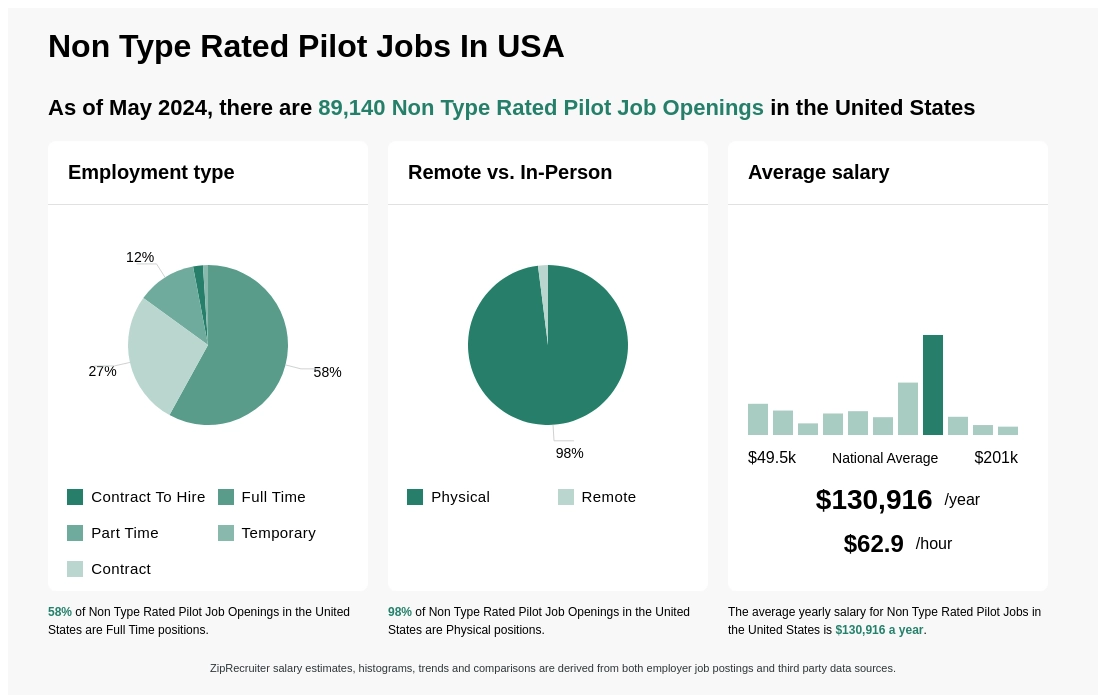
$49.5K - $63.3K
10% of jobs
$63.3K - $77K
7% of jobs
$77K - $90.8K
3% of jobs
$101.1K is the 25th percentile. Wages below this are outliers.
$90.8K - $104.6K
6% of jobs
$104.6K - $118.4K
7% of jobs
$118.4K - $132.1K
5% of jobs
The median wage is $140.7K / yr.
$132.1K - $145.9K
17% of jobs
$153.7K is the 75th percentile. Wages above this are outliers.
$145.9K - $159.7K
33% of jobs
$159.7K - $173.5K
5% of jobs
$173.5K - $187.2K
3% of jobs
$187.2K - $201K
2% of jobs
$49.5K
$130.9K
$201K
A Non Type Rated Pilot job is a position for pilots who hold a commercial pilot license (CPL) but do not yet have a type rating for a specific aircraft. Airlines or operators may hire these pilots with the intention of providing type rating training for their fleet. This allows pilots to gain the necessary certification to operate a specific aircraft model. Such roles are common for entry-level airline positions or for transitioning between different aircraft types.
Non Type Rated Pilots often begin by undergoing training and simulator sessions to obtain the needed type rating for the specific aircraft they will operate. Once type-rated, they can advance to First Officer positions and, with experience, may progress to Captain or instructor roles. The initial phase may involve observation flights, ground school, and working closely with experienced crews to build operational familiarity. Many airlines support ongoing professional development and offer mentorship programs to facilitate career advancement. Successfully completing your type rating and demonstrating strong performance can lead to rapid growth and more advanced opportunities within the organization.
To thrive as a Non Type Rated Pilot, you need a strong foundation in general aviation theory, flight hours in various aircraft, and possession of a valid commercial pilot license (CPL) with multi-engine and instrument ratings. Familiarity with industry-standard avionics, flight planning software, and regulatory compliance is crucial, although specific type endorsements are not yet held. Excellent communication, adaptability, and the ability to work well under pressure help pilots integrate with new equipment and teams. These competencies ensure a smooth transition into airline operations, support safe flights, and make a pilot attractive for future type rating opportunities.
Cities with the most Non Type Rated Pilot job openings:
The most popular types of Non Type Rated Pilot jobs are:
States with the most job openings for Non Type Rated Pilot jobs include:
The top searched job categories for Non Type Rated Pilot jobs are:

Per diem
Medical, Dental, Vision, Life
This job post has expired 3 days ago. Applications are no longer accepted.

Sourced by ZipRecruiter
Aviation
51 - 200 Employees
Phoenix, AZ, US
2003


