The Exercise Physiologist (EP) works as part of an integrated clinical team and is accountable to design an exercise prescription based on each Rehab patient clinical status and/or exercise testing ...
The Exercise Physiologist (EP) works as part of an integrated clinical team and is accountable to design an exercise prescription based on each Rehab patient clinical status and/or exercise testing ...

Clinical Exercise Physiologist - Cardiac Rehab
Florence, OR · On-site
$33.58 - $47.40/hr
PeaceHealth PeaceHarbor Hospital in Florence, Oregon is seeking a Clinical Exercise Physiologist - Respiratory Care for a Full Time, 0.90 FTE, Day position. The salary range for this job opening at ...
Clinical Exercise Physiologist - Cardiac Rehab
Florence, OR · On-site
$33.58 - $47.40/hr
PeaceHealth PeaceHarbor Hospital in Florence, Oregon is seeking a Clinical Exercise Physiologist - Respiratory Care for a Full Time, 0.90 FTE, Day position. The salary range for this job opening at ...

EXERCISE PHYSIOLOGIST
Chicago, IL · On-site
$30 - $36/hr
Under minimal supervision, the Exercise Physiologist is responsible for coordinating the activities of patients in outpatient cardiac rehabilitation, pulmonary rehabilitation, clinical exercise ...
EXERCISE PHYSIOLOGIST
Chicago, IL · On-site
$30 - $36/hr
Under minimal supervision, the Exercise Physiologist is responsible for coordinating the activities of patients in outpatient cardiac rehabilitation, pulmonary rehabilitation, clinical exercise ...
Josephs Medical Center in Bellingham, WA is seeking a Clinical Exercise Physiologist - Cardiac Rehab for a Per Diem/Relief, 0.00 FTE, Day position. The salary range for this job opening at ...
Josephs Medical Center in Bellingham, WA is seeking a Clinical Exercise Physiologist - Cardiac Rehab for a Per Diem/Relief, 0.00 FTE, Day position. The salary range for this job opening at ...
Lead Clinical Exercise Physiologist (Term Position)
Ann Arbor, MI · On-site
$95 - $115/hr
Education:Master's degree in Kinesiology, Exercise Physiology, Clinical Physiology, Exercise Science, or a closely related discipline * Expertise in Human Energetics:Minimum of 3-5 years of ...
Lead Clinical Exercise Physiologist (Term Position)
Ann Arbor, MI · On-site
$95 - $115/hr
Education:Master's degree in Kinesiology, Exercise Physiology, Clinical Physiology, Exercise Science, or a closely related discipline * Expertise in Human Energetics:Minimum of 3-5 years of ...

Education: Master's degree in Kinesiology, Exercise Physiology, Clinical Physiology, Exercise Science, or a closely related discipline. * Expertise in Human Energetics: Minimum of 3-5 years of ...
Education: Master's degree in Kinesiology, Exercise Physiology, Clinical Physiology, Exercise Science, or a closely related discipline. * Expertise in Human Energetics: Minimum of 3-5 years of ...

Master's Degree in Clinical Exercise Physiology or related field is required. * Requires 1-2 years of experience in cardiopulmonary rehabilitation. * ACSM Certified Clinical Exercise Physiologist ...
Master's Degree in Clinical Exercise Physiology or related field is required. * Requires 1-2 years of experience in cardiopulmonary rehabilitation. * ACSM Certified Clinical Exercise Physiologist ...
Clinical Exercise Physiologist - Cardiac Rehab
Bellingham, WA · On-site
$31.60 - $47.40/hr
Josephs Medical Center in Bellingham, WA is seeking a Clinical Exercise Physiologist - Cardiac Rehab for a Per Diem/Relief, 0.00 FTE, Day position. The salary range for this job opening at ...
Clinical Exercise Physiologist - Cardiac Rehab
Bellingham, WA · On-site
$31.60 - $47.40/hr
Josephs Medical Center in Bellingham, WA is seeking a Clinical Exercise Physiologist - Cardiac Rehab for a Per Diem/Relief, 0.00 FTE, Day position. The salary range for this job opening at ...

... EP) or Clinical Exercise Physiologist (ACSM-CEP). 5. Certificate in Pulmonary Rehabilitation AACVPR/AARC preferred. Work Hours:7-4Weekend Requirements:NoOn-Call Requirements:NoEmployment Type ...
... EP) or Clinical Exercise Physiologist (ACSM-CEP). 5. Certificate in Pulmonary Rehabilitation AACVPR/AARC preferred. Work Hours:7-4Weekend Requirements:NoOn-Call Requirements:NoEmployment Type ...
The Exercise Physiologist (EP) works as part of an integrated clinical team and is accountable to design an exercise prescription based on each Rehab patient clinical status and/or exercise testing ...
The Exercise Physiologist (EP) works as part of an integrated clinical team and is accountable to design an exercise prescription based on each Rehab patient clinical status and/or exercise testing ...
Clinical Exercise Physiologist - Cardiac Rehab
Springfield, OR · On-site
$31.60 - $47.40/hr
Description PeaceHealth SHMC at Riverbend in Springfield, Oregon is seeking a Clinical Exercise Physiologist - Cardiac Rehab for a Part Time, 0.80 FTE, Day position. The salary range for this job ...
Quick apply
Clinical Exercise Physiologist - Cardiac Rehab
Springfield, OR · On-site
$31.60 - $47.40/hr
Description PeaceHealth SHMC at Riverbend in Springfield, Oregon is seeking a Clinical Exercise Physiologist - Cardiac Rehab for a Part Time, 0.80 FTE, Day position. The salary range for this job ...

Exercise Physiologist
Elizabeth, NJ · On-site
$30.54 - $40.89/hr
Exercise Physiologist Req #: 0000253585 Category: Physical Therapy Status: Part-Time Shift: Evening ... Through evidence-based evaluation and clinical testing, our specialists develop individualized ...
Exercise Physiologist
Elizabeth, NJ · On-site
$30.54 - $40.89/hr
Exercise Physiologist Req #: 0000253585 Category: Physical Therapy Status: Part-Time Shift: Evening ... Through evidence-based evaluation and clinical testing, our specialists develop individualized ...

$20 - $30/hr
Clinical Staff Program Manager/Senior Manager of Cardiac Rehab Location: United States Compensation ... The Remote Exercise Physiologist plays a pivotal role in supporting patients enrolled in our ...
$20 - $30/hr
Clinical Staff Program Manager/Senior Manager of Cardiac Rehab Location: United States Compensation ... The Remote Exercise Physiologist plays a pivotal role in supporting patients enrolled in our ...
... Clinical Exercise Physiologist (ACSM-CEP). 5. Certificate in Pulmonary Rehabilitation AACVPR/AARC preferred. 7-4 No No
... Clinical Exercise Physiologist (ACSM-CEP). 5. Certificate in Pulmonary Rehabilitation AACVPR/AARC preferred. 7-4 No No
... or Clinical Exercise Physiologist (ACSM-CEP). 5. Certificate in Pulmonary Rehabilitation AACVPR/AARC preferred. Work Hours (EX:7AM-7PM):7-4Weekend Requirements:NoOn-Call Requirements:NoEmployment ...
... or Clinical Exercise Physiologist (ACSM-CEP). 5. Certificate in Pulmonary Rehabilitation AACVPR/AARC preferred. Work Hours (EX:7AM-7PM):7-4Weekend Requirements:NoOn-Call Requirements:NoEmployment ...

Clinical Exercise Physiologist - PRN
Lake Geneva, WI · On-site
$23.18 - $34.78/hr
Master's Degree in Exercise Physiology preferred. CERTIFICATION/LICENSURE If no Master's Degree, Certification through ACSM (Certified Clinical Exercise Physiologist) or AACVPR (Certified Cardiac ...
Clinical Exercise Physiologist - PRN
Lake Geneva, WI · On-site
$23.18 - $34.78/hr
Master's Degree in Exercise Physiology preferred. CERTIFICATION/LICENSURE If no Master's Degree, Certification through ACSM (Certified Clinical Exercise Physiologist) or AACVPR (Certified Cardiac ...
Exercise Physiologist
Elizabeth, NJ · On-site
$30.54 - $40.89/hr
Job Title: Exercise Physiologist Location: WILLIAMSON STREET Department Name: Cardiac ... Through evidence-based evaluation and clinical testing, our specialists develop individualized ...
Exercise Physiologist
Elizabeth, NJ · On-site
$30.54 - $40.89/hr
Job Title: Exercise Physiologist Location: WILLIAMSON STREET Department Name: Cardiac ... Through evidence-based evaluation and clinical testing, our specialists develop individualized ...
... Clinical Exercise Physiologist (ACSM-CEP). 5. Certificate in Pulmonary Rehabilitation AACVPR/AARC preferred. Work Hours: 7-4 Weekend Requirements: No On-Call Requirements: No
... Clinical Exercise Physiologist (ACSM-CEP). 5. Certificate in Pulmonary Rehabilitation AACVPR/AARC preferred. Work Hours: 7-4 Weekend Requirements: No On-Call Requirements: No
Clinical Exercise Physiologist - First Responder Occupational Health Company: Reserve Health About Reserve Health At Reserve Health, we specialize in occupational health dedicated to those who serve ...
Quick apply
Clinical Exercise Physiologist - First Responder Occupational Health Company: Reserve Health About Reserve Health At Reserve Health, we specialize in occupational health dedicated to those who serve ...

Exercise Physiologist - Cardiopulmonary Rehab at Reynolds Crossing - PRN
Richmond, VA · On-site
$30/hr
Certified Clinical Exercise Physiologist by the American College of Sports Medicine (ACSM)* *must successfully obtain certification within the first 6 months of employment Licensure, Certification ...
Exercise Physiologist - Cardiopulmonary Rehab at Reynolds Crossing - PRN
Richmond, VA · On-site
$30/hr
Certified Clinical Exercise Physiologist by the American College of Sports Medicine (ACSM)* *must successfully obtain certification within the first 6 months of employment Licensure, Certification ...
Clinical Exercise Physiologist information
See salary details
$5.29 - $10.07
0% of jobs
$14.86 is the 25th percentile. Wages below this are outliers.
$10.07 - $14.86
25% of jobs
$14.86 - $19.65
7% of jobs
$19.65 - $24.43
14% of jobs
The median wage is $25.20 / hr.
$24.43 - $29.22
26% of jobs
$30.06 is the 75th percentile. Wages above this are outliers.
$29.22 - $34
18% of jobs
$34 - $38.79
10% of jobs
$38.79 - $43.58
0% of jobs
$43.58 - $48.36
0% of jobs
$48.36 - $53.15
0% of jobs
$53.15 - $57.93
0% of jobs
$5
$26
$57
How much do clinical exercise physiologist jobs pay per hour?
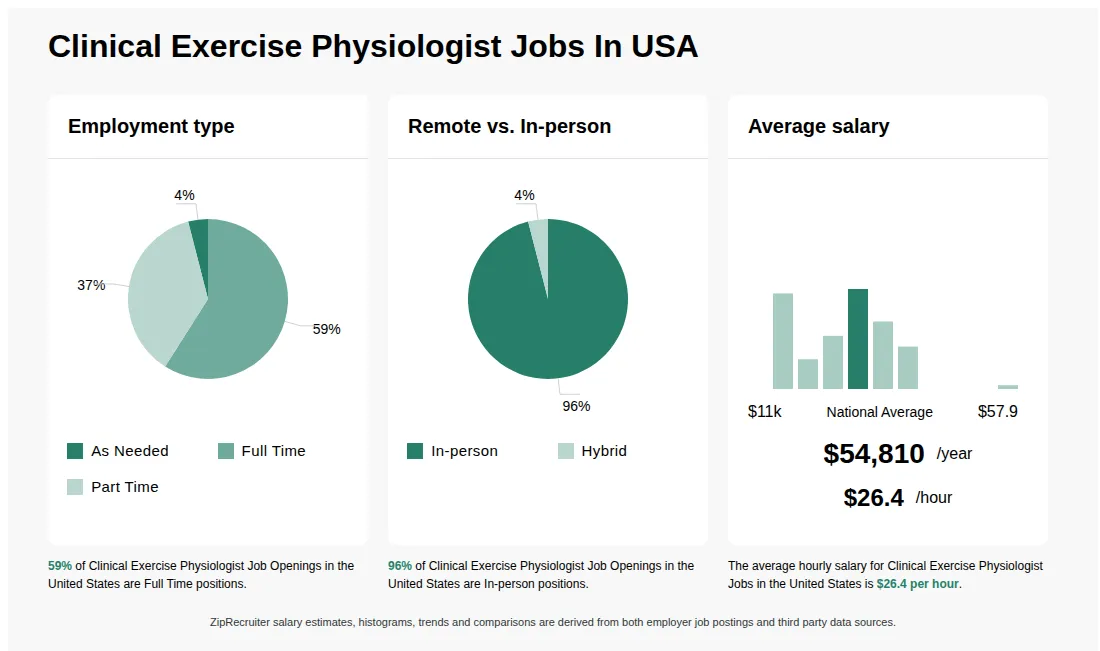
As of Sep 5, 2026, the average hourly pay for clinical exercise physiologist in the United States is $26.35, according to ZipRecruiter salary data. Most workers in this role earn between $14.42 and $31.25 per hour, depending on experience, location, and employer.
What is a clinical exercise physiologist?
A Clinical Exercise Physiologist is a healthcare professional who specializes in using exercise to help prevent and manage chronic diseases and medical conditions. They assess patients' physical abilities, design safe and effective exercise programs, and monitor progress, often working with individuals who have cardiovascular, pulmonary, metabolic, or musculoskeletal issues. Clinical Exercise Physiologists often collaborate with doctors and other healthcare providers to improve patients' health outcomes through physical activity. Their work is essential in cardiac rehabilitation, pulmonary rehabilitation, and chronic disease management. They also educate patients about lifestyle modifications to promote long-term health.
What does a clinical exercise physiologist do?
A clinical exercise physiologist works with a variety of patients to maintain or improve their health through physical activity. In this career, your duties may involve working with people with chronic medical conditions such as heart or lung disease, asthma, or diabetes. Your responsibilities may include assessing their needs, monitoring their exercise, and ensuring that they are following safe exercise practices. A certified exercise physiologist, also known as a CEP, may also work with patients who are recovering from a medical emergency or need to regain physical strength following surgery.
What are the key skills and qualifications needed to thrive as a clinical exercise physiologist?
To excel as a Clinical Exercise Physiologist, you need a solid background in exercise science, human physiology, and clinical assessment, typically supported by a relevant bachelor's or master's degree and professional certification (such as ACSM-CEP). Familiarity with cardiopulmonary exercise testing equipment, ECG interpretation, and health management software is commonly required. Excellent interpersonal skills, motivational ability, and clear communication help build trust and foster adherence among diverse patient populations. These competencies are crucial for delivering safe, effective exercise interventions and promoting long-term health outcomes in clinical settings.
What are some common challenges faced by clinical exercise physiologists when implementing individualized exercise programs?
Clinical Exercise Physiologists often encounter challenges such as varying patient motivation levels, adherence to prescribed exercise regimens, and managing complex medical conditions like cardiovascular or metabolic diseases. Adapting exercise plans to accommodate individual health limitations while ensuring safety and effectiveness is crucial. Collaboration with other healthcare professionals, such as physicians and physical therapists, is essential to coordinate care and adjust programs as patients progress.
What is the difference between Clinical Exercise Physiologist vs Cardiac Rehabilitation Specialist?
| Aspect | Clinical Exercise Physiologist | Cardiac Rehabilitation Specialist |
|---|---|---|
| Credentials | Certified Clinical Exercise Physiologist (ACSM-CEP), CPR certification | Certified Cardiac Rehabilitation Professional (CCRP), CPR certification |
| Work Environment | Hospitals, clinics, rehab centers, fitness facilities | Hospitals, outpatient cardiac rehab programs, clinics |
| Employer & Industry | Healthcare, sports medicine, rehab centers | Cardiology clinics, hospitals, rehab centers |
| Primary Focus | Designing exercise programs for patients with chronic diseases | Managing and guiding patients through cardiac rehab programs |
The main difference between a Clinical Exercise Physiologist and a Cardiac Rehabilitation Specialist lies in their focus and certification. Clinical Exercise Physiologists develop exercise plans for various chronic conditions, while Cardiac Rehabilitation Specialists specifically focus on recovery for cardiac patients. Both roles work in healthcare settings and require similar certifications, but their primary patient populations and program goals differ.
Are clinical exercise physiologists in demand?
Clinical exercise physiologists are in growing demand due to increasing awareness of the benefits of exercise in managing chronic diseases such as heart disease and diabetes. Employment opportunities are expected to expand as healthcare systems emphasize preventive care and rehabilitation, often requiring certification and specialized knowledge in exercise testing and program development.
What can you do with a clinical exercise physiologist degree?
A clinical exercise physiologist degree prepares individuals to assess, develop, and implement exercise programs for patients with chronic diseases such as heart disease, diabetes, and obesity. They often work in healthcare settings, hospitals, or rehabilitation centers, using skills in patient assessment, exercise testing, and program design, sometimes requiring certification like ACSM or NSCA. This role involves working closely with medical teams to improve patient health outcomes through exercise therapy.
Where do clinical exercise physiologists make the most money?
Clinical exercise physiologists tend to earn higher salaries in regions with a higher cost of living and greater healthcare demand, such as urban areas and certain states. Salaries can also increase with advanced certifications, experience, and working in specialized clinical settings or hospitals.
More about Clinical Exercise Physiologist jobs
What cities are hiring for Clinical Exercise Physiologist jobs?
Cities with the most Clinical Exercise Physiologist job openings:
Who are the top companies hiring for Clinical Exercise Physiologist jobs?
The top employers for Clinical Exercise Physiologist jobs are:
What states have the most Clinical Exercise Physiologist jobs?
States with the most job openings for Clinical Exercise Physiologist jobs include:
What job categories do people searching Clinical Exercise Physiologist jobs look for?
The top searched job categories for Clinical Exercise Physiologist jobs are:
What are popular job titles related to Clinical Exercise Physiologist jobs?
For Clinical Exercise Physiologist jobs, the most frequently searched job titles are:

Per diem
Re-posted 7 days ago
Conway Medical Center rating

7.0
Based on 44 frontline employees who took The Breakroom Quiz
507th of 1,065 rated hospitals
Job description
Position Summary:
The Exercise Physiologist (EP) works as part of an integrated clinical team and is accountable to design an exercise prescription based on each Rehab patient clinical status and/or exercise testing results. The EP will monitor physiological data and make appropriate adjustments for the safety and therapeutic benefit of the patient. The EP will assist in the education of patients, perform functional capacity tests, balance and musculoskeletal evaluations with attention to accuracy and safety. The EP uses test results to create customized exercise prescription and results report. The EP will document necessary information in patient's medical record and will assist with data management and quality indicators for the Rehab program. The EP will develop an individualized exercise plan/program for the patient for home and discharge. Other responsibilities include but are not limited to the preventive maintenance of equipment, ensuring all equipment is calibrated, and maintain safe and proper working order. The EP supervises student interns ensuring adherence to policies, procedures, and techniques, answering questions, conducting orientation, explaining correct procedures, demonstrating techniques, and intervening where warranted to correct deficiencies. The EP must be willing to coordinate alternate housing within the facility in advance of shifts when inclement weather potential threatens the ability to get to the facility. The EP may be required to report back to work during any emergency situation i.e. mass casualty, internal disaster, etc.
The Exercise Physiologist (EP) works as part of an integrated clinical team and is accountable to design an exercise prescription based on each Rehab patient clinical status and/or exercise testing results. The EP will monitor physiological data and make appropriate adjustments for the safety and therapeutic benefit of the patient. The EP will assist in the education of patients, perform functional capacity tests, balance and musculoskeletal evaluations with attention to accuracy and safety. The EP uses test results to create customized exercise prescription and results report. The EP will document necessary information in patient's medical record and will assist with data management and quality indicators for the Rehab program. The EP will develop an individualized exercise plan/program for the patient for home and discharge. Other responsibilities include but are not limited to the preventive maintenance of equipment, ensuring all equipment is calibrated, and maintain safe and proper working order. The EP supervises student interns ensuring adherence to policies, procedures, and techniques, answering questions, conducting orientation, explaining correct procedures, demonstrating techniques, and intervening where warranted to correct deficiencies. The EP must be willing to coordinate alternate housing within the facility in advance of shifts when inclement weather potential threatens the ability to get to the facility. The EP may be required to report back to work during any emergency situation i.e. mass casualty, internal disaster, etc.
Education:
- Bachelor’s degree in Exercise Physiology or Exercise Science required.
- Master’s degree in Exercise Physiology or Exercise Science preferred.
Experience:
- Minimum one (1) year applicable experience required.
- Two (2) years’ applicable experience preferred.
Licensure/Certification/Registration:
- Basic Life Support (BLS) required; Advanced Cardiac life Support Certification (ACLS) preferred.
- American College of Sports Medicine (ACSM) Certified as one of the following preferred:
- Certified Exercise Physiologist (EP-C); or
- Certified Clinical Exercise Physiologist (CEP); or
- Registered Clinical Exercise Physiologist (RCEP)
Special Skills:
- Ability to work effectively and collaboratively with colleagues, physicians, and department heads required.
- Exemplary core customer service skills strongly required.
- Strong organizational skills required.
- Strong PC skills required.
- Strong verbal and written communication skills required.
- Ability to remain calm and professional in all situations required.
What Conway Medical Center employees say
Pay
Benefits
Hours and flexibility
Workplace
Get the full story on Breakroom

About Conway Medical Center
Sourced by ZipRecruiter
Industry
Health care and social assistance
Company size
1,001 - 5,000 Employees
Headquarters location
Conway, SC, US
Year founded
1928