1

Seafood Processor Jobs in Alaska (NOW HIRING)

Seafood Processor

Mekoryuk, AK · On-site

$17.50 - $19.75/hr

Packing the cleaned seafood into pans and loading into freezers. * Packaging up product after 1st freezing process and stored down in the ship's hold securely. * General clean-up of vessel and the ...

Seafood Processor

Mekoryuk, AK

$17.50 - $19.75/hr

Packing the cleaned seafood into pans and loading into freezers. * Packaging up product after 1st freezing process and stored down in the ship's hold securely. * General clean-up of vessel and the ...

Chief Engineer

Wrangell, AK · On-site

$90K - $111K/yr

... seafood processing. * Strong problem-solving skills and ability to work within time constraints. * Proficiency in basic math and ability to read and write clear correspondence. * Valid driver ...

Chief Engineer

Wrangell, AK · On-site

$90K - $111K/yr

... seafood processing. * Strong problem-solving skills and ability to work within time constraints. * Proficiency in basic math and ability to read and write clear correspondence. * Valid driver ...

... seafood processing. * Strong problem-solving skills and ability to work within time constraints. * Proficiency in basic math and ability to read and write clear correspondence. * Valid driver ...

next page

Showing results 1-20

Seafood Processor information

See Alaska salary details

$11

$19

$28

How much do seafood processor jobs pay per hour?

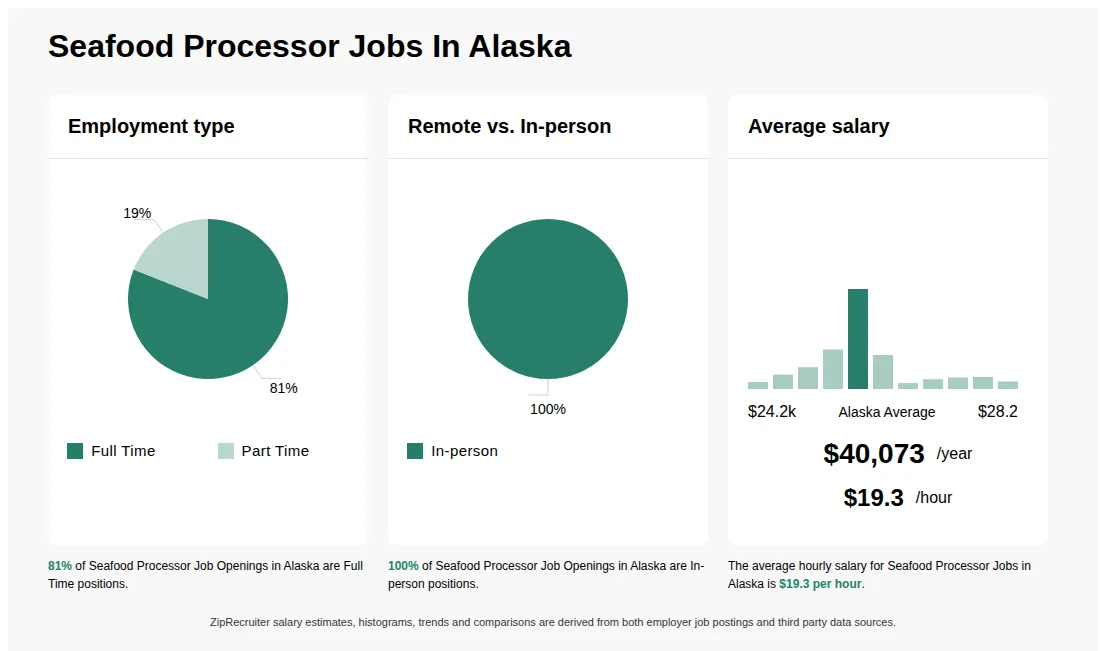
As of Aug 23, 2026, the average hourly pay for seafood processor in Alaska is $19.27, according to ZipRecruiter salary data. Most workers in this role earn between $17.07 and $19.13 per hour, depending on experience, location, and employer.

What is a seafood processor?

A seafood processor is someone who works on a fishing vessel to convert fish into sellable products. As a seafood processor, you are in charge of the sorting and preparation of fish. You also inspect them to ensure that they are of the highest quality, check their weight, and then run the viable catch through machinery. Depending on the company, you may also be in charge of cutting cuts of fish, usually into a fillet. You also clean and trim them for sale. After the fish has gone through the initial cleaning, you pack the product for market or for sale to a dealer, typically by storing them in a freezer onboard.


What are some common challenges seafood processors face on the job, and how can they be managed?

Seafood processors often work in cold, wet environments and must handle repetitive tasks with strict hygiene standards. Adapting to the physical demands—such as standing for long periods and lifting heavy trays—is crucial. Time management and teamwork are essential, as crews must meet production quotas while ensuring product quality. New hires can succeed by focusing on proper safety practices, maintaining good communication with supervisors, and taking short breaks to prevent fatigue.

What are the key skills and qualifications needed to thrive as a seafood processor, and why are they important?

To thrive as a Seafood Processor, you need strong manual dexterity, attention to detail, and physical stamina, typically supported by a high school diploma or equivalent. Familiarity with food processing equipment, safety protocols, and sometimes HACCP certification is important for handling seafood safely and efficiently. Dependability, teamwork, and the ability to work quickly under pressure are valuable soft skills in this role. These skills ensure the safe, high-quality preparation and packaging of seafood products in a fast-paced environment.

What is the difference between Seafood Processor vs Fish Cutter?

AspectSeafood ProcessorFish Cutter
CertificationsFood safety, HACCPFood safety, HACCP
Work EnvironmentProcessing plants, seafood facilitiesProcessing plants, seafood facilities
Job DutiesCleaning, sorting, packaging seafoodCutting, filleting, preparing fish
Industry UsageCommon in seafood processingSpecialized in fish preparation

While both roles work in seafood processing facilities and require food safety certifications, a Seafood Processor handles a broad range of tasks like cleaning, sorting, and packaging seafood products. In contrast, a Fish Cutter specializes in cutting, filleting, and preparing fish for sale or further processing. The roles often overlap but differ mainly in scope and specific duties within the seafood industry.

What skills do you need to be a seafood processor?

A seafood processor needs strong attention to detail, manual dexterity, and the ability to work efficiently in a fast-paced environment. Knowledge of food safety standards, proper handling techniques, and the use of processing equipment are also important skills for the role.

What are the most commonly searched types of Seafood Processor jobs in Alaska?

The most popular types of Seafood Processor jobs in Alaska are:

What are popular job titles related to Seafood Processor jobs in Alaska?

For Seafood Processor jobs in Alaska, the most frequently searched job titles are:

What job categories do people searching Seafood Processor jobs in Alaska look for?

The top searched job categories for Seafood Processor jobs in Alaska are:

What cities in Alaska are hiring for Seafood Processor jobs?

Cities in Alaska with the most Seafood Processor job openings:

What are popular job titles related to Seafood Processor jobs in AK?

For Seafood Processor jobs in AK, the most frequently searched job titles are:

Infographic showing various Seafood Processor job openings in Alaska as of August 2026, with employment types broken down into 100% Nights. Highlights an 100% In-person job distribution, with an average salary of $40,073 per year, or $19.3 per hour.

Seafood Processor

Baranof Holdings

Mekoryuk, AK • On-site

$17.50 - $19.75/hr

Full-time

Posted 11 days ago


Job description

Job Title

This job consists of a multitude of tasks which can change from day to day as the fishing demands or the Captain of the vessel sees fit. Shifts are 16+ hours per day, seven (7) days a week. Duties may include but are not limited to:

  • Heading, cutting and gutting fish. Cleaning and cooking crab.
  • Packing the cleaned seafood into pans and loading into freezers.
  • Packaging up product after 1st freezing process and stored down in the ship's hold securely.
  • General clean-up of vessel and the vessel's warehouse in Dutch Harbor when deemed necessary by officers and factory foreman.
  • Offloading operations in town (usually Dutch Harbor, AK). This is typically done by transferring product off vessel by offload belts into shipping containers or by loading onto trampers at sea.
  • Back loading supplies. Processors will also be involved with the back loading of supplies in town such as bait, food, and fiber.