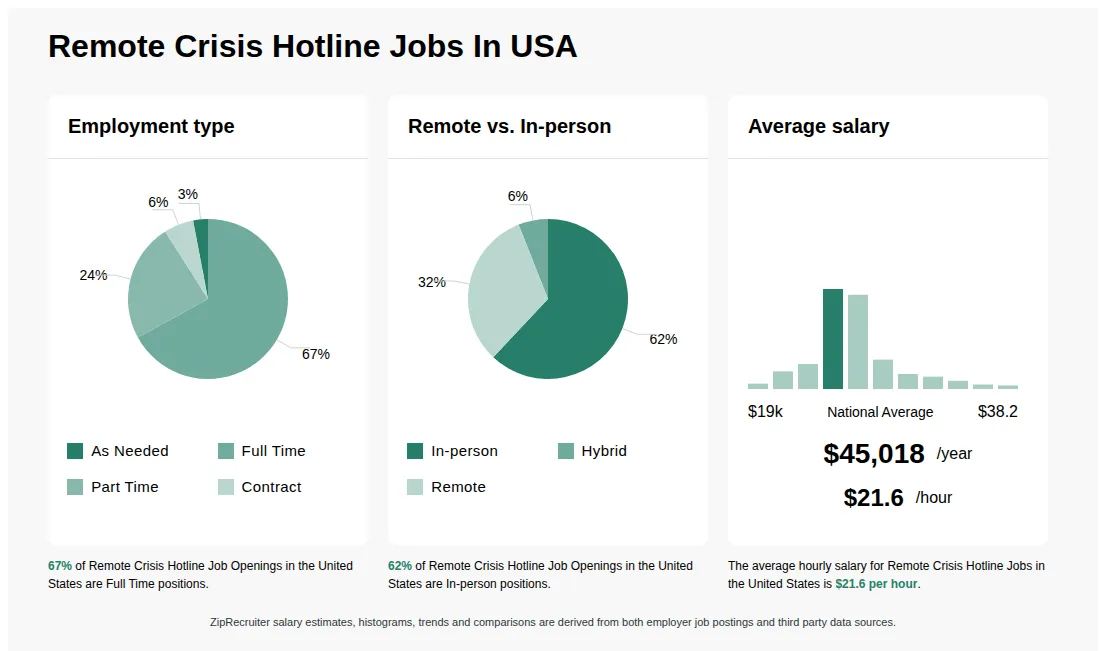
To thrive as a Remote Crisis Hotline worker, you need excellent active listening, crisis intervention training, and a background in mental health or social services. Familiarity with secure phone systems, chat platforms, and client management databases is often required, along with certifications such as ASIST or Mental Health First Aid. Superior empathy, emotional resilience, and clear communication help professionals build trust and respond effectively to individuals in distress. These skills are crucial for providing immediate, compassionate support and ensuring the safety and well-being of callers during high-stress situations.