1

Oil Rig Jobs in Alberta (NOW HIRING)

CA$1 - CA$2/hr

... oilfield sites. * Perform vacuum operations to remove drilling fluids, waste, and spills as per job requirements. * Assist with rig moves, well servicing, and industrial cleaning operations.

New

Apply Early

CA$1 - CA$2/hr

... oilfield sites. * Perform vacuum operations to remove drilling fluids, waste, and spills as per job requirements. * Assist with rig moves, well servicing, and industrial cleaning operations.

New

Apply Early

Service rig and frac experience is an asset. Responsibilities * Operate and run oilfield equipment (Mobile boilers) * Maintain a high degree of cleanliness and professionalism on site * Work ...

Apply Early

The MPD(Managed Pressure Drilling) Field Technician supports rig operations by installing ... * 3+ years of oilfield, drilling, pressure control, or field service experience, with MPD ...

Rig in and pressure test equipment before operating nitrogen or liquid pumping equipment ... oil refineries, petrochemical plants, pre-commissioning, commissioning, start-up and maintenance ...

next page

Showing results 1-20

Oil Rig information

See Alberta salary details

$21.5K

$78.5K

$285.5K

How much do oil rig jobs pay per year?

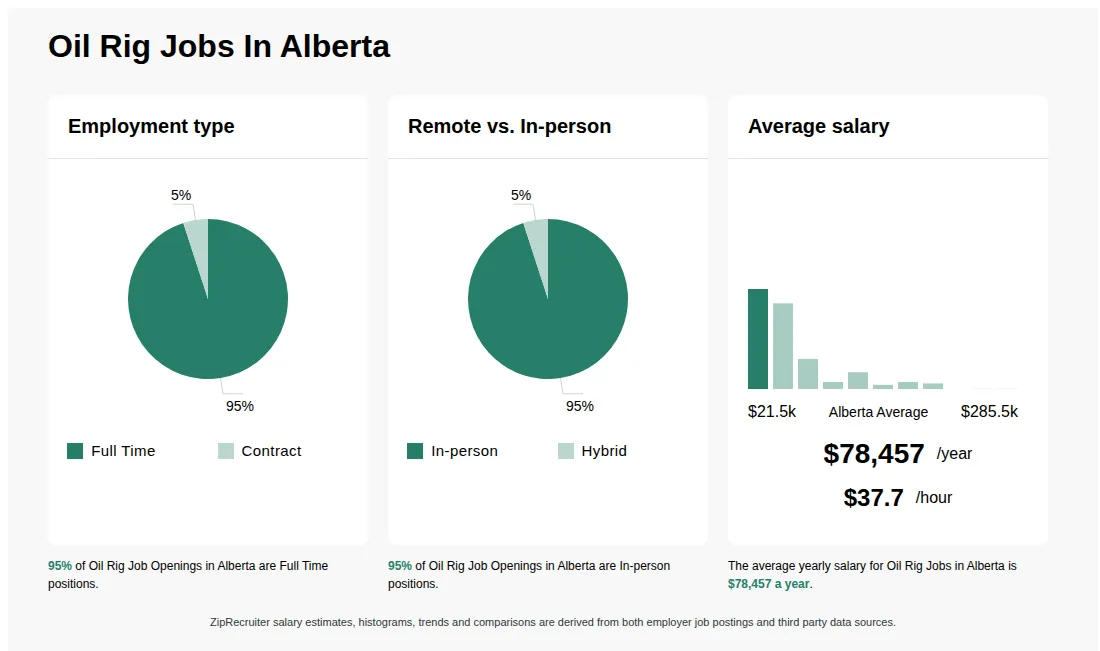
As of Jul 3, 2026, the average yearly pay for oil rig in Alberta is $78,457.00, according to ZipRecruiter salary data. Most workers in this role earn between $39,500.00 and $90,000.00 per year, depending on experience, location, and employer.

What are some common challenges faced by workers on an oil rig, and how are they addressed?

Working on an oil rig presents unique challenges such as long shifts, remote locations, and exposure to harsh weather conditions. Team members often work in rotating shifts (e.g., two weeks on, two weeks off), which can impact work-life balance. Safety is a top priority, with regular drills and strict protocols to minimize risks from heavy machinery and hazardous materials. Strong teamwork and communication are essential, as crews must collaborate closely to ensure operations run smoothly and safely. Most companies provide thorough training, support services, and modern amenities to help staff manage these challenges.

What are oil rig workers?

Oil rig workers are professionals who operate and maintain the equipment used to drill for oil and gas beneath the earth's surface, often on offshore platforms or onshore drilling sites. Their responsibilities include monitoring drilling operations, ensuring safety protocols are followed, and performing routine maintenance on machinery. Oil rig work can be physically demanding and requires long shifts, sometimes in remote or challenging environments. Many positions on an oil rig, such as roughneck, driller, or derrickhand, each have specific duties that contribute to the overall drilling process.

What is the difference between Oil Rig vs Oil Platform Worker?

AspectOil RigOil Platform Worker
CredentialsCertifications in safety, welding, and technical skillsSafety training, technical certifications often required
Work EnvironmentOffshore, mobile, often in harsh weatherOffshore platform, fixed or semi-permanent structures
Employer & Industry UsageUsed interchangeably in industry, referring to offshore drilling unitsRefers to personnel working on oil platforms

Both 'Oil Rig' and 'Oil Platform Worker' relate to offshore oil extraction. An oil rig is the structure used for drilling, while an oil platform worker is the personnel operating on these structures. Understanding the distinction helps in job searches and industry comprehension.

How much does working on an oil rig pay?

Oil rig workers typically earn between $50,000 and $150,000 annually, depending on experience, role, and location. Positions such as roustabouts, roughnecks, and engineers have varying pay scales, with many workers receiving additional compensation for overtime and hazardous conditions.

How much do you get paid on an oil rig?

Oil rig workers typically earn between $50,000 and $150,000 annually, depending on experience, role, and location. Offshore positions often offer higher pay due to the challenging environment and required certifications such as H2S and BOSIET. Salaries can also include bonuses and overtime pay.

How do I get a job in an oil rig?

To get a job on an oil rig, candidates typically need relevant technical skills, such as experience in welding, drilling, or safety procedures, and often require certifications like H2S or BOSIET. Applying through oil companies' recruitment programs or staffing agencies, gaining experience in the oil and gas industry, and being physically fit are also important steps. Many positions require a high school diploma or equivalent and the ability to work long shifts in challenging environments.

What are the key skills and qualifications needed to thrive as an Oil Rig Worker, and why are they important?

To thrive as an Oil Rig Worker, you need physical stamina, mechanical aptitude, and a high school diploma or equivalent, with specialized safety certifications like H2S and Basic Offshore Safety Induction and Emergency Training (BOSIET) often required. Familiarity with drill machinery, rig safety systems, and tools such as rotary drills and hoisting equipment is essential. Teamwork, problem-solving, and strong communication skills help individuals stand out in this demanding and hazardous environment. These abilities ensure operational efficiency, personal safety, and effective collaboration under challenging offshore conditions.

Is it hard to get hired at an oil rig?

Getting hired as an oil rig worker can be competitive and requires relevant skills, certifications, and physical fitness. Employers often look for experience in safety procedures, technical skills, and the ability to work long shifts in challenging environments.

What Are Jobs on an Oil Rig?

Oil rig jobs include semi-skilled workers who operate on the rig deck, specialists who work on machinery for drilling, and drillers and assistants who handle the controls of the drill in a control room. On offshore rigs, crews may include medics, mechanics, welders, and cooks. Management-level staff on oil and gas industry rigs include tool pushers, who work in the rig office, and offshore installation managers, whose duties involve overseeing the entire rig operation. Geologists who work on an oil rig collect samples during operations, otherwise known as “mud logging.”

What are the most commonly searched types of Oil Rig jobs in Alberta? The most popular types of Oil Rig jobs in Alberta are:
What are popular job titles related to Oil Rig jobs in Alberta? For Oil Rig jobs in Alberta, the most frequently searched job titles are:
What job categories do people searching Oil Rig jobs in Alberta look for? The top searched job categories for Oil Rig jobs in Alberta are:
What cities in Alberta are hiring for Oil Rig jobs? Cities in Alberta with the most Oil Rig job openings:

Class 1 Semi-Vac Truck Operator

Primus Workforce

CA$1 - CA$2/hr

Full-time, Part-time

Posted yesterday

Be an early applicant


Job description

Job Overview

We are seeking experienced Class 1 Semi-Vac Truck Operators to join our team for oil & gas operations across Alberta. This role involves operating semi-vac trucks to support drilling rigs, well sites, and industrial projects in off-road, remote environments. The ideal candidate has oilfield experience, strong off-road driving skills, and a commitment to safety.


This role is ideal for a retired driver, semi-retired professional, or someone with another job who is looking for flexible, supplemental work.


Location: Northern Alberta (Various Sites)

Employment Type: Part-time / Contract / Rotational

Industry: Oil & Gas

Schedule: 12-hour shifts (day/night), 2 or 3 week straight


Key Responsibilities

  • Operate Class 1 semi-vac trucks to transport fluids, drilling waste, and other materials between rigs, disposal sites, and service locations.
  • Drive and maneuver trucks on rough terrain, muddy lease roads, and remote oilfield sites.
  • Perform vacuum operations to remove drilling fluids, waste, and spills as per job requirements.
  • Assist with rig moves, well servicing, and industrial cleaning operations.
  • Conduct pre-trip and post-trip inspections to ensure equipment is in top condition.
  • Follow all company, client, and regulatory safety protocols for hazardous materials handling.
  • Communicate effectively with dispatch, rig managers, and other operators.
  • Maintain accurate logbooks, manifests, and compliance documentation

Qualifications & Requirements
  • Valid Class 1 Driver’s License with clean abstract (or minimal infractions).
  • Off-road truck driving experience in oil & gas, mining, or heavy industry (minimum 1 year).
  • Experience operating semi-vac trucks or hydrovac units in remote, rugged environments.
  • Safety Tickets (Required): H2S Alive, WHMIS, TDG, CSO & Standard First Aid.
  • Other Safety Tickets (Preferred): Confined Space Entry & Ground Disturbance.
  • Ability to work long shifts in harsh weather and remote locations.
  • Strong mechanical skills to troubleshoot minor equipment issues (Preferred).


Thank you to all those that apply. Only those who meet the specific job requirements for this position will be contacted. You are encouraged to apply for various future positions we may have.

Primus Workforce Ltd. provides safety-minded, experienced, professional personnel support throughout the energy, construction and technical trades sectors to our clients' long-term and short-term personnel requirements. We are a growing and dynamic company to work with, providing the key to your future success.


Primus Workforce is committed to equity employment for women, Aboriginal people, visible minorities, veterans, and persons with disabilities. Interested candidates from these groups are encouraged to apply.

Job Types: Full-time, Part-time, Contract