Description Persons requiring reasonable accommodation in the application process or requiring information in an alternative format may contact the recruitment team at HREmployment@atg.wa.gov. Those with a hearing impairment in need of accommodation are encouraged to contact the Washington Relay Service at 1-800-676-3777 or www.washingtonrelay.com. This position will remain open until a sufficient number of candidates have applied
The Washington State Office of the Attorney General reserves the right to close this announcement at any time without notice. Position and Salary The Attorney General's Office is recruiting for a permanent full time Digital Forensic Specialist (Forensic Scientist 4) in the Medicaid Fraud & Abuse Division. This position is located in Olympia, Washington, and is represented by the Washington Federation of State Employees (WFSE).
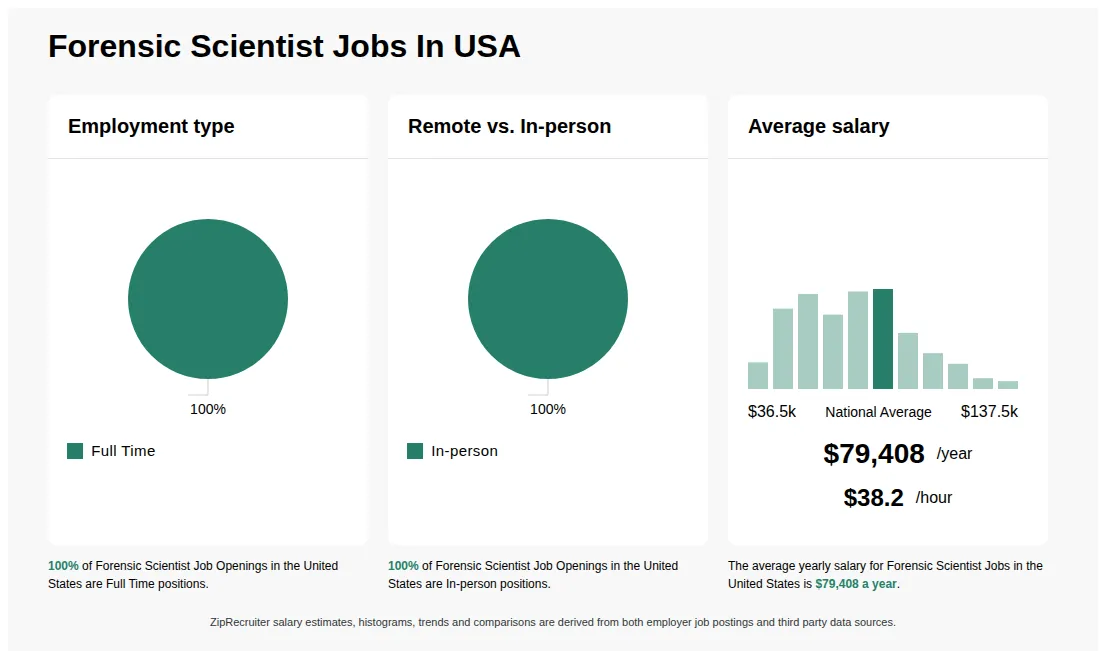
Forensic Scientist 4 Salary Range (68): $84,984 - $114,264 (Effective 7/1/25) | $86,688 - $116,544 (Effective 7/1/26) The base pay offered will take into account internal equity and may vary depending on the preferred candidate's job-related knowledge, skills, and experience. The AGO provides a workplace that is understanding of work-life balance and promotes advancement by offering a wide variety of professional development and growth opportunities. Excellent benefits Washington State offers one of the most competitive benefits packages in the nation, including Medical/Dental/Vision for employees & dependent(s); Vacation, Sick, and Other Leave; 11 Paid Holidays per year; Public Employees Retirement System (PERS) plans; and Life Insurance.
Beyond these traditional benefits, we offer Dependent Care Assistance, Flexible Spending Accounts, Public Service Loan Forgiveness, Tuition Waiver, Deferred Compensation, Employee Recognition Leave, and more. With the goal of employee health and wellness, we also offer: Flexible schedules and part-time/hybrid telework options; A Wellness Program, an Infants in the Workplace Program, and the Employee Assistance Program, which provides counseling, webinar, and other cost-free support resources; Numerous employee-driven affinity groups to foster community and connection, including Bereavement, Elder Care, Parenting, POC, LGBTQ+, Veterans and more. The AGO is a place to belong and make a difference.
About the Medicaid Fraud & Abuse Division The work of the Office's Medicaid Fraud & Abuse Division (MFAD) focuses on both criminal and civil law enforcement. The 75% federally funded MFAD's mission is combating provider fraud, abuse and neglect in residential facilities and involving Medicaid recipients in non-institutional settings. MFAD's Headquarters is located in Olympia, Washington with some team members also located at the AGO's Spokane Office and Seattle Office.
The Division currently has a staff of 84 FTEs, including attorneys, special agents, data scientists, clinical health investigators and professional support staff. MFAD involves protecting not only the Medicaid program of roughly 22.9 billion dollars annually, but also its most vulnerable persons, typically elderly persons in residential facilities or persons abused or neglected by a Medicaid Provider. In many of our cases, there is no precedent, so MFAD is consistently on the cutting edge of legal theories and issues
The cases range from abuse and neglect of persons in nursing homes, large scale organized individual and corporate civil and criminal fraudulent activity to national whistleblower actions. Our staff is a highly professional, fun and seasoned analytical investigative team. MFAD is unique in that all cases have an attorney, special agent, and data scientist assigned with legal support.
In cases involving digital evidence, a Digital Forensics Specialist is assigned as needed to provide specialized technical expertise. This, and the great people who make up the division, gives MFAD a particularly terrific team atmosphere. Duties and Essential Functions of a Digital Forensic Specialist (Forensic Scientist 4) This expert level position within the MFAD's Digital Forensics Section serves as the forensic technical lead and directs operations in the Olympia DF Lab and MFAD mobile labs, applying research, method modification, or unique approaches to complex digital forensic casework, forensic acquisition, and advanced data analysis while ensuring legal defensibility, evidentiary integrity, and compliance with applicable forensic, data governance, and laboratory standards.
Some of the work includes: Responsible to independently operate as the forensic technical lead at multiple search warrant sites and locations which often occur simultaneously across WA state. Maintains and runs a mobile laboratory during onsite search warrants ensuring it maintains quality processes and ensuring operational compliance with all certification, accreditation, legal standards, and requirements. Responsible for assigning, auditing and correcting the casework of new digital forensics personnel in all laboratory and field settings.
Authorized to direct and stop casework processes at any time if a problem occurs in the laboratory, mobile laboratory, and/or out in the field. Perform highly complex analyses of digital evidence from computers, mobile devices, cloud services, IoT devices, network traffic, and other storage media. Interpret complex datasets, identify patterns and anomalies, and reconstruct events from multiple evidence sources.
Uses forensic techniques, programming language and develops queries to identify and recover hidden, encrypted, unparsed or deleted information related to the case, safeguards the integrity of data by following a chain of custody that ensures its admissibility in court, testifying as an expert witness in legal proceedings when required Forensic reporting of digital evidence across numerous formats. Reports findings in the form of a written laboratory report based on the interpretation of observations and analytical test results This recruitment announcement may be used to fill multiple open positions for the same classification, in addition to the position(s) listed in this announcement. Required Qualifications Six (6) years of experience in digital forensics or a closely related field with at least four (4) years of technical experience working and managing and/or operating a lead role in a forensic lab and testifying in a court of law.
A Bachelor's degree in forensic science or closely related field may substitute for two (2) years of experience in digital forensics. Skills & Abilities Professional certifications such as GCFA, GCFE, CCO, CCPA, CCME, MCFE, FTK or CFCE Background in specialized areas such as SQL, SQLite, Python, and other programming languages, cloud forensics, IoT forensics, or malware reverse engineering Ability to apply knowledge of network computer systems, common communication software, including Outlook, and familiarity with electronic e-mail systems; knowledge of different operating systems, including Windows, DOS, Linux, and Mac OS; the Internet; hardware in standalone computers; various electronic storage media including internal and external hard drives and data archiving technology; USB/Firewire technology; and skilled in the use of various digital forensic software, including but not limited to Axiom Cyber, Encase and Forensic Tool Kit. Knowledge of the physical sciences; principles embraced in the scientific method; theory and practice of forensic science as it relates to digital forensics Technical casework experience Demonstrated competency in coordinating and planning projects, programs, or task forces Healthcare Fraud and/or Abuse and Neglect experience Conditions of Employment A background check consisting of employment history, professional references and educational verification (e.g., degree, license, or official transcript) may be conducted
Prior to any offer, the applicant selected will be required to submit to and pass a fingerprint-based criminal background check conducted by the Washington State Patrol, Criminal Records Division. The incumbent will submit to additional background checks as a condition of employment every five (5) years thereafter. About the Washington State Office of the Attorney General The Attorney General's Office (AGO) touches the lives of every resident in this state.
We serve more than 230 state agencies, boards, commissions, colleges and universities, as well as the Legislature and the Governor. The Office is comprised of nearly 700 attorneys and 800 professional staff, all working together to deliver the highest quality professional legal services to Washington state officials, agencies, and entities. This includes: Economic justice and consumer protections (safeguarding consumers, protecting youth, seniors, and other vulnerable populations) Social justice and civil rights (addressing discrimination, environmental protection, and veteran and military resources) Criminal justice and public safety (investigative and prosecutorial support, financial crimes) And much more.
Our agency also has national reach, representing the State of Washington before the Supreme Court, the Court of Appeals and trial courts in all cases that involve the state's interest. If you want to make a difference, we may be the perfect fit for you. Learn more about the AGO here.
Commitment to Diversity Diversity is critical to the success of the mission of the AGO. This means recognizing, respecting, and appreciating all cultures and backgrounds-- and fostering the inclusion of differences between people. Appreciating, valuing and implementing principles of diversity permits AGO employees to achieve their fullest potential in an inclusive, respectful environment.
One recent measure of the AGO's commitment to diversity can be found in its nomination for Rainbow Alliance and Inclusion Network's "Outstanding Agency Award" in 2019. Our commitment to employee wellness is reflected in earning the 2024 Zo8 Washington Wellness Award. Application Instructions In addition to completing the online application, applicants must attach the following documents to their profile in order to be considered for this position: A letter of interest, describing your specific qualifications for the position; A current resume detailing experience and education.
Read the Following Information Completely: Carefully review your application for accuracy, spelling and grammar before submitting. You may not reapply to this posting for 30 days. The initial screening of applications will be solely based on the contents and completeness of the "work experience" and "education" sections of your application in www.careers.wa.gov, completeness of the application material submitted, and responses to the supplemental questionnaire
A resume will not substitute for completing the "work experience" section of the application. All information may be verified and documentation may be required. The Washington State Office of the Attorney General does not use the E-Verify system; therefore, we are not eligible to extend STEM Optional Practical Training (OPT).
For more information, please visitwww.uscis.gov. Equal Employment Opportunity and Accommodations Requests Honoring diversity, equity and inclusion means that as an agency, and as individuals, we are committed to ensuring that all employees and volunteers enjoy a respectful, safe and supportive working environment. Only by fostering the inclusion of people from all backgrounds, cultures and attributes, can AGO employees and volunteers achieve their fullest potential and best advance the goals and mission of the AGO
The AGO is an equal opportunity employer and does not discriminate on the basis of race, creed, color, national origin, sex, marital status, sexual orientation/gender identity, age, disability, honorably discharged veteran or military status, retaliation or the use of a trained dog guide or service animal by a person with a disability. Persons requiring reasonable accommodation in the application process or requiring information in an alternative format may contact the recruitment team at HREmployment@atg.wa.gov. Those with a hearing impairment in need of accommodation are encouraged to contact the Washington Relay Service at 1-800-676-3777 or www.washingtonrelay.com
For questions regarding this recruitment or assistance with the application process, please contact the recruitment team at HREmployment@atg.wa.gov. If you are having technical difficulties creating, accessing or completing your application, please call NEOGOV toll-free at (855) 524-5627 or support@neogov.com.