1

Forensic Pathologist Jobs (NOW HIRING)

PathGroup's forensic pathology division, Forensic Medical Management Services of Texas, is seeking a Board-Certified or Board-Eligible Forensic Pathologist to join our established team in Beaumont ...

next page

Showing results 1-20

Forensic Pathologist information

See salary details

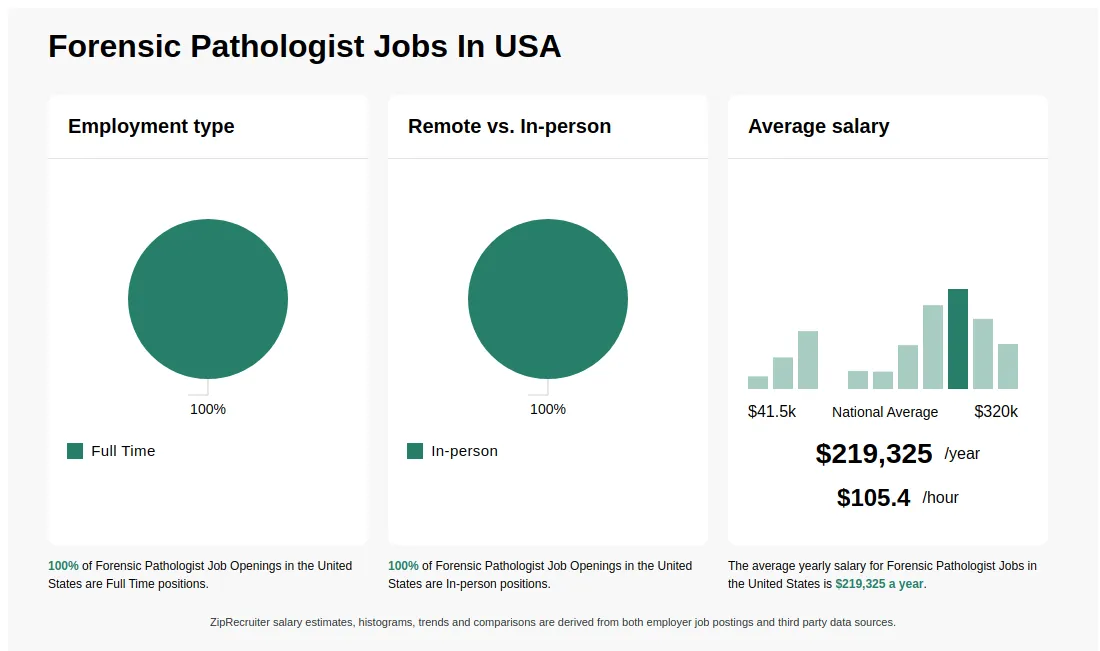
$41.5K

$219.3K

$320K

How much do forensic pathologist jobs pay per year?

As of Jun 4, 2026, the average yearly pay for forensic pathologist in the United States is $219,325.00, according to ZipRecruiter salary data. Most workers in this role earn between $183,000.00 and $274,000.00 per year, depending on experience, location, and employer.

What Do Forensic Pathologists Do?

Forensic pathologists are specially-trained physicians who work with law enforcement to determine the cause of a suspicious death in a case. They perform an autopsy to examine the body; they test blood and tissue samples, check for indications of injuries caused by firearms or other weapons, and seek other trace evidence that may provide information to the case. Before they make determinations on the cause of death, forensic pathologists also study the victim’s medical history and evaluate other evidence collected at the crime scene and witness statements. Once they compile and analyze the evidence, they prepare a report and may need to testify the reasons behind their findings in court.

What are the key skills and qualifications needed to thrive as a Forensic Pathologist, and why are they important?

To thrive as a Forensic Pathologist, you need a medical degree, board certification in pathology, and specialized training in forensic pathology. Familiarity with autopsy techniques, laboratory information systems, and evidence handling protocols is crucial. Strong analytical thinking, attention to detail, and clear written and verbal communication skills help in accurately determining causes of death and presenting findings. These competencies ensure reliable forensic investigations, support legal proceedings, and uphold public health and justice.

What are some of the unique challenges forensic pathologists face when working with law enforcement and legal teams?

Forensic pathologists often collaborate closely with law enforcement and legal professionals, which can present unique challenges such as communicating complex medical findings in a way that non-medical personnel can understand. They may be called upon to testify in court, requiring strong presentation skills and the ability to defend their conclusions under cross-examination. Balancing the need for scientific objectivity with the expectations and pressures from various stakeholders can also be demanding. Additionally, managing a high caseload while ensuring meticulous attention to detail is essential in this role.

What is a forensic pathologist?

A forensic pathologist is a medical doctor who specializes in determining the cause and manner of death by examining deceased individuals. They perform autopsies, analyze medical records, and may collect evidence to help law enforcement investigate suspicious or unexplained deaths. Forensic pathologists often testify in court as expert witnesses and play a critical role in criminal investigations. Their expertise helps bring clarity to legal cases and provides closure for families.

What is the difference between Forensic Pathologist vs Medical Examiner?

AspectForensic Pathologist

Required CredentialsMedical degree, pathology residency, forensic pathology fellowship, medical license
Work EnvironmentAutopsy suites, laboratories, crime scenes
Employer & IndustryLaw enforcement agencies, medical examiner offices, forensic labs
Common Search & ComparisonOften compared due to similar roles in death investigations

While both forensic pathologists and medical examiners investigate unexplained deaths, forensic pathologists perform autopsies and analyze evidence in labs, whereas medical examiners are typically elected officials overseeing death investigations. The roles overlap in credentials and work environment, but their responsibilities differ slightly based on jurisdiction and specific duties.

What cities are hiring for Forensic Pathologist jobs? Cities with the most Forensic Pathologist job openings:
What are the most commonly searched types of Forensic Pathologist jobs? The most popular types of Forensic Pathologist jobs are:
Who are the top companies hiring for Forensic Pathologist jobs? The top employers for Forensic Pathologist jobs are:
What states have the most Forensic Pathologist jobs? States with the most job openings for Forensic Pathologist jobs include:
What are popular job titles related to Forensic Pathologist jobs? For Forensic Pathologist jobs, the most frequently searched job titles are:

Physician / Pathology / Washington / Locum Tenens / Forensic Pathology Job

Adelphi Staffing, LLC

Vancouver, WA

Full-time

Posted yesterday


Job description

Adelphi is seeking a Forensic Pathologist for a public Health facility in Vancouver, Washington. The Forensic Pathologist will be responsible for the investigation of deaths meeting jurisdictional criteria to establish cause and manner of death.
Job Quick Facts:
Ref #: BD-261-05
Profession: Physician
Specialty: Forensic Pathology
Location: Vancouver, WA
Facility Type: Public Health facility
Coverage Type: Onsite
Start Date: ASAP
Contract Length: 1 Year
Minimum Qualifications:
WA MD/DO License
Board certification by the American Board of Pathology
3-4 years of experience practicing as a Board-Certified Forensic Pathologist
Desired Competencies:
Forensic pathology best practices, NAME accreditation standards,
and principles and practices of death investigation.
Medical and legal aspects surrounding sudden and unnatural death; methods, practices,
equipment, and procedures of handling deceased individuals.
Data collection, statistical analysis and report writing principles and techniques;
laws, rules, and regulations affecting certification of death, release of bodies,
custody of the property of deceased persons and related matters; medical examiner office accreditation requirements
Responsibilities:
Performs postmortem examinations and reports for suspicious death cases (e.g., homicides, infant/toddler cases).
Retains samples, specimens, and tissues necessary for analysis, examination, and documentation.
Prepares detailed technical examination reports using appropriate reporting form and convention.
Issues preliminary reports in writing, of the cause of death where such determination is not dependent upon further investigation.
Keeps and maintains appropriate records, reports, and other documentation regarding investigations.
Confers with and provides expert testimony on cases performed as required by the Sheriff, Prosecuting Attorney, and other law enforcement officials.
Confers with death investigators and uses judgment to determine need to attend death scenes or discovery of remains.
Meets with family members of decedents as requested.
Performs other related duties as required.