1

Electroneurodiagnostic Technologist Jobs (NOW HIRING)

The Harborview Operating Rooms have an outstanding opportunity for an Intraoperative Neurophysiological Monitoring Specialist (Electroneurodiagnostic Technologist 3) . WORK SCHEDULE Per Diem Rotating ...

next page

Showing results 1-20

Electroneurodiagnostic Technologist information

See salary details

$5

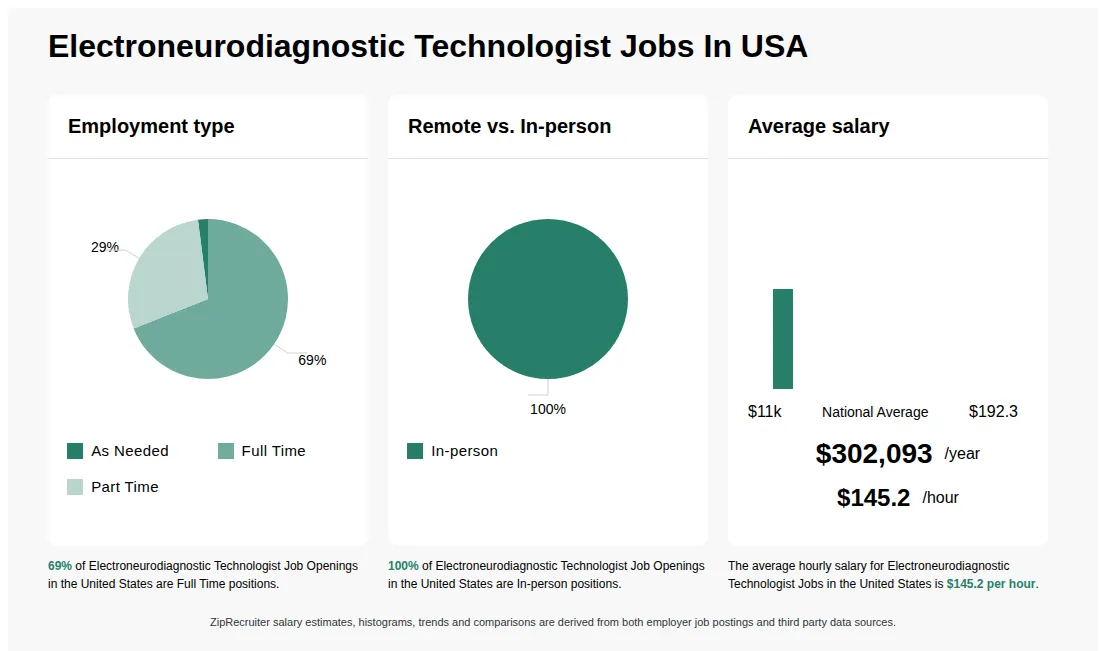
$145

$192

How much do electroneurodiagnostic technologist jobs pay per hour?

As of Aug 16, 2026, the average hourly pay for electroneurodiagnostic technologist in the United States is $145.24, according to ZipRecruiter salary data. Most workers in this role earn between $23.08 and $192.31 per hour, depending on experience, location, and employer.

What is an electroneurodiagnostic technologist?

An Electroneurodiagnostic Technologist is a healthcare professional who specializes in recording and analyzing electrical activity in the brain, nervous system, and other parts of the body. They use specialized equipment to perform tests such as electroencephalograms (EEGs), nerve conduction studies, and sleep studies, which help physicians diagnose neurological disorders like epilepsy, sleep disorders, and nerve diseases. These technologists work closely with neurologists and other medical staff in hospitals, clinics, and diagnostic laboratories to provide accurate and timely results for patient care.

What is an electroneurodiagnostic technologist?

An electroneurodiagnostic technologist, or neurodiagnostic tech, uses special equipment to monitor activity in the human brain and nervous system. You work alongside neurologists and job duties include operating EEG (electroencephalogram) equipment by connecting special diodes to the patient’s scalp. This monitors electrical activity in the brain to diagnose conditions like epilepsy and chronic headaches. Polysomnograms, a type of EEG, are used for monitoring brain activity while the patient is asleep. Career qualifications include an associate or bachelor’s degree in a related field, an electroneurodiagnostic certification, and work experience in a clinical setting. You must also have strong communication skills and work well as part of a team.

Are electroneurodiagnostic technologists in demand?

Electroneurodiagnostic technologists are in demand due to the growing need for neurological diagnostics and patient care. Employment opportunities are expected to increase as healthcare facilities expand and require skilled technicians to operate specialized equipment like EEG and EMG machines. Certification and technical skills can enhance job prospects in this field.

What are the key skills and qualifications needed to thrive as an electroneurodiagnostic technologist?

To thrive as an Electroneurodiagnostic Technologist, you need specialized knowledge in neurodiagnostic procedures, human anatomy, and physiology, typically supported by completion of an accredited END program and certification (such as R.EEG T. or RPSGT). Proficiency in operating EEG, EMG, and other neurodiagnostic equipment, as well as familiarity with patient data management systems, is essential. Strong attention to detail, effective communication, and the ability to remain calm under pressure are standout soft skills in this field. These skills ensure accurate test results, patient safety, and effective collaboration with healthcare teams in diagnosing neurological disorders.

What is the difference between Electroneurodiagnostic Technologist vs EEG Technician?

AspectElectroneurodiagnostic TechnologistEEG Technician
CredentialsCertification (e.g., R.EEG T.), post-secondary educationCertification often preferred, on-the-job training
Work EnvironmentHospitals, clinics, specialized labsHospitals, outpatient clinics, private practices
Job DutiesPerforming various neurodiagnostic tests, interpreting dataPreparing patients, conducting EEG recordings

Electroneurodiagnostic Technologists and EEG Technicians both work in neurodiagnostic settings, but Technologists typically have more advanced training and perform a wider range of tests and data interpretation. EEG Technicians focus mainly on recording EEGs under supervision. Both roles are essential in diagnosing neurological conditions, with Technologists often holding certifications and working in more complex environments.

What are some common challenges electroneurodiagnostic technologists face when conducting patient tests, and how can these be managed?

Electroneurodiagnostic Technologists often encounter challenges such as working with anxious or non-cooperative patients, especially children or individuals with neurological disorders. Managing these situations requires strong communication and interpersonal skills to reassure patients and ensure accurate test results. Additionally, technologists must be adept at troubleshooting equipment issues and adapting protocols for patients with special needs. Remaining calm, flexible, and detail-oriented helps ensure high-quality data collection and patient comfort.

What cities are hiring for Electroneurodiagnostic Technologist jobs?

Cities with the most Electroneurodiagnostic Technologist job openings:

Who are the top companies hiring for Electroneurodiagnostic Technologist jobs?

The top employers for Electroneurodiagnostic Technologist jobs are:

What states have the most Electroneurodiagnostic Technologist jobs?

States with the most job openings for Electroneurodiagnostic Technologist jobs include:

What job categories do people searching Electroneurodiagnostic Technologist jobs look for?

The top searched job categories for Electroneurodiagnostic Technologist jobs are:

What are popular job titles related to Electroneurodiagnostic Technologist jobs?

For Electroneurodiagnostic Technologist jobs, the most frequently searched job titles are:

Infographic showing various Electroneurodiagnostic Technologist job openings in the United States as of August 2026, with employment types broken down into 6% As Needed, 51% Full Time, 13% Part Time, and 30% Contract. Highlights an 99% Physical, and 1% Remote job distribution, with an average salary of $302,093 per year, or $145.2 per hour.

Electroneurodiagnostic Technologist

Childrens Hospital of The Kings Daughters

Norfolk, VA • On-site

$25.13/hr

Full-time

Re-posted 23 days ago


Children's Hospital Of The King's Daughters rating

7.4

Company rating: 7.4 out of 10

Based on 29 frontline employees who took The Breakroom Quiz

349th of 1,059 rated hospitals


Job description

  • GENERAL SUMMARY
    • Under general department supervision, maintains responsibilities for the quality performance of all modalities of Electroneurodiagnostic procedures in accordance with Electroneurodiagnostic (END) Technologists (ASET) guidelines and departmental policies. After hour call coverage is required. Reports to department leadership.
  • ESSENTIAL DUTIES AND RESPONSIBILITIES
    • Performs, identifies and assess data relative to the patient's status and age for identification of problem areas for focused review of images and data and for appropriate reporting to the physician.
    • Accurately obtains brain activity wave forms and identification of brain activity wave forms for review and interpretation by the physician.
    • Provides all modalities of END and evoked potential procedures to all age groups following established policies, procedures and regulations (hospitalized, ambulatory and intraoperative patients).
    • Provides for patient/family education.
    • Effectively utilizes END procedures as well as operation and maintenance of equipment.
    • Assists management with performance improvement, billing, budget, equipment and design processes related to END.
    • Expertly performs clinical duties within scope of clinical education/training, practice and expertise for END procedures.
    • Performs other duties and tasks as assigned.
  • LICENSES AND/OR CERTIFICATIONS
    • Certification/Registration as an EEG Technologist (EEG) awarded by the American Board of Registration of Electroneurodiagnostic and Evoked Potential Technologists (ABRET) required.
    • CPR Training required or must be obtained within 45 days of hire.
  • MINIMUM EDUCATION AND EXPERIENCE REQUIREMENTS
    • 2-3 years of Electroneurodiagnostic experience preferred.
    • Knowledge of Electroneurodiagnostic techniques/principles and procedures as well as operation and maintenance of Electroneurodiagnostic equipment as normally acquired through completion of an approved training program or 1-2 years on the job training and experience.
    • Interpersonal skills necessary in order to communicate effectively with patients/families, nursing personnel and physicians.
    • Analytical skills necessary to effectively detect pathologies based on knowledge of physiological cause effect of diseases and clinical procedures.
  • WORKING CONDITIONS
    • Clinical patient care environment with minimal exposure to hazards such as excess noise, dust, or extremes in temperature. Frequent exposure to communicable diseases, toxic substances, medicinal preparations, body fluids and other conditions common to the healthcare environment. Moderate adverse working conditions due to the need to perform certain patient care activities.
  • PHYSICAL REQUIREMENTS
    • Click here to view physical requirements.

What Children's Hospital Of The King's Daughters employees say

Pay

Benefits

Hours and flexibility

Workplace

Get the full story on Breakroom