1

Electrical Distribution Designer Jobs (NOW HIRING)

next page

Showing results 1-20

Electrical Distribution Designer information

See salary details

$20

$39

$60

How much do electrical distribution designer jobs pay per hour?

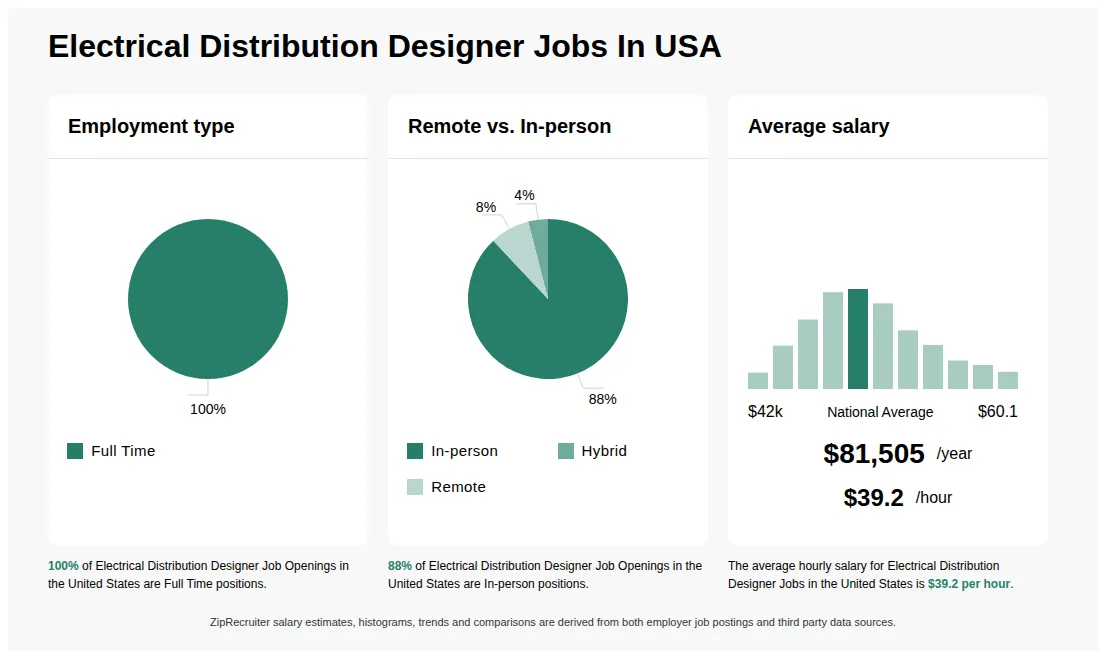
As of Jun 15, 2026, the average hourly pay for electrical distribution designer in the United States is $39.19, according to ZipRecruiter salary data. Most workers in this role earn between $31.49 and $44.95 per hour, depending on experience, location, and employer.

What Does an Electrical Distribution Designer Do?

An electrical distribution designer assists with the design and layout of residential and commercial electric systems. Your responsibilities as an electrical distribution designer include designing these electric systems to avoid overload and prevent outages. You may update existing systems or create networks from scratch for new commercial or residential builds. Your duties also include collaborating with engineers on a design project. You use various computer programs to track deadlines and project progress. You may have to make reports to update other relevant departments on the build. Electrical distribution designers must also stay current on safety policies and procedures.

Can you make $500,000 as an electrical engineer?

Electrical distribution designers typically earn salaries ranging from $70,000 to $120,000 annually, depending on experience, location, and certifications. Reaching a $500,000 income level generally requires advanced roles, extensive experience, or managerial positions in the field. High earnings are more common in senior engineering, consulting, or executive roles within the industry.

How does an Electrical Distribution Designer typically collaborate with engineers and field crews during a project?

Electrical Distribution Designers work closely with electrical engineers to interpret project requirements and ensure designs meet safety and regulatory standards. Throughout a project, they frequently coordinate with field crews to clarify design details, address site-specific challenges, and incorporate feedback from on-site conditions. This collaboration helps ensure plans are practical, constructible, and adhere to timelines. Effective communication and teamwork are essential, as designers often serve as a bridge between engineering teams and field operations.

What is the highest paying job for EE?

For electrical distribution designers, the highest paying roles are often senior engineering positions, project managers, or specialized consultants in power systems, which can offer higher salaries due to experience, certifications, and expertise in high-voltage systems or renewable energy projects. Advanced skills in design software and industry certifications like PE can also contribute to higher compensation.

Can I make 200K as an electrical engineer?

Electrical Distribution Designers and electrical engineers can earn $200,000 or more annually, especially with extensive experience, advanced certifications, or working in high-cost-of-living areas. Salaries vary based on location, industry, and level of expertise, with senior roles and specialized skills often commanding higher pay.

What does an electric distribution designer do?

An electrical distribution designer plans and designs electrical systems for power distribution networks, including overhead and underground lines, substations, and related infrastructure. They use engineering software and adhere to safety codes and standards to ensure reliable and efficient power delivery. The role often requires knowledge of electrical engineering principles and may involve collaboration with utility companies and construction teams.

What does an Electrical Distribution Designer do?

An Electrical Distribution Designer is responsible for planning and designing the layouts of electrical distribution systems that deliver electricity from substations to homes, businesses, and other end users. They create detailed drawings and specifications for overhead and underground power lines, ensuring compliance with safety standards and regulations. Their work often involves using specialized software, collaborating with engineers, and coordinating with utility companies to ensure reliable and efficient power delivery.

What are the key skills and qualifications needed to thrive as an Electrical Distribution Designer, and why are they important?

To thrive as an Electrical Distribution Designer, you need a solid understanding of electrical engineering principles, power distribution systems, and relevant industry standards, typically supported by a degree in electrical engineering or a related field. Familiarity with CAD software, GIS systems, and utility design tools like AutoCAD and ESRI ArcGIS is essential, along with knowledge of NESC or NEC codes. Strong attention to detail, problem-solving abilities, and effective communication are valuable soft skills for collaborating with engineers, clients, and field teams. These skills ensure safe, efficient, and code-compliant power distribution designs that meet project and regulatory requirements.

What is the difference between Electrical Distribution Designer vs Electrical Engineer?

AspectElectrical Distribution DesignerElectrical Engineer
CredentialsAssociate's or Bachelor's in Electrical Engineering or related field; certifications like PE or EITBachelor's or higher in Electrical Engineering; PE license often required
Work EnvironmentDesigning power distribution systems, working with CAD software, field visitsDesign, analysis, project management, often in office or lab settings
Industry UsagePower utilities, renewable energy, infrastructure projectsBroad engineering sectors including power, construction, manufacturing

Electrical Distribution Designers focus on creating detailed power distribution plans, often working closely with field teams. Electrical Engineers have a broader scope, including system analysis, project oversight, and design. Both roles require similar credentials and are vital in power and infrastructure projects, but their responsibilities and work environments differ.


What cities are hiring for Electrical Distribution Designer jobs? Cities with the most Electrical Distribution Designer job openings:
What are the most commonly searched types of Electrical Distribution Designer jobs? The most popular types of Electrical Distribution Designer jobs are:
What states have the most Electrical Distribution Designer jobs? States with the most job openings for Electrical Distribution Designer jobs include:
Infographic showing various Electrical Distribution Designer job openings in the United States as of June 2026, with employment types broken down into 75% Full Time, 23% Part Time, 1% Contract, and 1% Nights. Highlights an 89% Physical, 5% Hybrid, and 6% Remote job distribution, with an average salary of $81,505 per year, or $39.2 per hour.
Electrical Distribution Designer

Electrical Distribution Designer

Sterling Engineering Inc.

Columbus, OH • On-site

Contractor

Medical, Dental, Vision, Retirement, PTO

Posted 16 days ago


Job description

Title: Electrical Distribution Designer
Location: Columbus, OH
Hire Type: Contract to hire
Compensation:
Benefits: As a contract employee of Sterling, you are eligible to receive a Full Employee Benefits Package that includes paid time off, paid holidays, 3 medical plans to choose from, dental & vision plans, 401(k), and an Employee Stock Ownership (ESOP) plan.

Key Responsibilities
  • Develop and modify design packages for electric distribution replacement and rehabilitation projects, including poles, conductors, transformers, and associated equipment.
  • Prepare detailed drawings using MicroStation in accordance with utility standards and project specifications.
  • Support engineers and project teams in the execution of distribution system upgrades and renewal programs.
  • Coordinate with utility clients to incorporate design requirements, field conditions, and constructability considerations.
  • Review field data, sketches, and markups to ensure accurate and complete design deliverables.
  • Assist with addressing design issues during construction and respond to field questions as needed.
  • Participate in occasional site visits to support design validation and project coordination.
  • Ensure work is completed on schedule while maintaining quality, safety, and compliance standards.
Required Qualifications
  • 2–5 years of experience in utility design, with a focus on electric distribution systems.
  • Proficiency in MicroStation.
  • Experience supporting utility distribution projects such as line rebuilds, equipment replacements, or system rehabilitation.
  • Ability to interpret utility standards, drawings, and technical specifications.


Qualified applicants will receive consideration for employment without regard to race, color, age, religion, sex, sexual orientation, gender identity, national origin, disability, protected veteran status, or genetic information.