1

Virtual Architectural Designer Jobs (NOW HIRING)

The Virtual Designer role encompasses a wide range of responsibilities aimed at ensuring the ... Attend project design meetings with Owners, Architects, and Project Managers. * Coordinate with ...

VIRTUAL MECHANIC DESIGNER Location: Newark, DE Sobieski Mechanical Contractors, Inc. is looking to ... This role works closely with internal teammates as well as external design firms, architects ...

The Virtual Designer role encompasses a wide range of responsibilities aimed at ensuring the ... Attend project design meetings with Owners, Architects, and Project Managers. * Coordinate with ...

The Virtual Designer role encompasses a wide range of responsibilities aimed at ensuring the ... Attend project design meetings with Owners, Architects, and Project Managers. * Coordinate with ...

Virtual Design Construction Designer

Omaha, NE · On-site +1

$68K - $93.50K/yr

The primary role of the Virtual Designer is to lead project implementation of Virtual Design ... S.) in a relevant field such as Engineering Technology, Architecture, Construction Management, or a ...

The primary role of the Virtual Designer is to lead project implementation of Virtual Design ... S.) in a relevant field such as Engineering Technology, Architecture, Construction Management, or a ...

Virtual Design Construction Designer

Omaha, NE · On-site +1

$68K - $93.50K/yr

The primary role of the Virtual Designer is to lead project implementation of Virtual Design ... S.) in a relevant field such as Engineering Technology, Architecture, Construction Management, or a ...

next page

Showing results 1-20

Virtual Architectural Designer information

See salary details

$40.5K

$74.5K

$111K

How much do virtual architectural designer jobs pay per year?

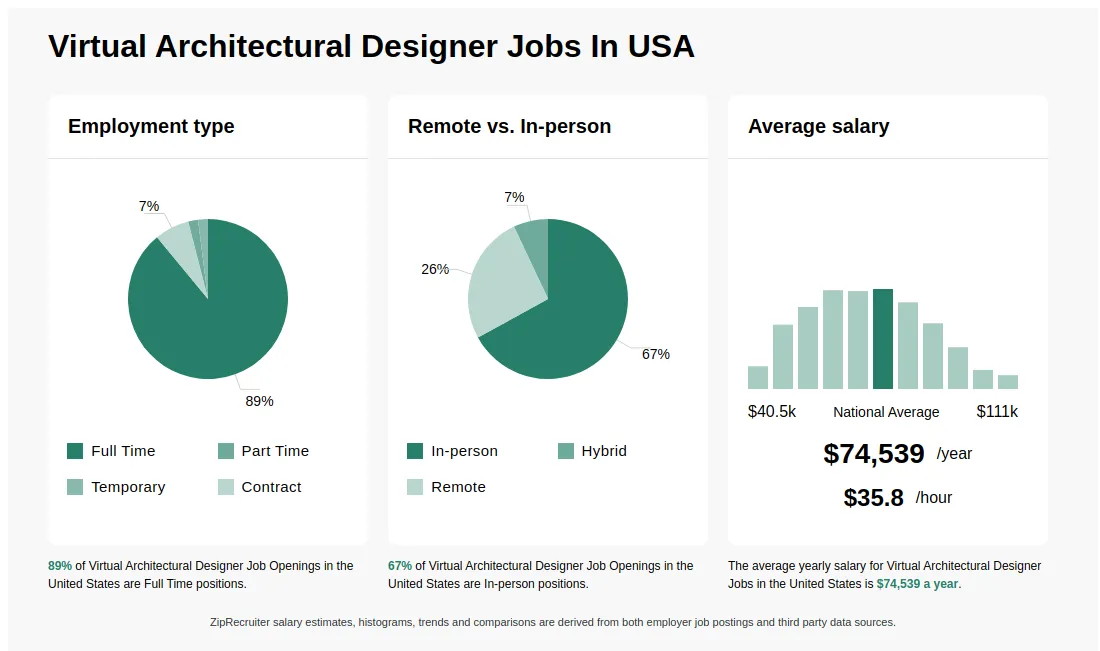
As of May 31, 2026, the average yearly pay for virtual architectural designer in the United States is $74,539.00, according to ZipRecruiter salary data. Most workers in this role earn between $60,000.00 and $85,000.00 per year, depending on experience, location, and employer.

What are the key skills and qualifications needed to thrive as a Virtual Architectural Designer, and why are they important?

To thrive as a Virtual Architectural Designer, you need a strong background in architectural principles, spatial design, and a degree in architecture or a related field. Proficiency in CAD software, BIM tools like Revit, and 3D rendering programs such as SketchUp or Rhino is typically required, along with familiarity with virtual collaboration platforms. Creativity, attention to detail, and effective remote communication are essential soft skills for collaborating with clients and teams online. These skills ensure the delivery of high-quality, innovative designs and seamless project workflow in a remote work environment.

How do Virtual Architectural Designers typically collaborate with clients and team members remotely?

Virtual Architectural Designers often use digital collaboration tools such as video conferencing, shared project management platforms, and cloud-based design software to communicate and share progress with clients and colleagues. Regular virtual meetings, real-time design reviews, and detailed digital documentation help ensure everyone stays aligned throughout the project. This remote setup allows for flexibility but also requires strong communication skills and self-motivation to manage tasks and deadlines effectively. Building rapport with clients virtually can be a challenge, but clear visuals and timely feedback go a long way in maintaining productive relationships.

What is a Virtual Architectural Designer?

A Virtual Architectural Designer is a professional who creates architectural plans, models, and visualizations using computer-aided design (CAD) software and virtual collaboration tools. They often work remotely, collaborating with clients and teams via digital platforms to design buildings, interiors, and landscapes. Their responsibilities include conceptualizing architectural solutions, producing detailed drawings, and sometimes creating 3D renderings or walkthroughs. By leveraging virtual technologies, they can efficiently communicate design ideas and manage projects from anywhere in the world.

What is the difference between Virtual Architectural Designer vs Architectural Drafter?

AspectVirtual Architectural DesignerArchitectural Drafter
CredentialsTypically requires a degree in architecture or design; certifications varyUsually requires a high school diploma or associate degree; technical training
Work EnvironmentRemote or on-site, collaborating with architects and clientsPrimarily office-based, creating technical drawings
Industry UsageDesigning concepts, 3D modeling, client presentationsPreparing detailed construction drawings and plans

The Virtual Architectural Designer focuses on conceptual design, 3D modeling, and client interaction, often working remotely. In contrast, the Architectural Drafter specializes in producing detailed technical drawings for construction. While both roles require knowledge of architectural software, their responsibilities and work environments differ significantly.


More about Virtual Architectural Designer jobs
What cities are hiring for Virtual Architectural Designer jobs? Cities with the most Virtual Architectural Designer job openings:
What are the most commonly searched types of Architectural Designer jobs? The most popular types of Architectural Designer jobs are:
What states have the most Virtual Architectural Designer jobs? States with the most job openings for Virtual Architectural Designer jobs include:
Virtual Designer

Other

Posted 15 days ago


Gaylor Electric rating

7.6

Company rating: 7.6 out of 10

Based on 35 frontline employees who took The Breakroom Quiz

31st of 77 rated construction


Job description

Scope of Work: The Virtual Designer role encompasses a wide range of responsibilities aimed at ensuring the successful design and implementation of project drawings and documentation. This position requires a blend of technical expertise, field coordination, and administrative skills to ensure the smooth execution of design projects from inception to completion.

Responsibilities:

  1. Project Documentation and Drawings:
    • Review and comprehend project documents and drawings.
    • Update and maintain project drawings as needed.
    • Prepare and interpret project ‘Record Drawings’ from field personnel.
    • Copy and coordinate drawing reproductions for various stakeholders.
  2. Field Coordination:
    • Determine and manage required points in the field for installations.
    • Interact with field personnel to resolve design and installation issues.
    • Provide solutions to questions from both office and field personnel.
  3. Collaboration and Meetings:
    • Work independently or in teams to meet company goals.
    • Attend project design meetings with Owners, Architects, and Project Managers.
    • Coordinate with Mechanical, Fire Protection, and Special System Contractors.
  4. Technical Proficiency:
    • Utilize AutoCAD/BIM for 3-D modeling and updating estimating schedules.
    • Regularly back-up drawings and project design information.
    • Maintain a high degree of technical knowledge in electrical construction and computer drafting applications.
  5. Administrative Tasks:
    • Schedule and maintain appointments and meetings.
    • Organize and prioritize workload to meet deadlines.
    • Maintain appropriate records, design files, and documentation.
    • Ensure confidentiality of all information.
  6. Professional Development:
    • Develop personal knowledge and awareness of current market trends.
    • Exhibit strong administrative, computer (Word & Excel), and communication skills.

Minimum Requirements:

  • Education: Education: High school graduate, holder of G.E.D., or equivalent studies/experience. A college degree is preferred.
  • Experience:
    • Entry-level experience with Revit, preferably in the electrical or construction industry.
  • SPECIALIZED SKILLS:
    • Basic knowledge of electrical systems and components.
    • Strong attention to detail and a commitment to accuracy in your work.
    • Effective communication skills, with the ability to work collaboratively within a team.
    • A proactive and eager-to-learn attitude, with a desire to grow in the field of electrical design.

Gaylor Electric, Inc. is an equal opportunity employer including disability and veterans.


What Gaylor Electric employees say

Pay

Benefits

Hours and flexibility

Workplace

Get the full story on Breakroom