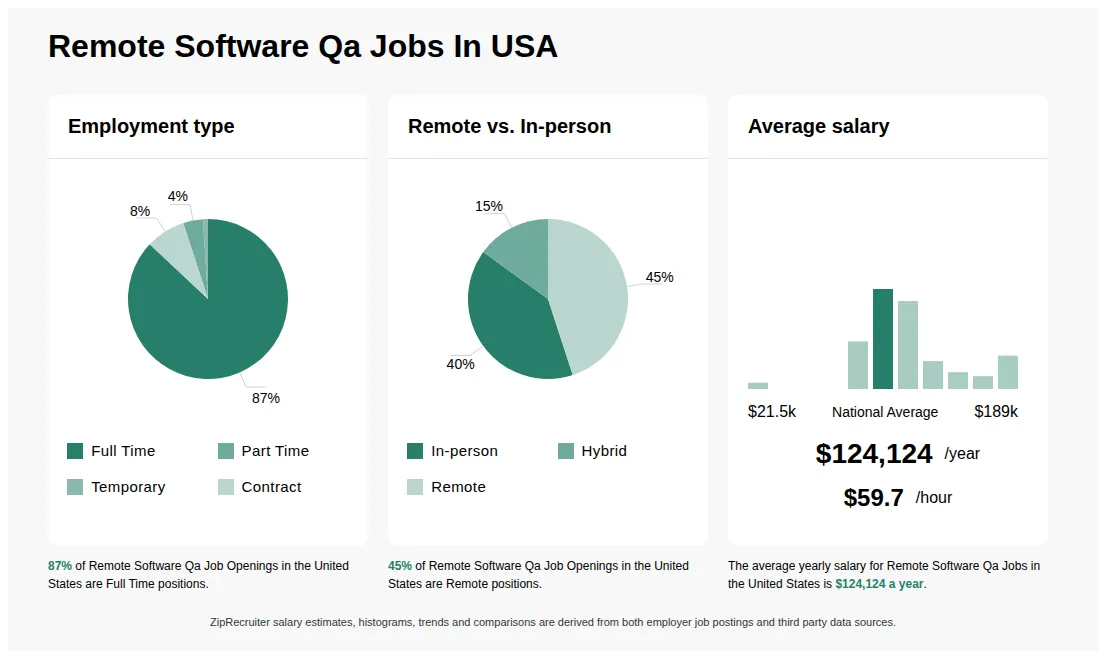
To thrive as a Remote Software QA, you need a solid grasp of software testing methodologies, attention to detail, and experience with quality assurance processes, often supported by a degree in computer science or a related field. Familiarity with test automation tools (like Selenium or Cypress), bug tracking systems (such as JIRA), and certifications like ISTQB can be highly beneficial. Excellent written communication, self-motivation, and strong collaboration skills are crucial for working effectively in a distributed team environment. These competencies ensure accurate defect identification, efficient workflow, and effective coordination, all of which are vital for delivering high-quality software in a remote setting.