1

Radiography Jobs (NOW HIRING)

A Part-Time Radiography Faculty member's responsibilities may include: * Provide X-ray laboratory instruction, including demonstration of radiographic positioning, equipment operation, radiation ...

A Part-Time Radiography Faculty member's responsibilities may include: * Provide X-ray laboratory instruction, including demonstration of radiographic positioning, equipment operation, radiation ...

Radiography Adjunct South College - We are one of the nation's fastest growing institutions of higher learning ... come grow your career with us. In order to fully meet our Mission to our students ...

Radiography Adjunct South College - We are one of the nation's fastest growing institutions of higher learning ... come grow your career with us. In order to fully meet our Mission to our students ...

Description Radiography Adjunct South College - We are one of the nation's fastest growing institutions of higher learning ... come grow your career with us. In order to fully meet our Mission to our ...

Description Radiography Adjunct South College - We are one of the nation's fastest growing institutions of higher learning ... come grow your career with us. In order to fully meet our Mission to our ...

Be Seen First

Film, Computed Radiography (CR), Digital Radiography (DR) & Computed Tomography (CT) Position Overview We are seeking a motivated, talented, and career-driven individual looking to expand their ...

next page

Showing results 1-20

Radiography information

See salary details

$15

$46

$74

How much do radiography jobs pay per hour?

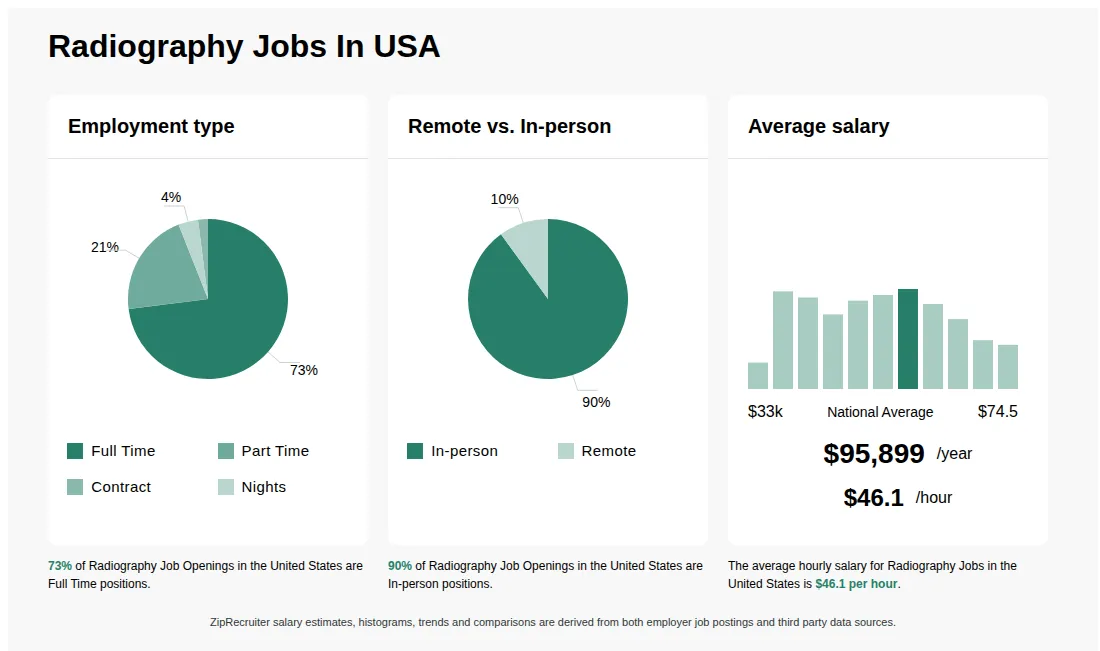
As of May 31, 2026, the average hourly pay for radiography in the United States is $46.11, according to ZipRecruiter salary data. Most workers in this role earn between $31.49 and $57.69 per hour, depending on experience, location, and employer.

What Is Radiography?

Radiography is a branch of medicine that focuses on using radiation or other techniques to create relevant medical images. In this field, you may use imaging equipment that utilizes x-ray, ultrasound, or MRI techniques based on what information doctors think is necessary to make an accurate diagnosis. Radiography is usually used to investigate bones and organs, but several radiography positions exist outside of the medical field. For example, industrial radiography is used to verify the internal structure of assembled products like cars and machines. This can help a company determine whether or not the product is ready to ship. Many radiography machines are safe under normal circumstances but can be dangerous if misconfigured, so technicians must ensure the safe operation of imaging equipment and calling for help if there's a problem with the machine.

What are the key skills and qualifications needed to thrive as a Radiographer, and why are they important?

To thrive as a Radiographer, you need a solid understanding of anatomy, radiologic techniques, and safety protocols, typically supported by an accredited radiography degree and certification such as ARRT. Familiarity with imaging equipment, PACS (Picture Archiving and Communication Systems), and digital radiography software is essential. Excellent attention to detail, communication skills, and patient care abilities help you stand out in the role. These skills ensure accurate diagnostic imaging, patient safety, and effective collaboration with healthcare teams.

What are some common challenges faced by radiographers in a fast-paced healthcare environment?

Radiographers often work in busy hospital settings where they must balance a high volume of imaging requests with the need to ensure patient safety and accurate results. Managing time effectively, maintaining clear communication with physicians and nurses, and adapting to rapidly changing priorities are typical challenges. Additionally, radiographers must stay up-to-date with evolving imaging technologies and adhere strictly to safety protocols to minimize radiation exposure for themselves and patients. These challenges can be rewarding, as they foster strong teamwork and continual learning within the radiology department.

What is the difference between Radiography vs MRI Technologist?

AspectRadiographyMRI Technologist
CredentialsCertification (ARRT), Radiography licenseCertification (ARRT), MRI license
Work EnvironmentHospitals, clinics, imaging centersHospitals, imaging centers, specialized clinics
Job DutiesPerform X-rays to assist diagnosisPerform MRI scans for detailed imaging
Industry UsageCommon in general radiologySpecialized in MRI imaging

Radiography and MRI Technologists both work in medical imaging, requiring similar certifications. Radiography focuses on X-ray imaging, while MRI Technologists operate magnetic resonance imaging equipment for detailed body scans. Both roles are vital in healthcare settings, but they differ in technology and specific procedures.

What cities are hiring for Radiography jobs? Cities with the most Radiography job openings:
What are the most commonly searched types of Radiography jobs? The most popular types of Radiography jobs are:
What states have the most Radiography jobs? States with the most job openings for Radiography jobs include:
Radiography Adjunct

Temporary

Posted 4 days ago


Job description

Radiography Adjunct
Job no: 494406
Work type: Temporary
Location: Elizabethtown, KY
Categories: Temporary
Title: Radiography Adjunct
Work Location: On-Site
FLSA Status: Exempt
College: Elizabethtown Community & Technical College
Campus Location: Elizabethtown CTC
Department: Radiography
Job Summary
Elizabethtown Community & Technical College is seeking a Radiography Adjunct to provide clinical instruction and tutoring to first- and second-year radiography students in the classroom, laboratory or clinical setting.
  • Provide students with an enriched learning experience and environment.
  • Provides group or one-on-one tutoring sessions to address specific student difficulties or questions.
  • Collaborates with the Clinical Coordinator and Program Director to ensure students' success.
  • Conducts hands-on lab sessions where students learn to operate radiographic equipment, practice positioning and analyze imaging results.
  • Preforms demonstrations of radiographic techniques and equipment operation to help students understand concepts visually.
  • Provide guidance and feedback as students practice taking X-rays and interpreting images.
  • Maintain current knowledge with advancements in radiography technology and teaching methodologies through continuing educational and professional development activities.
  • Maintain confidentiality with student records and performance.

Minimum Qualifications
* Associate's Degree in Radiography
* Current ARRT and state license
* Two Years experience in a clinical area
Additional Skills Requested:
Advertised: 05 Aug 2024 Eastern Daylight Time
Applications close:
Whatsapp Facebook LinkedIn Email App