1

Mat Nurse Practitioner Jobs (NOW HIRING)

MAT NP / MOUD NP Review nursing intake screening report and results of validated substance use screening tools. Conduct a multidimensional assessment of patients' medical, psychiatric health, social ...

JOB SUMMARY The MAT Nurse Practitioner at CAmden County DOC specializes in the ambulatory care of inmate patients while maintaining the standard of professional nursing. Nurse Practitioners work with ...

Nurse Practitioner

Baltimore, MD · On-site

$75 - $100/hr

... Treatment (MAT) • Provide and manage MAT services (e.g., buprenorphine, naltrexone) for ... , ANP, or related specialty) • Current CPR/BLS certification Preferred • Experience in ...

Nurse Practitioner

Baltimore, MD · On-site

$75 - $100/hr

Provide and manage MAT services (e.g., buprenorphine, naltrexone) for individuals with substance ... Active Certified Registered Nurse Practitioner (CRNP) license in the State of Maryland * Current ...

Nurse Practitioner ? Inpatient Addiction Medicine | $125K?$145K + $7K Sign-On Job Type Permanent ... Provide comprehensive medical care, including MAT, psychiatric support, and emergency response.

Overview The Nurse Practitioner Manager provides a full range of clinical services while overseeing the Medication Assisted Treatment (MAT) program and managing nurse practitioners and physician ...

next page

Showing results 1-20

Mat Nurse Practitioner information

See salary details

$41.5K

$130.3K

$200K

How much do mat nurse practitioner jobs pay per year?

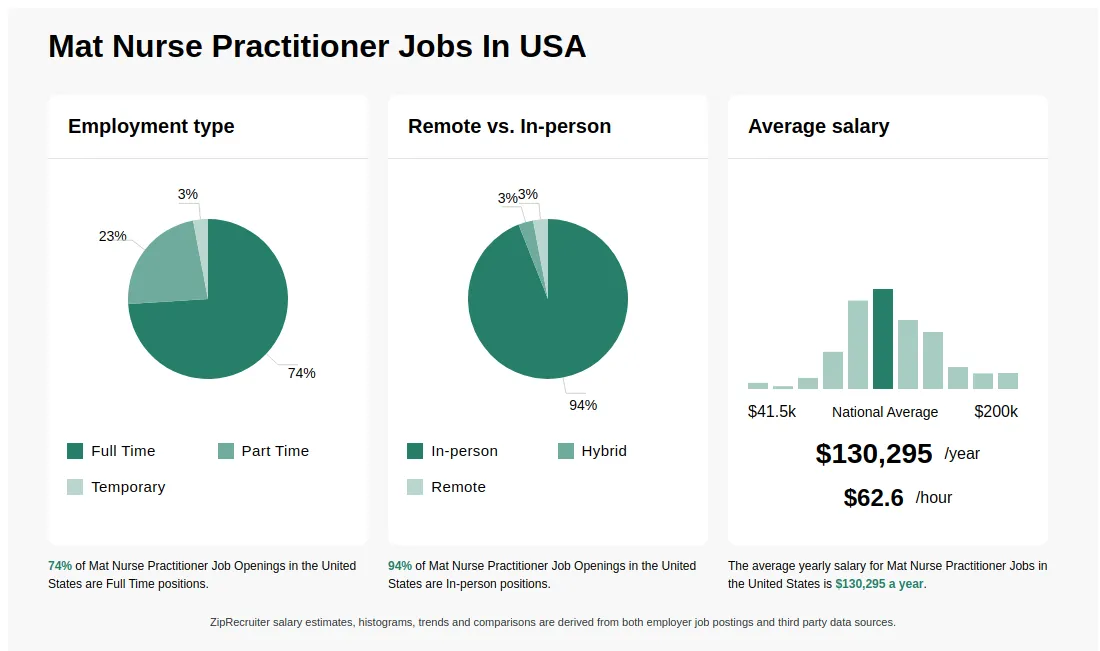
As of Jun 13, 2026, the average yearly pay for mat nurse practitioner in the United States is $130,295.00, according to ZipRecruiter salary data. Most workers in this role earn between $108,000.00 and $150,000.00 per year, depending on experience, location, and employer.

What is a MAT Nurse Practitioner job?

A MAT (Medication-Assisted Treatment) Nurse Practitioner is a specialized healthcare provider who treats patients with substance use disorders, particularly opioid and alcohol dependence. They prescribe and manage medications like buprenorphine, methadone, or naltrexone as part of a comprehensive treatment plan. MAT NPs also provide counseling, patient education, and coordinate care with other healthcare professionals. Their goal is to support recovery, reduce withdrawal symptoms, and prevent relapse while improving overall patient well-being.

Can you make 300K as an NP?

Mat Nurse Practitioners typically earn between $90,000 and $130,000 annually, with higher salaries possible in specialized fields or with extensive experience. Earning $300,000 is uncommon and usually requires advanced certifications, leadership roles, or working in high-demand settings such as private practices or administrative positions. Most NPs do not reach this salary level in standard clinical roles.

What are the key skills and qualifications needed to thrive in the Mat Nurse Practitioner position, and why are they important?

To thrive as a MAT (Medication-Assisted Treatment) Nurse Practitioner, you need advanced clinical expertise in addiction medicine, strong diagnostic abilities, and certification as a Nurse Practitioner, along with appropriate state licensure and specialized training in MAT protocols. Familiarity with electronic health record (EHR) systems, prescription monitoring programs, and knowledge of medications like buprenorphine and methadone are typically required. Compassion, nonjudgmental communication, and motivational interviewing skills help in building trust and supporting patient recovery. These competencies are crucial to ensure safe, effective treatment and foster positive patient outcomes in often sensitive and complex addiction care settings.

How to make $200,000 as an NP?

To earn $200,000 as a nurse practitioner, professionals often work in high-demand specialties such as acute care or anesthesia, gain extensive experience, and may pursue additional certifications. Working in urban or specialized healthcare settings, taking on leadership roles, or working extra shifts can also increase income potential.

What field of NP makes the most money?

Among nurse practitioner specialties, those in acute care, psychiatric-mental health, and neonatal care tend to have the highest salaries due to specialized skills and high demand. These roles often require additional certifications and offer higher compensation compared to primary care or family practice NP positions.

What is a mat nurse practitioner?

A mat nurse practitioner is a registered nurse with advanced training who provides primary and specialized healthcare services, often working in maternal and child health settings. They can diagnose, treat, and prescribe medications, typically requiring certification and licensure in their region.

What does a typical workday look like for a MAT Nurse Practitioner?

A typical day for a MAT Nurse Practitioner involves conducting patient assessments, developing individualized treatment plans, prescribing and managing medications for addiction (such as buprenorphine or methadone), and providing ongoing counseling and education. You will often collaborate closely with physicians, counselors, social workers, and case managers as part of a multidisciplinary care team. The role also includes monitoring patient progress, adjusting treatment protocols as needed, and maintaining thorough documentation within electronic health records. Many MAT Nurse Practitioners find the work rewarding due to the direct impact they make in supporting patients on their recovery journey.

More about Mat Nurse Practitioner jobs
What cities are hiring for Mat Nurse Practitioner jobs? Cities with the most Mat Nurse Practitioner job openings:
What are the most commonly searched types of Mat Nurse Practitioner jobs? The most popular types of Mat Nurse Practitioner jobs are:
What states have the most Mat Nurse Practitioner jobs? States with the most job openings for Mat Nurse Practitioner jobs include:
Infographic showing various Mat Nurse Practitioner job openings in the United States as of June 2026, with employment types broken down into 1% Locum Tenens, 9% As Needed, 23% Full Time, 1% Part Time, 1% Temporary, and 65% Contract. Highlights an 99% Physical, and 1% Remote job distribution, with an average salary of $130,295 per year, or $62.6 per hour.

Other

Posted 7 days ago


Job description

MAT NP / MOUD NP

Review nursing intake screening report and results of validated substance use screening tools. Conduct a multidimensional assessment of patients' medical, psychiatric health, social, substance use, and substance use treatment histories. Establish substance use diagnosis and determine severity using DSM-5 criteria. Perform physical examination and obtain appropriate lab tests to identify comorbidities that interact with or are caused/exacerbated by substance use. Collaborate with patients to develop treatment plans that meet their individual needs and preferences. Initiation, titration, or continuation of MAT medications using evidence-based pharmacological interventions. Address and treat patients' acute medical issues and refer patients with co-occurring chronic medical conditions to other medical providers in ADC. Conduct follow up visits based on the patient's clinical status, treatment compliance and degree of control to optimize patient outcomes and minimize risks. Recovery management checkups to identify and address potential obstacles to recovery and refer patients to CAF, BH and re-entry Services. Maintain accurate and timely documentation of patient encounters, treatment plans, and progress notes in EMR, ensuring compliance with quality standards. Participate in weekly MAT meetings with other medical providers, CSB behavioral health and CAF staff and other stakeholders to provide expert consultation and coordinate care. Support effective transitions in care to ensure uninterrupted MAT medication regimens as patients re-enter the community or transfer to another carceral facilities. Be available for 24-hour on-call availability to provide nurses with counsel, verbal orders, and facilitate MAT releases. Manage alcohol, opioids, benzodiazepines, or other substance intoxication and withdrawal. Utilize SAMHSA guidelines to screen, assess, and provide treatment for pregnant and parenting women with opioid use disorder. Regularly order and maintain stock of MAT medications. Engage in continuous professional development activities, including ongoing education and training, to remain up to date with the latest guidelines in MAT and addiction medicine. Focus on a MOUD chronic care education plan for MAT patients and work with other providers for additional chronic care needs.