1

Training Instructional Designer Jobs (NOW HIRING)

Instructional Designer (Training)

Columbus, GA · On-site

$58K - $78K/yr

The Operations Training Instructional Designer is responsible for designing, developing, implementing, and continuously improving operational training programs that support employee performance ...

Instructional Designer

Norfolk, VA · On-site

$62K - $85K/yr

Produce training materials (for example instructor guides, student guides, handouts and job aids ... Instructional Designer I, II, III - Bachelors level degree inInstructional System Design or ...

Instructional Designer

Mesquite, TX · On-site

$60 - $80/hr

Instructional Designer Full Time Office Mesquite, TX, US Salary Range: $61,689.00 To $72,576.00 ... Ensures training materials align with organizational standards, operational requirements, and ...

next page

Showing results 1-20

Training Instructional Designer information

See salary details

$44K

$79.7K

$124K

How much do training instructional designer jobs pay per year?

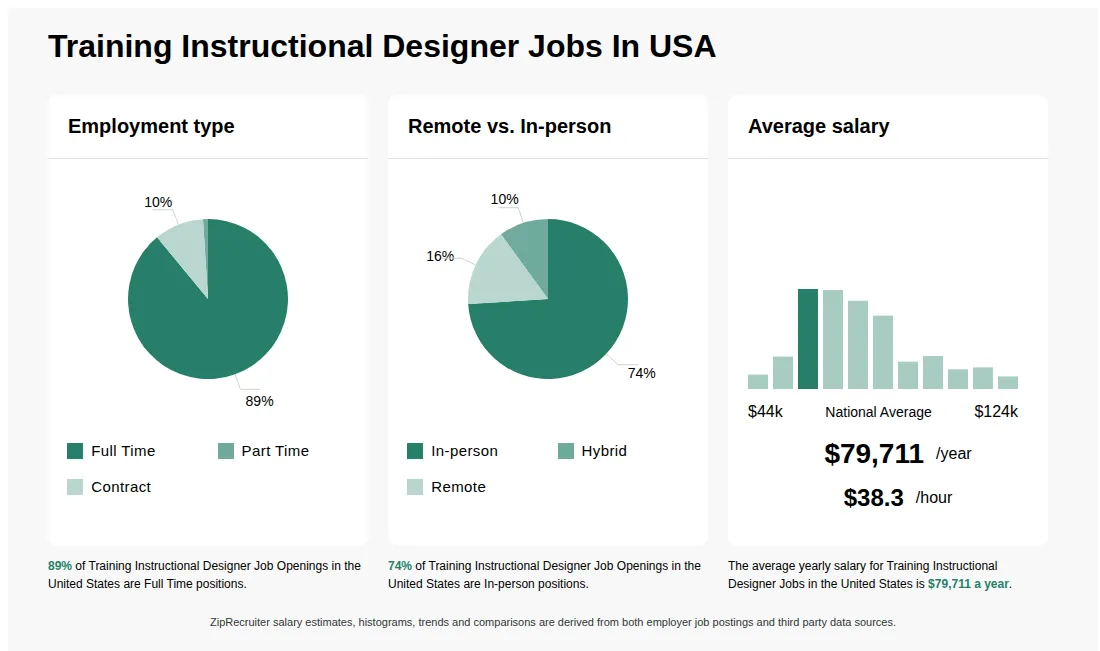
As of Sep 9, 2026, the average yearly pay for training instructional designer in the United States is $79,711.00, according to ZipRecruiter salary data. Most workers in this role earn between $65,000.00 and $88,000.00 per year, depending on experience, location, and employer.

What does a training instructional designer do?

A Training Instructional Designer is responsible for creating educational programs and materials to help learners acquire specific skills or knowledge. They analyze training needs, design engaging learning experiences, develop instructional materials (such as courses, manuals, or e-learning modules), and often assess the effectiveness of training programs. They work closely with subject matter experts and use various instructional technologies to deliver impactful training solutions. Their goal is to ensure that the training is effective, efficient, and aligned with organizational objectives.

What are the key skills and qualifications needed to thrive as a training instructional designer?

To thrive as a Training Instructional Designer, you need expertise in curriculum development, adult learning theories, and instructional design, often supported by a degree in instructional design, education, or a related field. Familiarity with e-learning authoring tools (such as Articulate Storyline or Adobe Captivate), learning management systems (LMS), and instructional technology certifications is highly valuable. Strong communication, creativity, and project management skills help you collaborate effectively and develop engaging learning experiences. These skills are essential for designing impactful training programs that enhance learner engagement and organizational performance.

How does a training instructional designer typically collaborate with subject matter experts (SMEs) during course development?

Training Instructional Designers work closely with subject matter experts to ensure that learning materials are both accurate and engaging. Typically, this collaboration involves conducting interviews or workshops with SMEs to gather content, reviewing drafts together, and iterating on materials to align with learning objectives. Effective communication and project management skills are crucial, as you'll often need to balance SME input with instructional best practices and project deadlines. This collaborative process ensures the final training programs are both informative and accessible to learners.

What is the difference between Training Instructional Designer vs Learning Experience Designer?

AspectTraining Instructional DesignerLearning Experience Designer
CredentialsTypically requires a degree in education, instructional design, or related field; certifications like CPTD or ATD are commonSimilar credentials; often holds degrees in education, instructional design, or instructional technology; certifications like ATD are valued
Work EnvironmentDesigns training programs for corporate, educational, or organizational settingsFocuses on creating engaging, user-centered learning experiences often for digital platforms
Employer & Industry UsageUsed in corporate training, education, government, and non-profitsCommon in e-learning companies, educational technology firms, and corporate digital learning teams

While both roles involve designing learning content, Training Instructional Designers primarily develop structured training programs, whereas Learning Experience Designers focus on creating engaging, learner-centered experiences often in digital environments. The roles overlap in skills and credentials but differ in scope and focus.

Are training instructional designers still in demand?

Training instructional designers are in demand as organizations continue to prioritize employee development and e-learning initiatives. They often use tools like Learning Management Systems (LMS) and instructional design models such as ADDIE, with certifications like CPT or CPL enhancing job prospects. The role is expected to grow alongside the expanding online education and corporate training sectors.

How to get into training instructional design with no experience?

Training instructional designers often start by gaining foundational knowledge through online courses in instructional design, adult learning, or e-learning tools like Articulate or Captivate. Building a portfolio with sample projects, volunteering to create training materials, and obtaining certifications such as the ATD Certification can help demonstrate skills to employers with little or no experience.
More about Training Instructional Designer jobs

What are popular job titles related to Training Instructional Designer jobs?

For Training Instructional Designer jobs, the most frequently searched job titles are:

Infographic showing various Training Instructional Designer job openings in the United States as of September 2026, with employment types broken down into 1% As Needed, 80% Full Time, 18% Part Time, and 1% Contract. Highlights an 88% Physical, 1% Hybrid, and 11% Remote job distribution, with an average salary of $79,711 per year, or $38.3 per hour.

Training Instructional Designer

Hockley, TX • On-site

$58K - $79K/yr

Full-time

Re-posted 10 days ago


Key responsibilities

  • Design, develop, and update training materials such as presentations, e-learning modules, videos, and job aids.

  • Assist in delivering training sessions in both classroom and virtual environments, ensuring engagement and achievement of learning outcomes.

  • Support the management of the Learning Management System (LMS), including course creation, enrollment, tracking, and reporting.


Job description

Main Responsibilities:
1. Instructional Design: Design, develop, and update engaging and effective training materials, including presentations, e-learning modules, videos, job aids, and other resources, utilizing best practices in instructional design and adult learning principles.
Conduct thorough needs assessments to identify knowledge and skill gaps within the organization.
Collaborate with subject matter experts (SMEs) to gather content and ensure accuracy and relevance of training materials.
Utilize various instructional design models (e.g., ADDIE, SAM) to create engaging and interactive learning experiences.
Develop clear learning objectives and outcomes that align with organizational goals and learner needs.
Incorporate multimedia elements, interactive exercises, and assessments to enhance learning retention and engagement.
Stay current with emerging trends and technologies in instructional design to continuously improve training content and delivery methods.
2. Training Program Development: Collaborate with subject matter experts and Director of Training to identify training needs, define learning objectives, and design curriculum for various functional areas and levels within the organization.
Design comprehensive training programs tailored to different departments, roles, and skill levels within the organization.
Create detailed training outlines, lesson plans, and facilitator guides to support consistent delivery of content.
Select appropriate delivery methods and modalities (e.g., instructor-led training, virtual classrooms, self-paced modules) based on learning objectives and audience preferences.
Ensure training materials comply with accessibility standards and accommodate diverse learning styles and needs.
Pilot-test training materials and solicit feedback from participants and stakeholders to iterate and refine content as needed.
3. Training Delivery: Assist in delivery of training sessions in both traditional classroom settings and virtual environments, ensuring content is delivered effectively and engagingly, and that learning outcomes are achieved.
Facilitate engaging and interactive training sessions using effective instructional techniques and adult learning principles.
Foster a supportive and inclusive learning environment where participants feel comfortable asking questions, sharing experiences, and applying new skills.
Provide constructive feedback and coaching to learners to reinforce key concepts and encourage skill development.
Monitor participant engagement and comprehension throughout training sessions and adjust pacing or content delivery as needed.
4. Learning Management System (LMS) Administration: Assist in managing the organization's LMS, including course creation, enrollment, tracking, and reporting, to ensure smooth and efficient delivery of training programs. This will be across the Reach360, Storyline, or any other suitable authoring platform.
Assist with the administration of the organization's LMS, including user management, course enrollment, and reporting functions.
Ensure accurate and up-to-date content within the LMS, including course materials, assessments, and certifications.
Generate reports and analyze training data to track learner progress, evaluate training effectiveness, and identify areas for improvement.
Troubleshoot technical issues related to the LMS and provide user support and training as needed.
5. Evaluation and Continuous Improvement: Conduct post-training evaluations to assess the effectiveness of training programs and make recommendations for improvement. Continuously monitor and update training materials and delivery methods to ensure relevance and effectiveness.
Collect and analyze feedback from participants, managers, and other stakeholders to measure learning outcomes and program satisfaction.
Use evaluation data to identify strengths and areas for improvement in training content, delivery methods, and overall learning experience.
Implement enhancements and refinements to training programs based on evaluation findings and industry best practices.
Regularly review and update training materials to ensure accuracy, relevance, and alignment with organizational goals and objectives.
6. Stakeholder Engagement: Build and maintain relationships with internal stakeholders, including department managers and executives, to understand their training needs and priorities, and to gain buy-in and support for learning initiatives.
7. Compliance and Quality Assurance: Ensure all Team Members have access to LMS and are utilizing their access to maintain compliance as well as maintain a high-quality standard in all training materials and delivery methods.

Main Responsibilities:

1. Instructional Design: Design, develop, and update engaging and effective training materials, including presentations, e-learning modules, videos, job aids, and other resources, utilizing best practices in instructional design and adult learning principles.

  • Conduct thorough needs assessments to identify knowledge and skill gaps within the organization.
  • Collaborate with subject matter experts (SMEs) to gather content and ensure accuracy and relevance of training materials.
  • Utilize various instructional design models (e.g., ADDIE, SAM) to create engaging and interactive learning experiences.
  • Develop clear learning objectives and outcomes that align with organizational goals and learner needs.
  • Incorporate multimedia elements, interactive exercises, and assessments to enhance learning retention and engagement.
  • Stay current with emerging trends and technologies in instructional design to continuously improve training content and delivery methods.

2. Training Program Development: Collaborate with subject matter experts and Director of Training to identify training needs, define learning objectives, and design curriculum for various functional areas and levels within the organization.

  • Design comprehensive training programs tailored to different departments, roles, and skill levels within the organization.
  • Create detailed training outlines, lesson plans, and facilitator guides to support consistent delivery of content.
  • Select appropriate delivery methods and modalities (e.g., instructor-led training, virtual classrooms, self-paced modules) based on learning objectives and audience preferences.
  • Ensure training materials comply with accessibility standards and accommodate diverse learning styles and needs.
  • Pilot-test training materials and solicit feedback from participants and stakeholders to iterate and refine content as needed.

3. Training Delivery: Assist in delivery of training sessions in both traditional classroom settings and virtual environments, ensuring content is delivered effectively and engagingly, and that learning outcomes are achieved.

  • Facilitate engaging and interactive training sessions using effective instructional techniques and adult learning principles.
  • Foster a supportive and inclusive learning environment where participants feel comfortable asking questions, sharing experiences, and applying new skills.
  • Provide constructive feedback and coaching to learners to reinforce key concepts and encourage skill development.
  • Monitor participant engagement and comprehension throughout training sessions and adjust pacing or content delivery as needed.

4. Learning Management System (LMS) Administration: Assist in managing the organization's LMS, including course creation, enrollment, tracking, and reporting, to ensure smooth and efficient delivery of training programs. This will be across the Reach360, Storyline, or any other suitable authoring platform.

  • Assist with the administration of the organization's LMS, including user management, course enrollment, and reporting functions.
  • Ensure accurate and up-to-date content within the LMS, including course materials, assessments, and certifications.
  • Generate reports and analyze training data to track learner progress, evaluate training effectiveness, and identify areas for improvement.
  • Troubleshoot technical issues related to the LMS and provide user support and training as needed.

5. Evaluation and Continuous Improvement: Conduct post-training evaluations to assess the effectiveness of training programs and make recommendations for improvement. Continuously monitor and update training materials and delivery methods to ensure relevance and effectiveness.

  • Collect and analyze feedback from participants, managers, and other stakeholders to measure learning outcomes and program satisfaction.
  • Use evaluation data to identify strengths and areas for improvement in training content, delivery methods, and overall learning experience.
  • Implement enhancements and refinements to training programs based on evaluation findings and industry best practices.
  • Regularly review and update training materials to ensure accuracy, relevance, and alignment with organizational goals and objectives.

6. Stakeholder Engagement: Build and maintain relationships with internal stakeholders, including department managers and executives, to understand their training needs and priorities, and to gain buy-in and support for learning initiatives.

7. Compliance and Quality Assurance: Ensure all Team Members have access to LMS and are utilizing their access to maintain compliance as well as maintain a high-quality standard in all training materials and delivery methods.