1

Flight Simulator Instructor Jobs (NOW HIRING)

Provide early-stage Flight Instruction in a Full Flight Simulator as well as occasional ground ... Previous 121 check airmen. * 121 instructor experience. Additional Information Delegation: In ...

Position Summary As a Simulator Instructor, you will have a direct impact on PSA Airlines' growth ... Provide early-stage Flight Instruction in a Full Flight Simulator as well as occasional ground ...

next page

Showing results 1-20

Flight Simulator Instructor information

See salary details

$25K

$94.6K

$145.5K

How much do flight simulator instructor jobs pay per year?

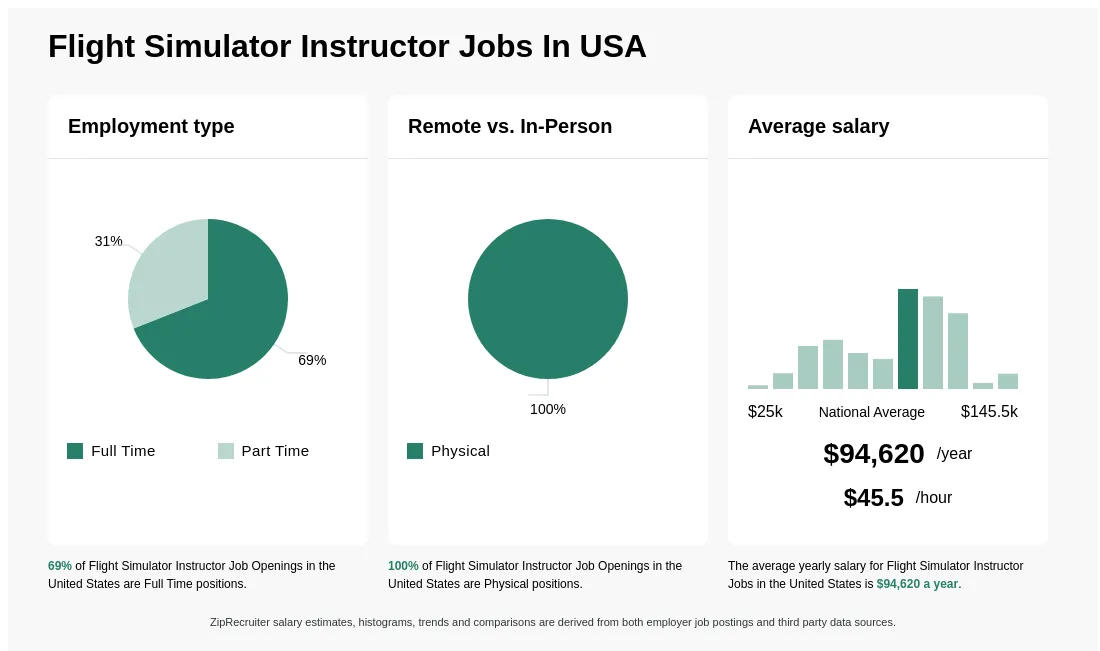
As of Jun 23, 2026, the average yearly pay for flight simulator instructor in the United States is $94,620.00, according to ZipRecruiter salary data. Most workers in this role earn between $69,000.00 and $112,000.00 per year, depending on experience, location, and employer.

What does a Flight Simulator Instructor do?

A Flight Simulator Instructor trains pilots using advanced flight simulation technology, helping them practice procedures, emergency scenarios, and aircraft operations in a safe, controlled environment. They develop lesson plans, conduct training sessions, assess pilot performance, and provide feedback for improvement. These instructors are essential for both new and experienced pilots to maintain their skills and stay updated on aviation regulations and procedures.

What are the key skills and qualifications needed to thrive as a Flight Simulator Instructor, and why are they important?

To thrive as a Flight Simulator Instructor, you need a solid background in aviation, a thorough understanding of aircraft systems, and typically a commercial pilot's license or equivalent flight experience. Familiarity with advanced flight simulation software and systems, as well as certifications such as FAA Flight Instructor or similar credentials, are often required. Strong communication, instructional ability, and patience are crucial soft skills for effectively teaching and assessing pilot trainees. These skills ensure safe, effective training and help pilots develop critical competencies in a controlled environment.

What is the difference between Flight Simulator Instructor vs Flight Instructor?

AspectFlight Simulator InstructorFlight Instructor
Required CertificationsFAA Certified Flight Instructor (CFI), simulator training certificationFAA Certified Flight Instructor (CFI), pilot license
Work EnvironmentFlight simulators, training centers, aviation academiesAircraft, flight schools, training aircraft
Employer & Industry UsageAirlines, flight training centers, militaryFlight schools, private aviation, commercial airlines

Both roles require FAA certification and involve pilot training, but Flight Simulator Instructors focus on simulator-based instruction in controlled environments, while Flight Instructors teach in actual aircraft. The choice depends on whether training occurs in simulators or real flight settings.

What Does a Flight Simulator Instructor Do?

A flight simulator instructor provides instruction to a student training to become a pilot. Your main responsibilities revolve around teaching ground, simulator, and flight operations. Your duties include developing curriculum, providing lessons, reviewing and grading students, monitoring the condition of an aircraft and related equipment, and creating reports on your students. You cover aviation machinery, flying techniques, safety policies and procedures, and FAA regulations. You assist students throughout the course and answer questions to ensure their success. A flight simulator instructor may also help recruit new applicants to the program.

How does a Flight Simulator Instructor typically collaborate with pilots and training teams during simulation sessions?

Flight Simulator Instructors work closely with pilots, both students and experienced crew, by guiding them through realistic scenarios and providing immediate, constructive feedback. They often coordinate with training managers and other instructors to align simulation exercises with regulatory requirements and airline procedures. Effective communication and teamwork are essential, as instructors must adapt to different learning styles and ensure training objectives are met. Collaboration extends to post-session debriefs, where instructors and trainees discuss performance and areas for improvement in a supportive environment.
What cities are hiring for Flight Simulator Instructor jobs? Cities with the most Flight Simulator Instructor job openings:
What are the most commonly searched types of Flight Simulator Instructor jobs? The most popular types of Flight Simulator Instructor jobs are:
What states have the most Flight Simulator Instructor jobs? States with the most job openings for Flight Simulator Instructor jobs include:
Infographic showing various Flight Simulator Instructor job openings in the United States as of June 2026, with employment types broken down into 100% Full Time. Highlights an 97% Physical, 1% Hybrid, and 2% Remote job distribution, with an average salary of $94,620 per year, or $45.5 per hour.

Other

Posted 19 days ago


Job description

Company Description

LOFT is a family-owned Part 142 training center teaching thousands of pilots per year how to fly Citation series jets in full-motion flight simulators.


Role Description

LOFT offers both full-time W2 and 1099 Contractor positions for a Simulator Instructor based in Carlsbad, CA. The Simulator Instructor will provide professional flight instruction to clients, including both theoretical and practical training. Responsibilities include conducting simulator session, and assessing pilot performance to ensure compliance with aviation standards and regulations. Supporting training programs, maintaining accurate training records, and staying up to date with current aviation practices will also be key aspects of this role.


Qualifications

  • An FAA ATP certificate
  • Strong knowledge of Aircraft Systems and their functionalities.
  • Experience operating jet aircraft with either a general aviation, military, or airline background.
  • Exceptional communication and interpersonal skills for effective instruction and interaction with clients.
  • FAA or other recognized instructor certification and prior flight instruction experience are preferred.
  • Ability to adapt to individual learning styles and evaluate trainee progress effectively.
  • Knowledge of safety management systems and aviation regulations is a plus.