1

Electrical Engineer Jobs in Puerto Rico (NOW HIRING)

PR · On-site

$64K - $83K/yr

... Electrical Engineering or related field. · Proven experience in testing engineering within a manufacturing environment. · Strong knowledge of root cause analysis techniques and problem-solving ...

PR · On-site

Bachelor's degree in Mechanical Engineering, Industrial Engineering, Electrical Engineering, Biomedical Engineering, or related field required. * 0-3 years of experience in product engineering ...

PR · On-site

$101K - $139K/yr

Support challenging assignments that include investigating, trouble-shooting, and solving a wide variety of electrical engineering issues. * Prepare reports that present technical and project ...

S. citizen ● Bachelor's degree--preferably in the field of civil, mechanical or electrical engineering General qualifications may vary depending upon whether you're currently serving, whether you ...

S. citizen ● Bachelor's degree--preferably in the field of civil, mechanical or electrical engineering General qualifications may vary depending upon whether you're currently serving, whether you ...

S. citizen ● Bachelor's degree--preferably in the field of civil, mechanical or electrical engineering General qualifications may vary depending upon whether you're currently serving, whether you ...

S. citizen ● Bachelor's degree--preferably in the field of civil, mechanical or electrical engineering General qualifications may vary depending upon whether you're currently serving, whether you ...

next page

Showing results 1-20

Electrical Engineer information

What does an Electrical Engineer do?

An Electrical Engineer designs, develops, tests, and supervises the manufacturing of electrical equipment, such as electric motors, radar and navigation systems, communications systems, and power generation equipment. They work in a variety of industries, including energy, manufacturing, telecommunications, and electronics. Their role often involves problem-solving, project management, and ensuring that systems comply with safety and quality standards. Electrical Engineers also collaborate with other engineers and professionals to bring projects from concept to completion.

What are the key skills and qualifications needed to thrive as an Electrical Engineer, and why are they important?

To thrive as an Electrical Engineer, you need a solid understanding of circuit design, electronics, mathematics, and physics, usually backed by a bachelor's degree in electrical engineering or a related field. Familiarity with CAD software, simulation tools like MATLAB or PSpice, and knowledge of relevant industry standards or certifications (such as a Professional Engineer license) are commonly expected. Strong problem-solving abilities, teamwork, and effective communication skills set outstanding engineers apart. These competencies are critical for designing safe, efficient electrical systems and collaborating effectively on complex engineering projects.

What are some common challenges Electrical Engineers face when working on multidisciplinary project teams?

Electrical Engineers often collaborate with professionals from mechanical, civil, and software engineering backgrounds. A common challenge is ensuring clear communication and alignment of technical specifications, as each discipline may have different priorities and terminologies. Successfully navigating these challenges requires strong teamwork, adaptability, and the ability to translate complex electrical concepts for diverse audiences. Building mutual understanding helps prevent project delays and ensures seamless integration of electrical systems with other components.

What type of work do electrical engineers do?

Electrical engineers design, develop, and test electrical systems and components used in a variety of industries such as power generation, electronics, telecommunications, and automation. They work on projects involving circuit design, control systems, and power distribution, often using tools like CAD software and adhering to safety standards and regulations.

Can I make 200K as an electrical engineer?

Electrical engineers can earn $200,000 or more annually, especially with advanced experience, specialized skills, management roles, or working in high-paying industries like aerospace or energy. Salaries vary based on location, education, certifications, and years of experience, with senior-level engineers and those in leadership positions more likely to reach this income level.

Can you make $500,000 as an electrical engineer?

Electrical engineers typically earn salaries that vary based on experience, location, and industry, with median annual wages around $100,000. Reaching a $500,000 salary usually requires advanced roles such as senior management, specialized consulting, or working in high-paying sectors like aerospace or defense, often combined with extensive experience and advanced certifications. Such high earnings are uncommon for entry- or mid-level positions.

What Do Electrical Engineers Do?

Electrical engineers design, test, and fix devices relating to electricity, electronics, and electromagnetism. An electrical engineer builds virtually every tool in the world that produces, conducts, or operates by way of electricity. Electrical engineers handle the research, design, installation, and handover of new electrical equipment. They also run tests on new devices and solve problems on malfunctioning systems and components. Electrical engineers work with a wide range of electronic equipment, from tiny microchips to supercomputers up to massive power station generators. They have their hands on a myriad of electrical components during their work, including conductors, batteries, capacitors, coils, magnets, transistors, and switches.

What engineers make $500,000?

Senior engineering roles such as petroleum engineers, aerospace engineers, and certain specialized software engineers can earn $500,000 or more annually, often through a combination of base salary, bonuses, and stock options. Achieving this level typically requires extensive experience, advanced skills, and working in high-paying industries or leadership positions.

What is the difference between Electrical Engineer vs Electrical Technician?

AspectElectrical EngineerElectrical Technician
Required CredentialsBachelor's degree in electrical engineering or related fieldAssociate degree or technical diploma in electrical technology
Work EnvironmentDesign, development, and testing of electrical systems, often in offices or labsInstallation, maintenance, and troubleshooting of electrical systems, often on-site
Employer & Industry UsageEngineering firms, manufacturing, power generation, and consultingConstruction, maintenance, and manufacturing industries

Electrical engineers focus on designing and developing electrical systems, requiring a bachelor's degree, while electrical technicians handle installation and maintenance, typically with technical diplomas. Both roles are essential in the electrical industry but differ in responsibilities and educational requirements.

What are the most commonly searched types of Electrical Engineer jobs in Puerto Rico? The most popular types of Electrical Engineer jobs in Puerto Rico are:
What are popular job titles related to Electrical Engineer jobs in Puerto Rico? For Electrical Engineer jobs in Puerto Rico, the most frequently searched job titles are:
What job categories do people searching Electrical Engineer jobs in Puerto Rico look for? The top searched job categories for Electrical Engineer jobs in Puerto Rico are:
What cities in Puerto Rico are hiring for Electrical Engineer jobs? Cities in Puerto Rico with the most Electrical Engineer job openings:
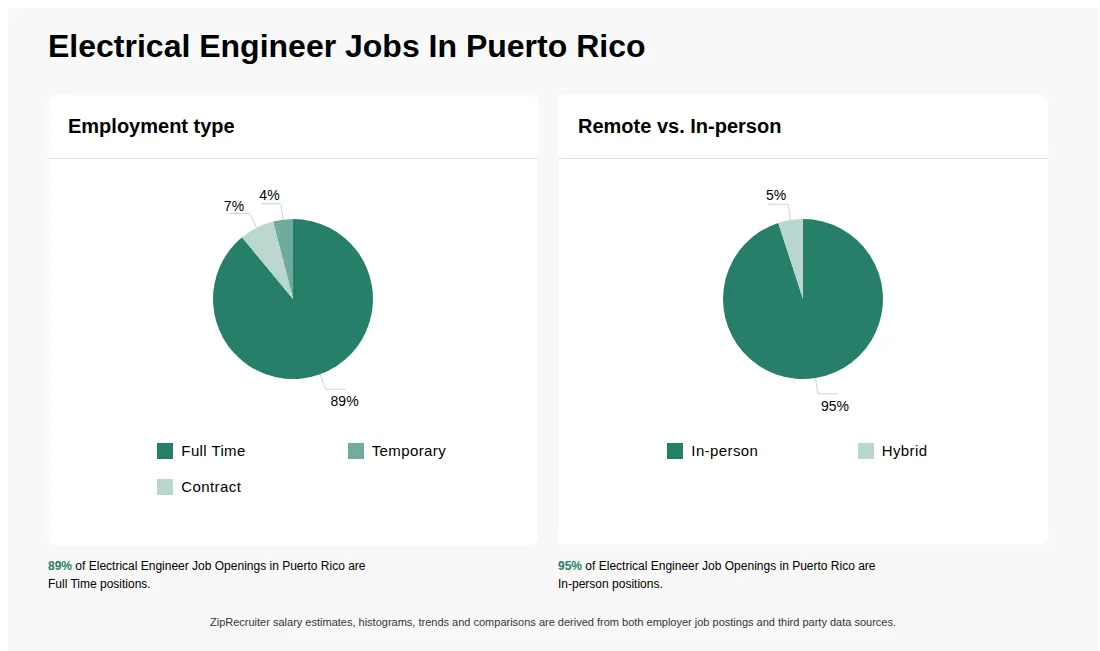
Infographic showing various Electrical Engineer job openings in Puerto Rico as of June 2026, with employment types broken down into 85% Full Time, 4% Part Time, 2% Temporary, and 9% Contract. Highlights an 92% In-person, and 8% Hybrid job distribution.

Quality Engineer

SOLX HOLDINGS LLC

PR • On-site

$64K - $83K/yr

Full-time

Posted 24 days ago


Job description

Job Summary:

The Quality Engineer is responsible for improving product quality and ensuring efficient production operations. This position requires a strong background in mechanical engineering, process engineering, and lean manufacturing principles. If you are passionate about driving improvements in a fast-paced environment and can work collaboratively with cross-functional teams.

Key Responsibilities:

· Conduct root cause analysis to identify and resolve production issues effectively.

· Design and optimize testing equipment to enhance productivity and reduce waste.

· Utilize drawing software for creating detailed engineering drawings and specifications.

· Implement lean manufacturing techniques to streamline operations and improve efficiency.

· Collaborate with tooling engineers to develop and maintain effective tooling solutions.

· And other assigned duties

Requirements:

· Bachelor's degree in Electrical Engineering or related field.

· Proven experience in testing engineering within a manufacturing environment.

· Strong knowledge of root cause analysis techniques and problem-solving methodologies.

· Proficiency in drawing software for design purposes.

· Familiarity with lean manufacturing principles and practices.

· Experience with tooling design and implementation is preferred.

· Excellent communication skills, both verbal and written, with the ability to work collaboratively in a team setting.

· Strong analytical skills with attention to detail.

Preferred Skills (Not Required, but a Plus):

· Experience with CAPA (Corrective and Preventive Actions) and Nonconformance Reports (NR).

· Familiarity with MRB (Material Review Board) processes.

· Knowledge of Document Management and Change Management procedures.

· Understanding UL (Underwriters Laboratories) standards.

· Familiarity with IEC (International Electrotechnical Commission) regulations.