DescriptionThe
University of Washington (UW) Geophysics Group invites applications for a Postdoctoral Scholar to lead high-impact research in multi-hazard, multi-sensor monitoring of geological hazards at Mt Rainier, supported by the UW College of the Environment's Geohazard Initiative. Generous support from Jerry and Linda Paros enables bold, interdisciplinary science to advance our understanding of geological hazards and Earth processes in one of North America's most complex and geologically active regions.
Summary:The postdoc will collaborate closely with
Dr. Marine Denolle and
Dr. Paul Bodin and researchers across UW, eScience Institute, Civil Environmental Engineering, Atmospheric Sciences, Applied Mathematics, and engage with partners such as the USGS Cascades Volcano Observatory and the Pacific Northwest Seismic Network. The person in this position will have access to many resources including:
- Access to petascale computing and cloud-based infrastructure.
- A state-of-the-art UW Fiber Lab for DAS data and Pacific Northwest Seismic Network specialists in multi-sensor networks
- An working environment with a commitment to open science, peer and student mentoring, reproducible workflows, and collaborative tools.
The project's scope includes event detection and classification (earthquakes, landslides, lahars, glacier motion, atmospheric signals), data fusion across sensing modalities, and development of scalable machine learning pipelines. Work will be entirely computational and based in Seattle, with no field deployment responsibilities.
Responsibilities:The postdoc will work on integrating multiple observational data streams for real-time and retrospective analysis of geophysical and environmental hazards. This includes:
- Tiltmeter and rotational sensor data near volcanic edifices.
- Distributed Acoustic Sensing (DAS) on buried and surface-deployed fiber.
- Regional seismic and infrasound networks.
- Hydrological and weather data relevant to understanding processes such as debris flows and glacial melt.
- Volcanic, Tectonic, Hydrologic, and Geotechnical framework of hazards, particularly in urban settings.
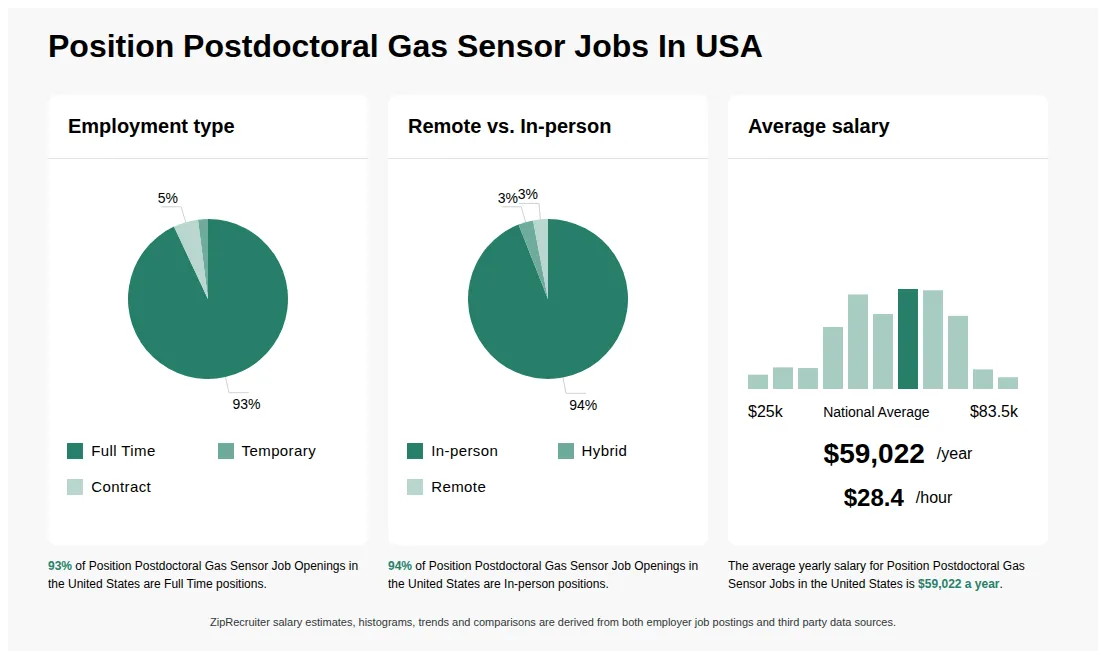
Compensation:This is a full-time appointment. The base salary for this position will be $6,681 per month, commensurate with experience and qualifications, or as mandated by a U.S. Department of Labor prevailing wage determination.
Employee benefits will be provided. The position initially runs for one year subject to renewal after 12 months based on satisfactory progress. The position is available immediately, but the exact start date for the position is negotiable. A start date as soon as possible is highly desirable.
Support is available for computing, publication, and travel to conferences. This position does not involve fieldwork.
Postdoctoral scholars are represented by UAW 4121 and are subject to the collective bargaining agreement, unless agreed exclusion criteria apply. For more information, please visit the University of Washington Labor Relations website at https://hr.uw.edu/labor.
QualificationsUniversity of Washington postdoctoral scholar appointments are for a temporary, defined period not to exceed five years/60 months, including any previous postdoctoral experience.
Minimum Qualifications:- The candidate must have a PhD in a related field, such as seismology, geophysics, or computer science, by the start date of the appointment.
- Demonstrated experience with deep learning methods or sophisticated mathematical frameworks applied to large-scale or scientific datasets.
- Experience working with observational seismology data (e.g., DAS, broadband networks).
- Proficiency in open-source, version-controlled environments (Python, git, conda).
- Comfort with cloud/HPC workflows in a Unix-based environment.
Preferred Qualifications:- Ideally, the candidate Familiarity with infrasound, tilt, or rotational seismic data.
- Interest in hydrology, meteorological, or environmental sensor integration.
- Experience building scalable ML pipelines or deploying ML in real-time contexts.
We seek a candidate who is enthusiastic and comfortable with computational challenges, curious about Earth system processes, eager to work across disciplinary boundaries and committed to reproducibility, collaboration, and open science practices.
Application Instructions Submit the following materials via Interfolio:- A CV (GitHub or equivalent portfolio links welcome)
- A 1-2-page research statement outlining your experience and how it aligns with multi-sensor, multi-hazard monitoring
- Copies or links to two representative publications
- The names and contact information of three references.
Applications received before January 5, 2026 will receive higher priority but the position will remain open for applications beyond this date until filled. Shortlisted applicants will be invited to present a remote seminar to the UW Earthquake Science community
Equal Employment Opportunity StatementEqual OpportunityThe University of Washington is committed to fostering an inclusive, respectful and welcoming community for all. As an equal opportunity employer, the University considers applicants for employment without regard to race, color, creed, religion, national origin, citizenship, sex, pregnancy, age, marital status, sexual orientation, gender identity or expression, genetic information, disability, or veteran status consistent with UW Executive Order No. 81.
Benefits InformationThe University is committed to providing excellent benefits to our faculty. For a summary of available benefits, please see UWHR benefits information.
Privacy NoticeYour application materials may be used for employment consideration and shared in accordance with UW's Privacy Policy.
Disability ServicesThe University of Washington is committed to providing access and reasonable accommodation in its services, programs, activities, education, and employment for individuals with disabilities. To request disability accommodation in the application process, contact the Disability Services Office at 206-543-6450 or dso@uw.edu.