1

Marine Biologist Jobs (NOW HIRING)

Bachelor's degree in a natural science (e.g., Marine Biology, Fisheries Science, Ecology, Environmental Science, or related field). * Ability to work independently at sea for extended periods (up to ...

... biology, marine biology, natural resource management, conservation biology, or a closely related field.A relevant degree may be substituted by two (2) additional years of relevant work experience.

Bachelor 's degree or higher in a natural science (e.g., Marine Biology, Fisheries Science, Ecology, or Environmental Science).Extensive observer experience - typically 3+ years as a certified NOAA ...

Bachelor's degree or higher in a natural science (e.g., Marine Biology, Fisheries Science, Ecology, or Environmental Science). * Extensive observer experience - typically 3+ years as a certified NOAA ...

Showing results 21-40

Marine Biologist information

See salary details

$11K

$43.4K

$61K

How much do marine biologist jobs pay per year?

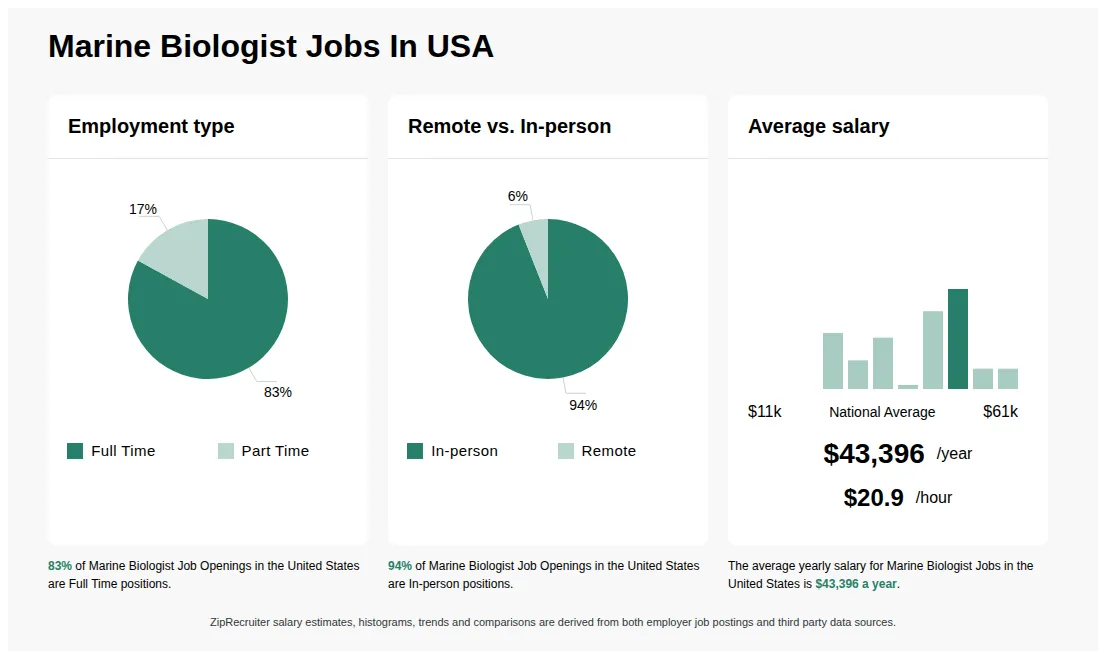
As of Aug 8, 2026, the average yearly pay for marine biologist in the United States is $43,396.00, according to ZipRecruiter salary data. Most workers in this role earn between $34,000.00 and $48,500.00 per year, depending on experience, location, and employer.

What is a marine biologist?

Marine biologists study the ocean and all ocean life. The job of a marine biologist is to research organisms in their natural water habitats. These organisms may include various species of plants and animals, such as whales, dolphins, plankton, and seaweed to name a few.

What is the difference between Marine Biologist vs Marine Ecologist?

AspectMarine BiologistMarine Ecologist
Required CredentialsBachelor's or Master's in Marine Biology or related fieldBachelor's or Master's in Marine Biology, Ecology, or Environmental Science
Work EnvironmentResearch labs, oceanic research vessels, coastal areasFieldwork in marine habitats, research labs, environmental agencies
Employer & IndustryUniversities, research institutions, government agenciesEnvironmental organizations, government agencies, research institutions
Common Search & ComparisonOften compared for research roles in marine lifeFocuses on ecosystem interactions and environmental impact

Marine Biologists study marine organisms and their behaviors, often focusing on individual species or groups. Marine Ecologists examine the relationships within marine ecosystems, emphasizing environmental interactions and ecosystem health. While both roles require similar educational backgrounds and work environments, Marine Biologists tend to focus on species-specific research, whereas Marine Ecologists analyze broader ecological systems.


What are the key skills and qualifications needed to thrive as a marine biologist, and why are they important?

To thrive as a Marine Biologist, you need a solid background in biology, ecology, and oceanography, typically supported by a relevant degree and research experience. Proficiency with data analysis software, laboratory equipment, and field research tools like GPS and sonar is commonly required. Strong observational skills, teamwork, and effective communication help marine biologists excel in collaborative research and public outreach. These competencies are crucial for conducting accurate scientific studies, advancing marine conservation, and sharing findings with stakeholders.

What are some common challenges marine biologists face when conducting field research?

Marine biologists often encounter challenges such as unpredictable weather conditions, difficult access to remote study sites, and the need to operate specialized equipment in harsh marine environments. Additionally, obtaining permits for research in protected areas and ensuring minimal disturbance to sensitive ecosystems can be complex. Collaboration with multidisciplinary teams and adaptability are essential for overcoming these obstacles and ensuring successful data collection.
What cities are hiring for Marine Biologist jobs? Cities with the most Marine Biologist job openings:
What are the most commonly searched types of Marine Biologist jobs? The most popular types of Marine Biologist jobs are:
Who are the top companies hiring for Marine Biologist jobs? The top employers for Marine Biologist jobs are:
What states have the most Marine Biologist jobs? States with the most job openings for Marine Biologist jobs include:
What are popular job titles related to Marine Biologist jobs? For Marine Biologist jobs, the most frequently searched job titles are:
Infographic showing various Marine Biologist job openings in the United States as of August 2026, with employment types broken down into 96% Full Time, 3% Part Time, and 1% Contract. Highlights an 98% Physical, 1% Hybrid, and 1% Remote job distribution, with an average salary of $43,396 per year, or $20.9 per hour.

Fishery Observer I

Think Tank, Inc.

Key Biscayne, FL โ€ข On-site

Contractor

Re-posted 15 days ago


Job description

*Authorized to work in the US Required (US Citizen Preferred)

*Onsite at a SEFSC Facility (TX, FL, Gulf of Mexico, South Atlantic, or Caribbean)

*Proposal Effort: Position is Subject to Contract Award

*Must be able to provide 3 professional references

POSITION DESCRIPTION:

The Fishery Observer I supports NOAA's mission to conserve and manage marine resources by collecting high-quality fishery and environmental data aboard commercial fishing vessels operating in the Southeast United States, Gulf of Mexico, and Caribbean. Observers are critical in ensuring sustainable fisheries and healthy marine ecosystems through direct data collection and scientific observation.

You will work independently aboard commercial vessels to document fishing operations, collect biological samples, record species data, and monitor interactions with protected species. This is a demanding but rewarding opportunity to contribute directly to marine conservation science.

RESPONSIBILITIES:

  • Collect scientific, management, and compliance data at sea through direct observation of fishing operations, including sampling catch, measuring fish, and documenting bycatch species such as sea turtles and marine mammals.
  • Interview vessel captains and crew to obtain accurate fishing effort and gear information.
  • Record and enter data using standardized electronic and written formats in accordance with NOAA's Observer Sampling Manual.
  • Collect biological samples for use in stock assessments, including tissue, otolith, and specimen samples.
  • Conduct safety checks using the Pre-Trip Vessel Safety Checklist and ensure compliance with U.S. Coast Guard regulations.
  • Maintain equipment and ensure all sampling and safety gear is accounted for and in proper working order.
  • Assist NOAA staff in debriefings and data verification sessions following deployments.
  • May tag species of interest including sharks, tunas, sablefish, spiny lobsters, swordfish and sea turtles.
  • May observe and document compliance with fishery
    regulations, and may write affidavits. May camp at remote sites and may operate All-Terrain Vehicles (ATV's)
    and skiffs.

REQUIREMENTS:

  • Bachelor's degree in a natural science (e.g., Marine Biology, Fisheries Science, Ecology, Environmental Science, or related field).
  • Ability to work independently at sea for extended periods (up to several weeks) without medical restrictions.
  • Excellent communication skills (verbal and written) in English.
  • Current CPR and First Aid certifications (must be renewed annually).
  • Physical fitness sufficient to perform duties aboard vessels, including climbing ladders, lifting up to 50 lbs, and enduring rough sea conditions
  • Previous experience working on or around commercial fishing vessels.
  • Familiarity with fish identification, marine sampling techniques, or data collection methods.
  • Understanding of NOAA's fisheries monitoring and marine conservation mandates (MSA, MMPA, ESA).

Please contact hr@ttinc.com if you have any questions or concerns.