This person is involved in all engineering activities associated with our excitation business in the US, Canada and Americas. Position requires engineer to travel up to 90% of his time and stay for ...
This person is involved in all engineering activities associated with our excitation business in the US, Canada and Americas. Position requires engineer to travel up to 90% of his time and stay for ...
Field Excitation Engineer
Alpharetta, GA · On-site
This person is involved in all engineering activities associated with our excitation business in the US, Canada and Americas. Position requires engineer to travel up to 90% of his time and stay for ...
Field Excitation Engineer
Alpharetta, GA · On-site
This person is involved in all engineering activities associated with our excitation business in the US, Canada and Americas. Position requires engineer to travel up to 90% of his time and stay for ...
Field Excitation Engineer
Alpharetta, GA · On-site
This person is involved in all engineering activities associated with our excitation business in the US, Canada and Americas. Position requires engineer to travel up to 90% of his time and stay for ...
Quick apply
Field Excitation Engineer
Alpharetta, GA · On-site
This person is involved in all engineering activities associated with our excitation business in the US, Canada and Americas. Position requires engineer to travel up to 90% of his time and stay for ...
GE Vernova's Gas Power business engineers advanced, efficient natural gas-powered technologies and ... The TFA - Electrical Excitation is responsible for the Power Turbine Generator Excitation System ...
GE Vernova's Gas Power business engineers advanced, efficient natural gas-powered technologies and ... The TFA - Electrical Excitation is responsible for the Power Turbine Generator Excitation System ...
GE Vernova's Gas Power business engineers advanced, efficient natural gas-powered technologies and ... The TFA - Electrical Excitation is responsible for the Power Turbine Generator Excitation System ...
GE Vernova's Gas Power business engineers advanced, efficient natural gas-powered technologies and ... The TFA - Electrical Excitation is responsible for the Power Turbine Generator Excitation System ...
GE Vernova's Gas Power business engineers advanced, efficient natural gas-powered technologies and ... Familiar with excitation, controls, or mechanical operation, and control philosophies * Self ...
GE Vernova's Gas Power business engineers advanced, efficient natural gas-powered technologies and ... Familiar with excitation, controls, or mechanical operation, and control philosophies * Self ...
GE Vernova's Gas Power business engineers advanced, efficient natural gas-powered technologies and ... Familiar with excitation, controls, or mechanical operation, and control philosophies * Self ...
GE Vernova's Gas Power business engineers advanced, efficient natural gas-powered technologies and ... Familiar with excitation, controls, or mechanical operation, and control philosophies * Self ...

Generator Protection & Excitation System Design Engineer Houston, TX. (Onsite) Any VISA Fulltime /permanent role Mandatory Skills: Supervisory Control and Data Acquisition (SCADA),Systems Engineering ...
Quick apply
Generator Protection & Excitation System Design Engineer Houston, TX. (Onsite) Any VISA Fulltime /permanent role Mandatory Skills: Supervisory Control and Data Acquisition (SCADA),Systems Engineering ...

Electrical Engineer
Rothschild, WI · On-site
Configuration of excitation and protective relay systems. * Create and implement O&M/FAT/SAT ... Ensure system engineering is complete prior to handing off work for detailed engineering and design.
Electrical Engineer
Rothschild, WI · On-site
Configuration of excitation and protective relay systems. * Create and implement O&M/FAT/SAT ... Ensure system engineering is complete prior to handing off work for detailed engineering and design.
Configuration of excitation and protective relay systems. * Create and implement O&M/FAT/SAT ... Ensure system engineering is complete prior to handing off work for detailed engineering and design.
Configuration of excitation and protective relay systems. * Create and implement O&M/FAT/SAT ... Ensure system engineering is complete prior to handing off work for detailed engineering and design.
Configuration of excitation and protective relay systems. * Create and implement O&M/FAT/SAT ... Ensure system engineering is complete prior to handing off work for detailed engineering and design.
Configuration of excitation and protective relay systems. * Create and implement O&M/FAT/SAT ... Ensure system engineering is complete prior to handing off work for detailed engineering and design.
Electrical Engineer
Appleton, WI · On-site
Configuration of excitation and protective relay systems. * Create and implement O&M/FAT/SAT ... Ensure system engineering is complete prior to handing off work for detailed engineering and design.
Electrical Engineer
Appleton, WI · On-site
Configuration of excitation and protective relay systems. * Create and implement O&M/FAT/SAT ... Ensure system engineering is complete prior to handing off work for detailed engineering and design.

Generator Controls Systems Engineer
Greenville, SC · Remote
$90K - $110K/yr
Apply electrical and mechanical engineering principles to analyse, design, test, and troubleshoot ... Take full ownership of nuclear generator excitation control systems from concept to delivery.
Quick apply
Generator Controls Systems Engineer
Greenville, SC · Remote
$90K - $110K/yr
Apply electrical and mechanical engineering principles to analyse, design, test, and troubleshoot ... Take full ownership of nuclear generator excitation control systems from concept to delivery.

Controls - Electrical Engineer
$79K - $105K/yr
Minimum 1 years of engineering experience with excitation or power electronics hardware and/or software control systems * Willing to relocate to the Longmont/Denver, CO area. Desired Characteristics ...
Controls - Electrical Engineer
$79K - $105K/yr
Minimum 1 years of engineering experience with excitation or power electronics hardware and/or software control systems * Willing to relocate to the Longmont/Denver, CO area. Desired Characteristics ...

The replacement EX2100e excitation system sizes range from 35A voltage regulators to 8000A full ... The Lead Engineer/Technologist will be responsible for providing technical support to sales and to ...
The replacement EX2100e excitation system sizes range from 35A voltage regulators to 8000A full ... The Lead Engineer/Technologist will be responsible for providing technical support to sales and to ...

NVH Engineer
Palo Alto, CA · On-site
$180K - $210K/yr
Understanding of electric motor NVH, including electromagnetic excitation, stator mounting, rotor ... clearly to engineers and leadership. The salary for this position ranges from$180,000 - $210 ...
NVH Engineer
Palo Alto, CA · On-site
$180K - $210K/yr
Understanding of electric motor NVH, including electromagnetic excitation, stator mounting, rotor ... clearly to engineers and leadership. The salary for this position ranges from$180,000 - $210 ...
Controls - Electrical Engineer
Longmont, CO · On-site
$79K - $105K/yr
Quest Global delivers world-class end-to-end engineering solutions by leveraging our deep industry ... Develop, configure, and test excitation control software. Support software and hardware FAT.
Controls - Electrical Engineer
Longmont, CO · On-site
$79K - $105K/yr
Quest Global delivers world-class end-to-end engineering solutions by leveraging our deep industry ... Develop, configure, and test excitation control software. Support software and hardware FAT.
Controls - Electrical Engineer
Greenville, SC · On-site
$75K - $100K/yr
Quest Global delivers world-class end-to-end engineering solutions by leveraging our deep industry ... Develop, configure, and test excitation control software. Support software and hardware FAT.
Controls - Electrical Engineer
Greenville, SC · On-site
$75K - $100K/yr
Quest Global delivers world-class end-to-end engineering solutions by leveraging our deep industry ... Develop, configure, and test excitation control software. Support software and hardware FAT.
Controls - Electrical Engineer
Longmont, CO · On-site
$79K - $105K/yr
Minimum 1 years of engineering experience with excitation or power electronics hardware and/or software control systems * Willing to relocate to the Longmont/Denver, CO area. Desired Characteristics ...
Controls - Electrical Engineer
Longmont, CO · On-site
$79K - $105K/yr
Minimum 1 years of engineering experience with excitation or power electronics hardware and/or software control systems * Willing to relocate to the Longmont/Denver, CO area. Desired Characteristics ...
$77K - $95K/yr
MSc or PhD in Robotics, Mechanical Engineering, Electrical Engineering, or a related field with a ... System identification on physical robotic systems: excitation trajectory design, least-squares or ...
$77K - $95K/yr
MSc or PhD in Robotics, Mechanical Engineering, Electrical Engineering, or a related field with a ... System identification on physical robotic systems: excitation trajectory design, least-squares or ...
Excitation Engineer information
See salary details
$19.95 - $24.17
3% of jobs
$24.17 - $28.39
7% of jobs
$31.80 is the 25th percentile. Wages below this are outliers.
$28.39 - $32.60
18% of jobs
$32.60 - $36.82
21% of jobs
The median wage is $36.93 / hr.
$36.82 - $41.04
21% of jobs
$43.03 is the 75th percentile. Wages above this are outliers.
$41.04 - $45.26
9% of jobs
$45.26 - $49.48
7% of jobs
$49.48 - $53.69
5% of jobs
$53.69 - $57.91
3% of jobs
$57.91 - $62.13
2% of jobs
$62.13 - $66.35
2% of jobs
$19
$40
$66
How much do excitation engineer jobs pay per hour?
As of Sep 13, 2026, the average hourly pay for excitation engineer in the United States is $40.43, according to ZipRecruiter salary data. Most workers in this role earn between $32.21 and $45.67 per hour, depending on experience, location, and employer.
What is an excitation engineer?
Excitation Engineers are professionals who specialize in the design, installation, maintenance, and troubleshooting of excitation systems used in electrical generators, particularly in power plants. These systems are critical for controlling the voltage and stability of generators by regulating the field current. Excitation Engineers ensure that generators operate efficiently and safely, and they often work with complex control systems, protective relays, and automation technologies. Their expertise is essential for maintaining reliable power generation and complying with industry standards.
What are the key skills and qualifications needed to thrive as an excitation engineer, and why are they important?
To thrive as an Excitation Engineer, you need a solid background in electrical engineering, with expertise in power systems, control theory, and typically a relevant engineering degree. Familiarity with excitation control systems, PLCs, SCADA, and industry standards like IEEE are essential, and certifications in these areas can be advantageous. Strong analytical thinking, problem-solving abilities, and effective communication help engineers excel in troubleshooting and collaborating with multidisciplinary teams. These skills and qualifications are vital to ensure reliable generator performance, system stability, and safe operation in power generation environments.
What are the most common challenges an excitation engineer faces when working on generator systems?
Excitation Engineers often encounter challenges such as troubleshooting complex control systems, ensuring reliable voltage regulation, and integrating new excitation equipment with existing generators. They must frequently collaborate with maintenance teams, system operators, and commissioning engineers to diagnose issues and implement solutions while minimizing downtime. Adapting to evolving technologies and strict safety standards is also a key part of the role, requiring ongoing learning and flexibility.
What is the difference between Excitation Engineer vs Power Systems Engineer?
| Aspect | Excitation Engineer | Power Systems Engineer |
|---|---|---|
| Required Credentials | Bachelor's degree in Electrical Engineering, certifications in power systems or control systems | Bachelor's or higher in Electrical Engineering, often with specialization in power systems |
| Work Environment | Power plants, electrical substations, manufacturing facilities | Utility companies, consulting firms, power generation plants |
| Industry Usage | Design, testing, and maintenance of excitation systems for generators | Design and analysis of entire power systems, including generation, transmission, and distribution |
Excitation Engineers focus specifically on the excitation systems of generators, ensuring proper voltage regulation and stability. Power Systems Engineers have a broader role, working on the overall design, analysis, and optimization of electrical power networks. While both roles require electrical engineering expertise, Excitation Engineers specialize in generator excitation systems, whereas Power Systems Engineers handle larger-scale power infrastructure.
More about Excitation Engineer jobs
What states have the most Excitation Engineer jobs?
States with the most job openings for Excitation Engineer jobs include:
What are popular job titles related to Excitation Engineer jobs?
For Excitation Engineer jobs, the most frequently searched job titles are:


Field Excitation Engineer
Alpharetta, GA
IS International Services
• Utilities • 11 - 50 employees11 - 50 employees
Full-time
Re-posted 11 days ago
Job description
Field Service is specifically responsible to start-up commissioning Excitation Systems and in addition will support engineering and assist with factory test products. Familiar with the technologies for static and brushless excitation turbine generators of combustion turbines, steam as well as hydro units.
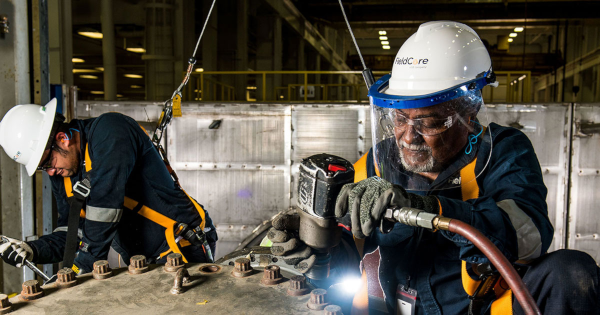
This person is involved in all engineering activities associated with our excitation business in the US, Canada and Americas. Position requires engineer to travel up to 90% of his time and stay for extended time (~ 6 weeks) on jobsites. There is allowance for Field Engineer to return home every third weekend subject to jobsite activities and at least one more week of that assignment. Field engineer is expected to work in non-air conditioned and high humidity environments during the removal of the old equipment and installation of the new equipment. Fire Resistant Clothing (being long sleeve and trousers), safety glasses, steel toe dielectric boots and hard hat are required during site visits (90% of field engineer's on-site time). Due to construction, work environment is dusty or muddy. Work environment may have excessive amount of noise due to rotating combustion turbine operation coupled with generators requiring hearing protection devices. Especially during removal and installation of the equipment, machine grinder will be operating to cut the welding/bolts of the cabinets and a welding machine may need to be used during installation which generates high noise, small metal pieces and stress on the eyes due to flash / bright light emissions. Hazard protection is required for such conditions. Company will provide proper PPE.
Field engineer should be able to lift 50lb which is the weight of Thyristor block assembly. Most of the tool boxes weight around 45lb to 75lb and may need to be carried up to turbine deck climbing up stairs.
Due to nature of the service job, Field engineer will need to be available for travel on short notice regardless of the time of the day or day of the week.
Outages on sites are kept as short as possible to be productive so this requires extended work hours and/or shift work/night work. Company policy is a maximum of sixteen (16) hours of work in a twentyfour period with a minimum of eight (8) of rest time in addition to the jobsite travel time. Field engineer should be able to travel to job sites by airplane or by car.
Field engineers are required to have a vehicle drivers' license and should be able to drive to the work location and back to the resting location (home/hotel).
Our company provides supports to our customers outside of the U.S.A. Field engineer must have a valid passport and appropriate Visa paperwork (company sponsored) and should not be restricted with their travel to other countries for extended amount of time. Travel is mostly in South America (Mexico, Brazil, Venezuela, Peru, Trinidad and other countries), Canada and it is not uncommon to travel to Saudi Arabia and South Korea for installation and commissioning jobs. Some of the commissioning jobs in foreign countries may require field engineer to stay in Man Camps located in the construction site and usually it not close to a major city or facilities. Medical immunizations may be required for foreign travel.
Field Service Engineer will be responsible for:
- Installation of electrical equipment on site
- Testing electrical equipment and providing test reports
- Provide timesheets and expense reports in timely manner
- Providing training to the customer on site and in classroom
- Troubleshooting complex problems independently
- Write and follow procedures
- Provide feedback to the engineering department
- To provide phone support to our customers
- Work with Service manager and project managers to provide solutions
- Work with our suppliers, vendors, craft labor and contractors
- Follow our safety policy and OSHA regulations
Requirements
Required Knowledge/Skills, Education, and Experience
- Field Service Engineer should have Bachelors degree in Electrical Engineering or other equivalent
- engineering disciplines (Electrical and Electronic, Controls etc.)
- 5+ years experience in Electrical engineering
- Working knowledge of computers and various programming languages
Preferred Knowledge/Skills, Education, and Experience
- Experience in Electrical Power Systems including: MV/LV Switchgear, HV/MV/LV Transformers, UPS/DC systems, Generator Circuit Breakers, Generator Bus Ducts and Emergency Power Systems is a plus.
The Field Service Engineer should have experience and skills in various Unit & Generator Auxiliary Systems as following:
- Start-up Frequency Converter
- Automatic Voltage Regulation
- Excitation Systems - Static and Brushless
- Synchronization
- Generator Protection
- Transformer Protection along with Measuring & Metering

About is International Services
Sourced by ZipRecruiter
Industry
Utilities
Company size
11 - 50 Employees
Headquarters location
Atlanta, GA, US
Year founded
1997