1

Energy Trading Jobs (NOW HIRING)

Build or manage a Energy Trading (Power, Oil, Gas, etc.) or run a solo trade, utilizing strategies ... that could include market making, taking, systematic, semi-systematic, or discretionary approaches.

Be Seen First

We are a consulting firm with a focus on supporting the software developments of international energy trading industry in establishing and growing their operations in the United States. Our expertise ...

Be Seen First

We are a consulting firm with a focus on supporting the software developments of international energy trading industry in establishing and growing their operations in the United States. Our expertise ...

next page

Showing results 1-20

Energy Trading information

See salary details

$110K

$157.5K

$201.5K

How much do energy trading jobs pay per year?

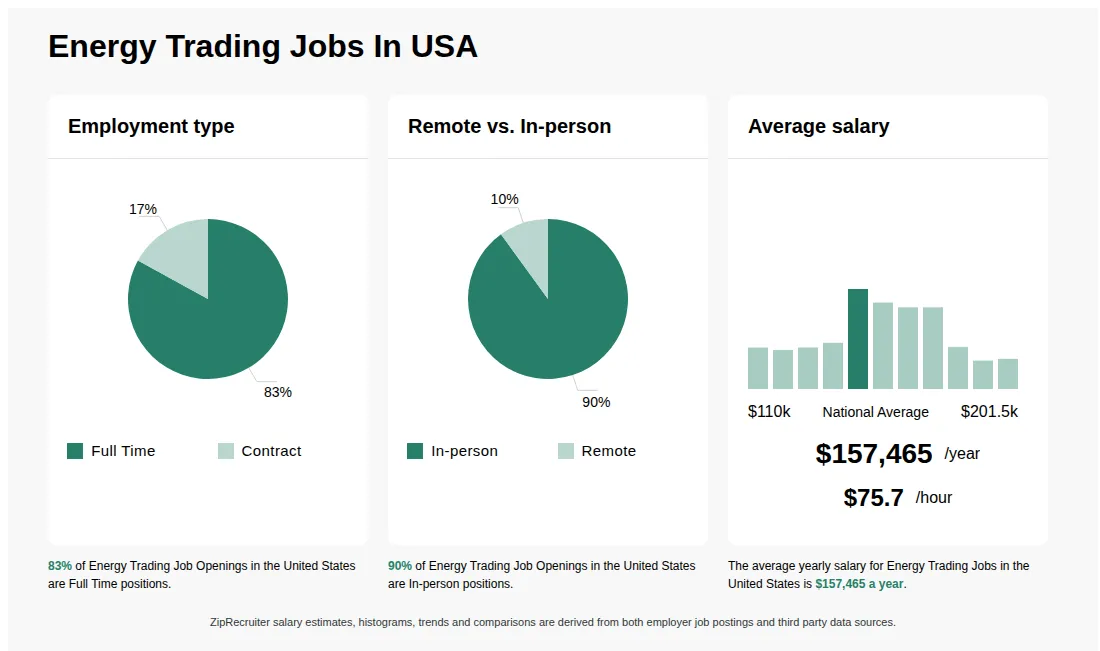
As of May 28, 2026, the average yearly pay for energy trading in the United States is $157,465.00, according to ZipRecruiter salary data. Most workers in this role earn between $142,500.00 and $173,500.00 per year, depending on experience, location, and employer.

What Are Energy Trading Jobs?

The most common energy trading job is an energy trader. This position can start at entry-level and work up to a senior role. As an energy trader, your responsibilities include purchasing energy and completing trade sales to produce a profit with limited cost. You examine technical market factors, the availability of power sources, and prices to predict the next drop or rise for shares. If you work as an energy trade analyst, you track, interpret, and report on conditions that affect energy trading. There are also energy trading directors and energy trading managers who handle high-level duties and oversee trading activities.

What are the key skills and qualifications needed to thrive as an Energy Trader, and why are they important?

To succeed as an Energy Trader, you need strong analytical abilities, a solid grasp of financial markets, and a relevant degree in finance, economics, or engineering. Familiarity with trading platforms (such as Eikon or Bloomberg), risk management tools, and energy market regulations or certifications (like Series 7 or 63) is typically required. Excellent decision-making under pressure, attention to detail, and effective communication skills help traders excel in fast-paced environments. These competencies are crucial for managing market volatility, optimizing trades, and ensuring regulatory compliance in the dynamic energy sector.

What are some common challenges faced by professionals working in energy trading?

Energy trading professionals often face challenges such as managing price volatility in the markets, staying up-to-date with regulatory changes, and making quick, data-driven decisions under pressure. They must also coordinate closely with risk management, analysts, and operations teams to ensure trades align with company strategy and compliance requirements. Adapting to new technologies and market trends is essential for success, as is maintaining strong communication skills to work effectively with both internal and external stakeholders.

What is energy trading?

Energy trading involves the buying and selling of energy commodities such as electricity, natural gas, oil, and renewable energy certificates. Professionals in this field analyze market trends, forecast supply and demand, and execute trades to optimize profits or reduce risks for utility companies, producers, or financial institutions. Energy traders may operate on physical markets, where actual delivery of energy is involved, or on financial markets, dealing with contracts and derivatives. The field is fast-paced and requires strong analytical, quantitative, and decision-making skills.

What is the difference between Energy Trading vs Energy Analyst?

AspectEnergy TradingEnergy Analyst
Required CredentialsBachelor's degree in finance, economics, or related field; certifications like CFA beneficialBachelor's or master's in economics, finance, or energy management
Work EnvironmentFast-paced trading floors, financial institutions, energy companiesResearch-focused, office settings, consulting firms, energy companies
Employer & Industry UsageFinancial firms, energy trading companies, utilitiesEnergy companies, consulting firms, government agencies
Common Search & ComparisonYesNo

Energy Trading involves buying and selling energy commodities to maximize profit, often in real-time markets. Energy Analysts focus on analyzing energy data, market trends, and providing insights to support decision-making. While both roles require understanding of energy markets, Energy Trading is more transaction-oriented, whereas Energy Analysts emphasize research and analysis.

What cities are hiring for Energy Trading jobs? Cities with the most Energy Trading job openings:
What are the most commonly searched types of Energy Trading jobs? The most popular types of Energy Trading jobs are:
What states have the most Energy Trading jobs? States with the most job openings for Energy Trading jobs include:
Infographic showing various Energy Trading job openings in the United States as of May 2026, with employment types broken down into 100% Full Time. Highlights an 100% In-person job distribution, with an average salary of $157,465 per year, or $75.7 per hour.

Energy Trader (15% - 40% Payout)

Fionics

Chicago, IL

Full-time

Posted 14 days ago


Job description

Company: The world's top energy prop desk. Global team in the USA, UK, Singapore, and Dubai. Provides options for K1 status, allowing you to pay long-term capital gains on 60% of your futures trading profits, optimizing your earnings.
Overview: Opportunity to run a standalone trade, or build a desk focused on Energy Trading (Power, Oil, Gas, etc.). You'll have access to top-tier third-party data, weather data, and premium subscriptions. Benefit from an excellent payout model and the choice to be a K1 equity Class B shareholder. Collaborate with great colleagues within a dynamic international team.
Key Responsibilities: Build or manage a Energy Trading (Power, Oil, Gas, etc.) or run a solo trade, utilizing strategies that could include market making, taking, systematic, semi-systematic, or discretionary approaches.
Qualifications:
  • Proven track record of success in your trading strategy.
  • Seeking an enhanced setup to optimize and run your trade or strategy more effectively.
#LI-NB1