1

Commercial Fishing Jobs (NOW HIRING)

Commercial fishing dates back hundreds of years. Today commercial fishing continues to be possible due to cooperation between fishermen and fisheries management scientists like yourself. In order to ...

next page

Showing results 1-20

Commercial Fishing information

See salary details

$11

$23

$44

How much do commercial fishing jobs pay per hour?

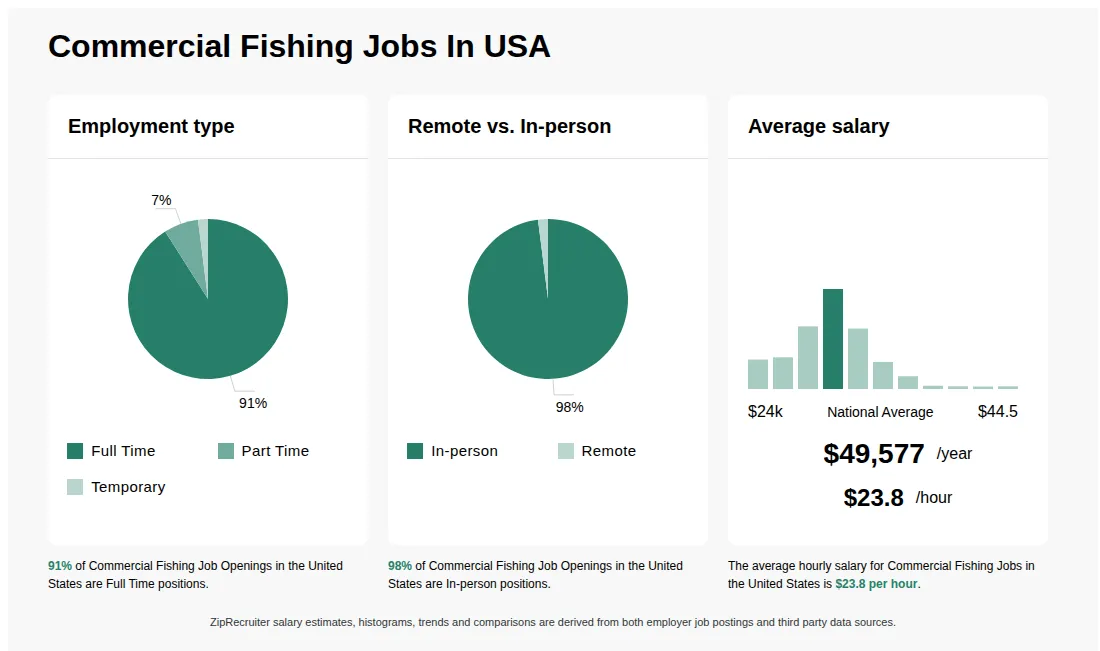
As of Jul 19, 2026, the average hourly pay for commercial fishing in the United States is $23.84, according to ZipRecruiter salary data. Most workers in this role earn between $19.23 and $25.48 per hour, depending on experience, location, and employer.

What commercial fishing makes the most money?

In commercial fishing, jobs targeting high-value species like Atlantic bluefin tuna, swordfish, and certain shellfish such as lobster and king crab tend to be the most lucrative. These roles often require specialized skills, equipment, and sometimes certifications, and income can vary based on catch value, location, and season. Generally, fishing for high-demand, premium seafood species yields higher earnings for experienced fishermen.

What are commercial fishing jobs?

Commercial fishing jobs involve harvesting fish and other seafood from oceans, rivers, and lakes for commercial sale and distribution. Workers in this industry operate boats, cast nets or lines, and handle equipment to catch fish, crab, shrimp, and other seafood. These jobs can be physically demanding and often require working long hours in challenging weather conditions. Commercial fishing is essential for supplying seafood to markets and restaurants around the world.

What are some common challenges faced by commercial fishing crews, and how can new hires prepare for them?

Commercial fishing crews often encounter physically demanding work, long hours, and unpredictable weather conditions at sea. New hires should be prepared for extended periods away from home and irregular schedules, especially during peak seasons. Building physical stamina, learning safety protocols, and developing strong teamwork skills are essential for success. Many crews foster a tight-knit environment, so adaptability and good communication will help new members integrate smoothly and handle the challenges of the job.

What does it take to be a commercial fisherman?

Becoming a commercial fisherman requires physical strength, stamina, and knowledge of fishing techniques and safety procedures. Many positions require a valid captain's license or specific certifications, and experience working in marine environments is essential. The job often involves long hours, working in challenging weather conditions, and operating specialized equipment such as boats and fishing gear.

What Are Jobs in Commercial Fishing?

Jobs in commercial fishing include several positions involved in the operation of a fishing boat and specialized fishing equipment. Most jobs are ultimately that of a deckhand, a member of the crew who manages various parts of the boat. The definition of commercial fishing is relatively broad and includes jobs on lakes or rivers, but most commercial fishing occurs on the ocean. Aside from catching fish, you are also responsible for the management of fish populations and reporting any problems, such as an unusually low number of a particular species. Commercial fishing is seasonal, so it's rare to work in this industry throughout the year.

How much does a commercial fisherman get paid?

Commercial fishermen's earnings vary widely based on factors such as location, target species, experience, and the season. On average, they earn between $20,000 and $50,000 annually, with skilled fishermen or those working in high-value fisheries potentially earning more. Many commercial fishermen work long hours and may receive additional income from catch shares or bonuses.

What is the highest paid fishing job?

The highest paid fishing jobs are often in commercial fishing for high-value species like tuna, swordfish, or lobster, especially for captains and crew with extensive experience and specialized skills. These roles can earn significant income, particularly when working in offshore or deep-sea environments, with earnings influenced by catch volume, market prices, and season length.

What is the difference between Commercial Fishing vs Marine Biologist?

AspectCommercial FishingMarine Biologist
CredentialsHigh school diploma or equivalent; specialized training or certifications often preferredBachelor's degree in Marine Biology or related field; advanced degrees for research roles
Work EnvironmentOn boats, in open water, often remote and physically demandingLaboratories, research vessels, or field sites; more controlled environment
Industry UsageFishing companies, seafood industry, maritime sectorsResearch institutions, environmental agencies, academia

Commercial fishing involves harvesting seafood from oceans and lakes, focusing on catching fish and other marine life for commercial sale. Marine biologists study marine organisms and ecosystems, often conducting research and conservation efforts. While both roles relate to the ocean, commercial fishing is primarily about harvesting, whereas marine biology emphasizes scientific understanding and preservation.

What are the key skills and qualifications needed to thrive as a Commercial Fisher, and why are they important?

To thrive as a Commercial Fisher, you need knowledge of fishing techniques, vessel operation, and safety procedures, often supported by completion of safety training and relevant licenses. Familiarity with navigation systems, fish-finding sonar, and equipment maintenance is typically required. Strong teamwork, physical endurance, and problem-solving skills help individuals succeed in unpredictable and challenging environments. These abilities are crucial for ensuring safety, maximizing catch efficiency, and adapting to the demanding conditions of commercial fishing.
What cities are hiring for Commercial Fishing jobs? Cities with the most Commercial Fishing job openings:
What are the most commonly searched types of Commercial Fishing jobs? The most popular types of Commercial Fishing jobs are:
What states have the most Commercial Fishing jobs? States with the most job openings for Commercial Fishing jobs include:
Infographic showing various Commercial Fishing job openings in the United States as of July 2026, with employment types broken down into 92% Full Time, 6% Part Time, and 2% Contract. Highlights an 93% Physical, 2% Hybrid, and 5% Remote job distribution, with an average salary of $49,577 per year, or $23.8 per hour.
2026- Commercial Fishing

Other

Posted 24 days ago


Job description

Alaskan Leader Fisheries (ALF) is a leading longline company based out of Alaska looking for entry level and experienced crew members to work on board commercial fishing vessels. ALF is looking for full-time, long term employees who are willing to work a rotating schedule throughout the year.Responsibilities:Handle Lines to tie up vesselSet and Haul gearMaintain GearThaw and break baitAble to work on the roller and operate the combi machineAssist on deck (dip net)Bleed FishRun heading machineGutting of fish and ancillary productsPanning of productLoad and unload freezer platesBag and stow productOffload and backload vessel which includes: food and supplies, bait and fiberAbility to work long hours in a harsh or extreme environment.