1

Polysomnographic Sleep Tech Jobs (NOW HIRING)

$60 - $80/hr

The Polysomnographic/Sleep Technologist II performs procedures appropriate to the competence and credentials of a Registered Polysomnographic Technologist (RPSGT). * Maintains continuing education ...

Showing results 41-60

Polysomnographic Sleep Tech information

See salary details

$16

$28

$48

How much do polysomnographic sleep tech jobs pay per hour?

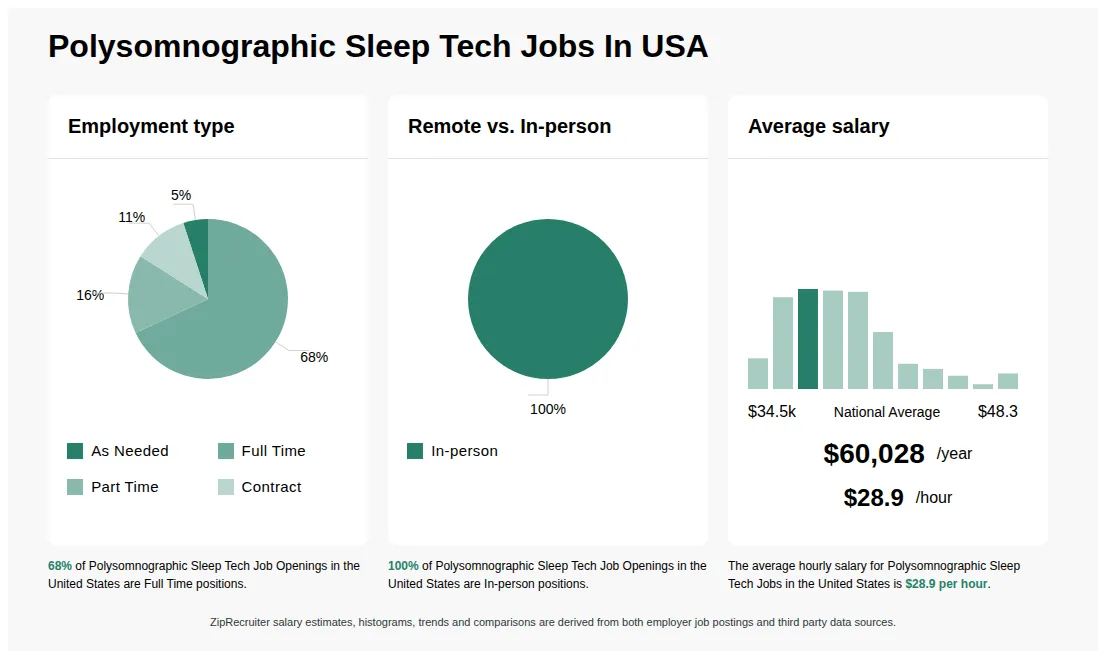
As of Sep 9, 2026, the average hourly pay for polysomnographic sleep tech in the United States is $28.86, according to ZipRecruiter salary data. Most workers in this role earn between $22.84 and $31.73 per hour, depending on experience, location, and employer.

What does a polysomnographic sleep tech do?

A Polysomnographic Sleep Tech, also known as a sleep technologist, is a healthcare professional who conducts sleep studies to diagnose and monitor sleep disorders. They operate specialized equipment to record brain waves, oxygen levels, heart rate, breathing, and eye and leg movements during sleep. These professionals also help prepare patients for sleep studies, monitor them during the night, and assist in scoring and analyzing the collected data for review by physicians. Their role is crucial in identifying conditions like sleep apnea, insomnia, and narcolepsy.

What are the key skills and qualifications needed to thrive as a polysomnographic sleep tech?

To thrive as a Polysomnographic Sleep Tech, you need a solid background in sleep technology, physiology, and patient care, typically supported by an associate degree or completion of a sleep technology program, along with RPSGT certification. Familiarity with polysomnography equipment, CPAP/BiPAP machines, and sleep study scoring software is crucial. Strong attention to detail, problem-solving abilities, and excellent communication skills help in monitoring patients and collaborating with healthcare teams. These competencies ensure accurate diagnostic results, effective patient care, and smooth operation of sleep studies.

What are some common challenges faced by polysomnographic sleep techs during overnight studies, and how can they be managed?

Polysomnographic Sleep Techs often encounter challenges such as patient discomfort, unexpected equipment issues, and the need to maintain vigilance throughout long overnight shifts. Managing these challenges requires strong communication skills to reassure and educate patients, technical proficiency to quickly troubleshoot equipment, and effective time management to complete documentation and scoring tasks. Building rapport with patients and collaborating closely with other technologists and sleep specialists can help ensure smooth study operations and high-quality results.

What is the difference between Polysomnographic Sleep Tech vs Sleep Technologist?

AspectPolysomnographic Sleep TechSleep Technologist
CertificationsCPAP, RPSGT (preferred)CPAP, RPSGT (preferred)
Work EnvironmentSleep labs, hospitals, clinicsSleep labs, hospitals, clinics
Job FocusConducting sleep studies, monitoring patientsAssisting with sleep studies, patient care

Polysomnographic Sleep Techs and Sleep Technologists often perform similar roles in sleep disorder diagnosis. The main difference lies in terminology; 'Sleep Technologist' is a broader term that may include various sleep-related roles, while 'Polysomnographic Sleep Tech' specifically emphasizes conducting polysomnography. Both roles require similar certifications and work environments, making them closely related in the sleep medicine industry.

How long does it take to be a polysomnographic sleep technologist?

Becoming a polysomnographic sleep technologist typically requires completing a postsecondary education program, which can take about 6 months to 1 year, followed by obtaining certification such as the Registered Polysomnographic Technologist (RPSGT) credential. Some states or employers may also require on-the-job training or clinical experience before certification.

How to become a polysomnographic sleep technologist?

To become a polysomnographic sleep technologist, you typically need to complete a postsecondary education program in sleep technology or a related health field, and obtain certification such as the Registered Polysomnographic Technologist (RPSGT) from the Board of Registered Polysomnographic Technologists. Certification often requires passing an exam and gaining clinical experience, and maintaining certification may involve continuing education. Strong knowledge of sleep disorders, technical skills with sleep study equipment, and attention to detail are essential for this role.

Is polysomnographic sleep tech a good career?

Polysomnographic sleep technicians, or sleep techs, play a vital role in diagnosing sleep disorders by conducting sleep studies using specialized equipment. The profession offers steady employment opportunities, typically requires certification, and often involves shift work in healthcare settings. It can be a rewarding career for those interested in healthcare and patient care, with potential for advancement through additional training or education.

Where do polysomnographic sleep techs make the most money?

Polysomnographic sleep techs tend to earn higher salaries in regions with a higher cost of living and greater demand for sleep studies, such as urban areas and states with strong healthcare industries. Salaries can also increase with experience, certifications, and working in specialized sleep centers or hospitals.

What cities are hiring for Polysomnographic Sleep Tech jobs?

Cities with the most Polysomnographic Sleep Tech job openings:

What states have the most Polysomnographic Sleep Tech jobs?

States with the most job openings for Polysomnographic Sleep Tech jobs include:

What are popular job titles related to Polysomnographic Sleep Tech jobs?

For Polysomnographic Sleep Tech jobs, the most frequently searched job titles are:

Infographic showing various Polysomnographic Sleep Tech job openings in the United States as of August 2026, with employment types broken down into 1% As Needed, 72% Full Time, 13% Part Time, 13% Contract, and 1% Nights. Highlights an 92% Physical, 2% Hybrid, and 6% Remote job distribution, with an average salary of $60,028 per year, or $28.9 per hour.

Travel Polysomnographer (Sleep Tech) - $1812/Week

Dickinson, ND • On-site

Anders Group
Recruiting and Staffing Services • 51 - 200 employees

$1.8K/wk

Other

Medical, Dental, Vision, Retirement

Posted 29 days ago


Job description

Anders Group is hiring a Travel Polysomnographer (Sleep Tech) for a 13-week assignment in DICKINSON, ND.
Location: DICKINSON, ND
Start Date: 09/28/2026
Schedule: 3x12 Nights
Setting: Hospital
Contract Length: 13 weeks
Job Type: Travel Contract
Position Overview
This travel assignment is a great opportunity for an experienced Polysomnographer (Sleep Tech) professional to work in a clinical setting while gaining new experience and earning competitive pay. Join a healthcare team in DICKINSON and expand your skillset in a supportive environment.
Key Responsibilities

  • Provide Polysomnographer (Sleep Tech) services in accordance with facility standards
  • Follow established clinical workflows, safety protocols, and procedures
  • Collaborate with physicians and interdisciplinary healthcare staff
  • Maintain accurate and timely patient documentation
  • Support quality care initiatives and positive patient outcomes
Qualifications
  • Active ND license, registration, or certification as required
  • At least 1 year of recent experience in Polysomnographer (Sleep Tech)
  • BLS certification (AHA) if required by facility
  • Strong communication and teamwork skills
  • Ability to adapt to new clinical environments
Benefits
  • Weekly pay
  • Housing and meal stipends when applicable
  • Travel reimbursement options
  • Medical, dental, and vision coverage
  • 401(k) retirement plan
  • Licensure and certification reimbursement
  • Employee assistance programs

About the Location
Working in DICKINSON, ND offers the chance to gain experience in a new setting while exploring the local community during your assignment.
About Anders Group
Anders Group supports allied healthcare professionals with dedicated recruiters, transparent communication, and travel opportunities across the United States.
Apply Now
Interested in this Travel Polysomnographer (Sleep Tech) assignment in DICKINSON, ND? Apply today to connect with a recruiter.
jobs.andersgroup.org
877-343-1607
Pay Transparency
Weekly compensation estimates may vary based on experience, credentials, schedule, and finalized contract terms.

Anders Group logo

About Anders Group

Sourced by ZipRecruiter

Anders Group is a Joint Commission accredited staffing agency and stands out from other agencies by our commitment to making sure our travelers are given the best customer service. Our team works hard to find the best jobs with the most aggressive rates!

Industry

Recruiting and staffing services

Company size

51 - 200 Employees

Headquarters location

Irving, TX, US

Year founded

2010