1

Hybrid Electric Vehicle Jobs (NOW HIRING)

Rivian EV certification (highly preferred) Experience working with electric or hybrid vehicles * Other EV or high-voltage certifications * Welding or fabrication experience Training & Development:

next page

Showing results 1-20

Hybrid Electric Vehicle information

See salary details

$11

$35

$87

How much do hybrid electric vehicle jobs pay per hour?

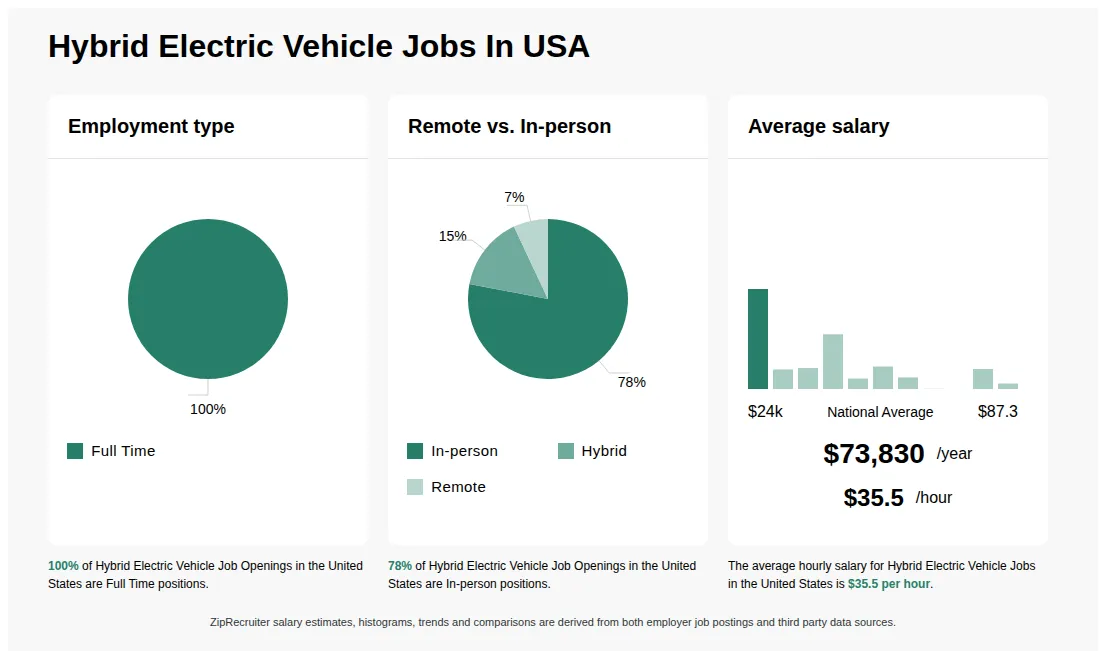
As of Sep 3, 2026, the average hourly pay for hybrid electric vehicle in the United States is $35.50, according to ZipRecruiter salary data. Most workers in this role earn between $13.22 and $47.60 per hour, depending on experience, location, and employer.

What is a hybrid electric vehicle?

Hybrid Electric Vehicles (HEVs) are vehicles that use a combination of an internal combustion engine and one or more electric motors to power the vehicle. The electric motor works in conjunction with the gasoline engine to improve fuel efficiency, reduce emissions, and provide additional power when needed. HEVs do not need to be plugged in to recharge; instead, their batteries are charged through regenerative braking and by the engine. This technology allows drivers to experience better fuel economy and lower emissions compared to traditional vehicles. HEVs are popular choices for those looking to reduce fuel costs and environmental impact.

What are hybrid electric vehicle jobs?

Hybrid electric vehicle jobs focus on the engineering, design, testing, repair, marketing, and sales of hybrid and electric vehicles (EVs). The duties of an EV engineer involve creating specific aspects of electric and hybrid cars such as the battery or powertrain, while a lead designer or engineer oversees the entire project. Electricians design and build components for electric autos and develop systems to provide the car with energy through a battery or plug-in charging system. Hybrid electric car salespeople help customers choose the EV or hybrid that best fits their needs and explain the details of EV ownership.

What are the key skills and qualifications needed to thrive as a hybrid electric vehicle engineer, and why are they important?

To thrive as a Hybrid Electric Vehicle Engineer, you need a solid background in electrical, mechanical, or automotive engineering, often supported by a relevant degree. Proficiency with CAD software, simulation tools (like MATLAB/Simulink), and familiarity with battery management systems and power electronics is typically required. Strong problem-solving abilities, teamwork, and effective communication skills set top performers apart in this field. These skills are crucial for designing, testing, and optimizing advanced vehicle systems to meet safety, efficiency, and sustainability standards.

What are some typical challenges faced by engineers working on hybrid electric vehicle development teams?

Engineers on hybrid electric vehicle (HEV) teams often encounter challenges such as integrating complex electrical and mechanical systems, ensuring seamless communication between the internal combustion engine and electric motor, and optimizing battery management for performance and longevity. Balancing energy efficiency with vehicle performance and meeting stringent regulatory standards can also be demanding. Collaboration with multidisciplinary teams—including software developers, mechanical engineers, and supply chain specialists—is essential to address these challenges and deliver innovative, reliable vehicles.

What is the difference between Hybrid Electric Vehicle vs Electric Vehicle Technician?

AspectHybrid Electric VehicleElectric Vehicle Technician
CredentialsAutomotive certifications, hybrid/electric vehicle trainingEV-specific certifications, electrical systems training
Work EnvironmentAutomotive repair shops, dealershipsSpecialized EV service centers, dealerships
Industry UsageAutomotive manufacturing, repairElectric vehicle maintenance and repair

Hybrid Electric Vehicles involve both internal combustion engines and electric motors, requiring technicians trained in hybrid systems. Electric Vehicle Technicians focus solely on electric vehicles, specializing in battery systems and electrical components. While both roles require automotive repair skills, EV Technicians have more specialized electrical training. The roles often overlap in automotive repair settings, but EV Technicians are more focused on fully electric vehicles, whereas Hybrid Electric Vehicle technicians work on both hybrid and conventional vehicles.

What cities are hiring for Hybrid Electric Vehicle jobs?

Cities with the most Hybrid Electric Vehicle job openings:

What are the most commonly searched types of Hybrid Electric Vehicle jobs?

The most popular types of Hybrid Electric Vehicle jobs are:

What states have the most Hybrid Electric Vehicle jobs?

States with the most job openings for Hybrid Electric Vehicle jobs include:

Infographic showing various Hybrid Electric Vehicle job openings in the United States as of August 2026, with employment types broken down into 58% Full Time, 41% Part Time, and 1% Contract. Highlights an 99% Physical, and 1% Remote job distribution, with an average salary of $73,830 per year, or $35.5 per hour.

$65 - $85/hr

Other

Posted yesterday

New


Job description

Schedule:Monday–Friday2:00pm–10:00pm (Training Schedule: Monday–Friday 8:00am–4:00pm)

Reports to:Foreman

Location:Chattanooga, Tennessee

Summary:

The Electric Vehicle Specialist is responsible for diagnosing, repairing, and maintaining electrical and electronic systems in diesel, gas, electric, and hybrid-electric vehicles. This includes expertise in AC/DC electrical systems, high‑voltage components, battery maintenance, vehicle multiplexing, and HVAC systems.

This role requires proficiency in reading schematics, using precision instruments, programming AC drives, updating PLC software, and performing computer‑based diagnostics.

Essential Duties and Responsibilities:

Other duties may be assigned that are in keeping with the goals and objectives of CARTA.

  • Electronic Systems Diagnostics and Repair:
  • Overhaul, diagnose, and repair all electrical and electronic systems on diesel, gas, electric, and hybrid electric‑powered vehicles.
  • Knowledge of both alternating current (AC) and direct current (DC) electrical systems for vehicles, commercial, and household power.
  • Knowledge of high‑voltage systems, including battery, charger, and converter repairs, as well as connecting test equipment to live system circuits.
  • Ability to read and interpret wiring schematics and maintenance manual drawings.
  • Use precision instruments and gauges to check clearances, currents, and voltages.

Computer & Software Proficiency:

  • Use a laptop computer to transfer files via flash drive and update or modify Programmable Logic Controller (PLC) software.
  • Program AC drives that operate various motor systems, fans, and pumps.
  • Connect a computer to the onboard diagnostics system and launch programs for remote access and programming with manufacturer technical support.
  • Disassemble and perform minor repairs on dual motherboard computers and reprogram them using a touchpad display.
  • Understand and troubleshoot AC/DC converters and use an oscilloscope to test for excessive noise levels in DC circuits.

Safety & Environmental Awareness:

  • Understand potential dangers and safely work in all environments, maintaining awareness of electrical hazards.
  • Follow proper procedures when handling high‑voltage components and live circuits.

Battery Systems Knowledge:

  • Knowledge of various battery types and chemistries used in CARTA’s fleet.
  • Perform battery care, troubleshooting, and repairs.

HVAC and Multiplexing Systems:

  • Basic knowledge of heating and air conditioning (HVAC) systems.
  • Thorough understanding of Programmable Logic Controllers (PLC) and vehicle multiplexing systems such as I/O.

Preferred Knowledge & Additional Skills:

  • Familiarity with CAD/AVL equipment, including security electronic repairs (preferred).
  • Ability to understand and follow written and oral instructions.

Qualifications:

Education:

  • Successful graduation from a trade school for electrical training.

Experience:

  • Diagnosing and repairing EV propulsion systems, battery management systems, and high‑voltage components.
  • Using diagnostic software and scan tools for electrical and electronic issues.
  • Handling energy storage systems, including lithium‑ion batteries.
  • Reading and interpreting electrical schematics and wiring diagrams.
  • Minimum three (3) years of experience with heavy‑duty vehicle electrical equipment.

Skills and Certification:

  • Valid Commercial Driver’s License (CDL)
  • ARC certified/ability to obtain ARC certification; ASE electrical certification preferred.
  • Strong problem‑solving skills, attention to detail, and the ability to follow technical instructions are essential.

Safety and Workplace Standards:

  • Employees will be expected to maintain a clean and safe work area. Safety equipment is available and mandatory to be worn on jobs requiring such.

Physical Requirements:

  • Physical ability to lift 50 lbs. and move various equipment, tools, and supplies.

Tools and Equipment:

  • A full set of hand tools specific to electrical work is required and must be maintained.

CARTA is an equal‑opportunity employer. We embrace diversity and are dedicated to fostering an inclusive environment for all employees.

#J-18808-Ljbffr