Based on the level of experience and qualifications, the operator may also assist with data processing, analysis, and interpretation. Key Responsibilities: * Operate geophysical data acquisition ...
Based on the level of experience and qualifications, the operator may also assist with data processing, analysis, and interpretation. Key Responsibilities: * Operate geophysical data acquisition ...

Geophysical Data Analyst Belong. Connect. Grow. with KBR! Around here, we define the future. We are ... Basic understanding of the processes that lead to geophysical event formation and classification ...
Geophysical Data Analyst Belong. Connect. Grow. with KBR! Around here, we define the future. We are ... Basic understanding of the processes that lead to geophysical event formation and classification ...

Staff Geophysicist
Chantilly, VA · On-site
Key Responsibilities Geophysical Data Collection and Processing * Lead field surveys using techniques such as seismic reflection, refraction, ground-penetrating radar (GPR), electromagnetic surveys ...
Staff Geophysicist
Chantilly, VA · On-site
Key Responsibilities Geophysical Data Collection and Processing * Lead field surveys using techniques such as seismic reflection, refraction, ground-penetrating radar (GPR), electromagnetic surveys ...
Based on the level of experience and qualifications, the operator may also assist with data processing, analysis, and interpretation. Key Responsibilities: * Operate geophysical data acquisition ...
Quick apply
Based on the level of experience and qualifications, the operator may also assist with data processing, analysis, and interpretation. Key Responsibilities: * Operate geophysical data acquisition ...
Staff Geophysicist
Chantilly, VA · On-site
Key Responsibilities Geophysical Data Collection and Processing * Lead field surveys using techniques such as seismic reflection, refraction, ground-penetrating radar (GPR), electromagnetic surveys ...
Staff Geophysicist
Chantilly, VA · On-site
Key Responsibilities Geophysical Data Collection and Processing * Lead field surveys using techniques such as seismic reflection, refraction, ground-penetrating radar (GPR), electromagnetic surveys ...
Based on the level of experience and qualifications, the operator may also assist with data processing, analysis, and interpretation. Key Responsibilities: * Operate geophysical data acquisition ...
Based on the level of experience and qualifications, the operator may also assist with data processing, analysis, and interpretation. Key Responsibilities: * Operate geophysical data acquisition ...

Geophysicist/Geodesist
Laurel, MD · On-site
Have an understanding of and interest in geophysical data sources and how they are used in real world applications * Have experience in exploration geophysics, geodesy, and signal processing, with a ...
Geophysicist/Geodesist
Laurel, MD · On-site
Have an understanding of and interest in geophysical data sources and how they are used in real world applications * Have experience in exploration geophysics, geodesy, and signal processing, with a ...

Associate Geophysicist
Cincinnati, OH · On-site
Support basic geophysical data processing and interpretation tasks, ensuring accuracy and consistency in deliverables. * Ensure Data Quality and Compliance: Conduct QA/QC on field data, verify ...
Associate Geophysicist
Cincinnati, OH · On-site
Support basic geophysical data processing and interpretation tasks, ensuring accuracy and consistency in deliverables. * Ensure Data Quality and Compliance: Conduct QA/QC on field data, verify ...

Have an understanding of and interest in geophysical data sources and how they are used in real world applications * Have experience in exploration geophysics, geodesy, and signal processing, with a ...
Have an understanding of and interest in geophysical data sources and how they are used in real world applications * Have experience in exploration geophysics, geodesy, and signal processing, with a ...
... geophysical data. It provides robust earthquake and hazard information including real-time alerts ... where data is processed, analyzed and archived for the purposes of earthquake monitoring ...
... geophysical data. It provides robust earthquake and hazard information including real-time alerts ... where data is processed, analyzed and archived for the purposes of earthquake monitoring ...
Associate Geophysicist
Cincinnati, OH · On-site
Support basic geophysical data processing and interpretation tasks, ensuring accuracy and consistency in deliverables. * Ensure Data Quality and Compliance: Conduct QA/QC on field data, verify ...
Associate Geophysicist
Cincinnati, OH · On-site
Support basic geophysical data processing and interpretation tasks, ensuring accuracy and consistency in deliverables. * Ensure Data Quality and Compliance: Conduct QA/QC on field data, verify ...
... geophysical data. It provides robust earthquake and hazard information including real-time alerts ... where data is processed, analyzed and archived for the purposes of earthquake monitoring ...
... geophysical data. It provides robust earthquake and hazard information including real-time alerts ... where data is processed, analyzed and archived for the purposes of earthquake monitoring ...
Associate Geophysicist
Cincinnati, OH · On-site
Support basic geophysical data processing and interpretation tasks, ensuring accuracy and consistency in deliverables. * Ensure Data Quality and Compliance: Conduct QA/QC on field data, verify ...
Associate Geophysicist
Cincinnati, OH · On-site
Support basic geophysical data processing and interpretation tasks, ensuring accuracy and consistency in deliverables. * Ensure Data Quality and Compliance: Conduct QA/QC on field data, verify ...

Intermediate Professional, Geophysics
Portland, ME · On-site
$60K - $76K/yr
Learn and apply standard geophysical software tools for data processing and visualization. * Support integration of geophysical data with geological, environmental, or geotechnical information.
Intermediate Professional, Geophysics
Portland, ME · On-site
$60K - $76K/yr
Learn and apply standard geophysical software tools for data processing and visualization. * Support integration of geophysical data with geological, environmental, or geotechnical information.

When not in the field, the candidate will support marine geophysical data processing and analysis, reporting, field planning, logistics, proposal writing, and estimating. * Occasionally candidates ...
When not in the field, the candidate will support marine geophysical data processing and analysis, reporting, field planning, logistics, proposal writing, and estimating. * Occasionally candidates ...
Geophysicist III
Chantilly, VA · On-site
Advanced skills in digital signal processing, data processing, geophysical modeling, and interpretation * Hands-on experience in algorithm development and machine learning applications for ...
Geophysicist III
Chantilly, VA · On-site
Advanced skills in digital signal processing, data processing, geophysical modeling, and interpretation * Hands-on experience in algorithm development and machine learning applications for ...
Intermediate Professional, Geophysics
Portland, ME · On-site
$60K - $76K/yr
Learn and apply standard geophysical software tools for data processing and visualization. * Support integration of geophysical data with geological, environmental, or geotechnical information.
Intermediate Professional, Geophysics
Portland, ME · On-site
$60K - $76K/yr
Learn and apply standard geophysical software tools for data processing and visualization. * Support integration of geophysical data with geological, environmental, or geotechnical information.
When not in the field, the candidate will support marine geophysical data processing and analysis, reporting, field planning, logistics, proposal writing, and estimating. * Occasionally candidates ...
When not in the field, the candidate will support marine geophysical data processing and analysis, reporting, field planning, logistics, proposal writing, and estimating. * Occasionally candidates ...
Intermediate Professional, Geophysics
Portland, ME · On-site
$60K - $76K/yr
Learn and apply standard geophysical software tools for data processing and visualization. * Support integration of geophysical data with geological, environmental, or geotechnical information.
Intermediate Professional, Geophysics
Portland, ME · On-site
$60K - $76K/yr
Learn and apply standard geophysical software tools for data processing and visualization. * Support integration of geophysical data with geological, environmental, or geotechnical information.
Associate Geophysicist
Cincinnati, OH · On-site
Assist with Data Processing: Support basic geophysical data processing and interpretation tasks, ensuring accuracy and consistency in deliverables.Ensure Data Quality and Compliance: Conduct QA/QC on ...
Quick apply
Associate Geophysicist
Cincinnati, OH · On-site
Assist with Data Processing: Support basic geophysical data processing and interpretation tasks, ensuring accuracy and consistency in deliverables.Ensure Data Quality and Compliance: Conduct QA/QC on ...
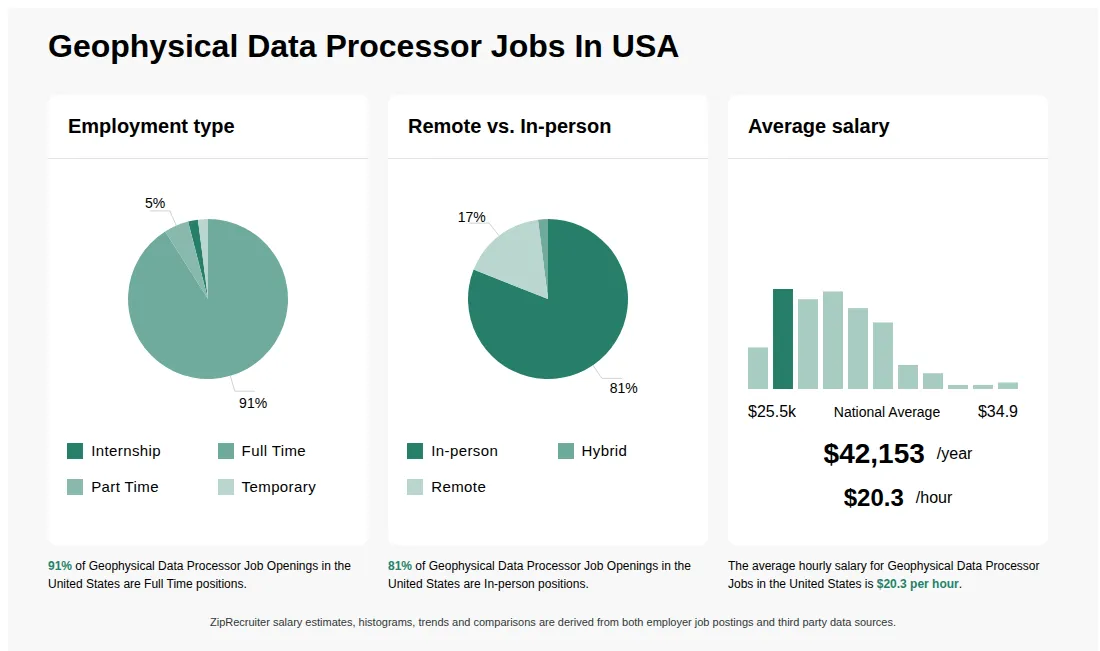
Geophysical Data Processor information
See salary details
$12.26 - $14.31
8% of jobs
$16.17 is the 25th percentile. Wages below this are outliers.
$14.31 - $16.37
19% of jobs
$16.37 - $18.42
17% of jobs
The median wage is $19.05 / hr.
$18.42 - $20.48
19% of jobs
$21.95 is the 75th percentile. Wages above this are outliers.
$20.48 - $22.53
16% of jobs
$22.53 - $24.58
13% of jobs
$24.58 - $26.64
4% of jobs
$26.64 - $28.69
2% of jobs
$28.69 - $30.75
0% of jobs
$30.75 - $32.80
0% of jobs
$32.80 - $34.86
1% of jobs
$12
$20
$34
How much do geophysical data processor jobs pay per hour?
As of Sep 12, 2026, the average hourly pay for geophysical data processor in the United States is $20.27, according to ZipRecruiter salary data. Most workers in this role earn between $16.11 and $22.36 per hour, depending on experience, location, and employer.
What is a geophysical data processor?
A Geophysical Data Processor analyzes and processes geophysical data collected from surveys, such as seismic, magnetic, or gravity data, to create accurate subsurface models. They use specialized software to filter noise, enhance signal quality, and interpret geological structures. This role is critical in industries like oil and gas exploration, environmental studies, and engineering projects. Strong analytical skills and attention to detail are essential for ensuring high-quality data outputs.
What are the typical daily responsibilities of a geophysical data processor?
On a daily basis, Geophysical Data Processors collect, clean, and analyze raw geophysical data from sources such as seismic surveys, ensuring its accuracy and reliability. They use specialized software tools to filter noise, extract meaningful information, and generate visualizations for interpretation by geoscientists and engineers. Collaboration is common, as processors often work closely with project teams to meet data requirements and address technical challenges. Additionally, they may be expected to document workflows, maintain databases, and contribute to quality control procedures, making organizational skills and attention to detail essential in this role.
What are the key skills and qualifications needed to thrive as a geophysical data processor?
To thrive as a Geophysical Data Processor, you need strong analytical skills, attention to detail, and a solid understanding of geophysical principles, often supported by a degree in geophysics, geology, or a related field. Familiarity with specialized data processing software such as Seismic Unix, Petrel, or ProMAX, as well as programming languages like Python or MATLAB, is typically required. Effective communication, problem-solving ability, and teamwork are valuable soft skills in this role. These competencies ensure accurate data interpretation, effective collaboration on multidisciplinary teams, and high-quality results in geophysical projects.
More about Geophysical Data Processor jobs
What cities are hiring for Geophysical Data Processor jobs?
Cities with the most Geophysical Data Processor job openings:
What are the most commonly searched types of Geophysical Data Processor jobs?
The most popular types of Geophysical Data Processor jobs are:
What states have the most Geophysical Data Processor jobs?
States with the most job openings for Geophysical Data Processor jobs include:
What are popular job titles related to Geophysical Data Processor jobs?
For Geophysical Data Processor jobs, the most frequently searched job titles are:

Geophysical Logging Technician
Florence, AZ • On-site
Florence Copper
• Coal, Metals and Minerals Mining • 11 - 50 employees11 - 50 employees
Full-time
Re-posted 23 days ago
Job description
Description
Position at Florence Copper
Job Description
Job Title: Geophysical Logging Technician
Department: Wellfield
Reports to: Senior Geologist
Location: Florence, AZ
Job Summary:
The Geophysics Logging Technician is responsible for operating and monitoring geophysical survey equipment from a mobile data acquisition unit in support of exploration and mining activities. This role involves real-time data monitoring, quality control, equipment setup and maintenance, coordination with field crews, and ensuring accurate collection and recording of subsurface data. The successful candidate will demonstrate strong technical aptitude, attention to detail, and a commitment to safety while working in field environments. Based on the level of experience and qualifications, the operator may also assist with data processing, analysis, and interpretation.
Key Responsibilities:
Minimum Qualifications & Education:
Preferred Qualifications:
Work Environment:
Position at Florence Copper
Job Description
Job Title: Geophysical Logging Technician
Department: Wellfield
Reports to: Senior Geologist
Location: Florence, AZ
Job Summary:
The Geophysics Logging Technician is responsible for operating and monitoring geophysical survey equipment from a mobile data acquisition unit in support of exploration and mining activities. This role involves real-time data monitoring, quality control, equipment setup and maintenance, coordination with field crews, and ensuring accurate collection and recording of subsurface data. The successful candidate will demonstrate strong technical aptitude, attention to detail, and a commitment to safety while working in field environments. Based on the level of experience and qualifications, the operator may also assist with data processing, analysis, and interpretation.
Key Responsibilities:
- Operate geophysical data acquisition systems from the logging van/mobile unit.
- Safely rig up and rig down geophysical equipment over boreholes and wells.
- Monitor incoming survey data in real time and identify data quality issues.
- Perform quality control (QC) checks and ensure data integrity.
- Communicate effectively with field crews to coordinate survey activities and track progress.
- Assist with troubleshooting equipment and data acquisition issues.
- Support the setup, calibration, maintenance, and transportation of geophysical equipment.
- Maintain accurate logs, reports, and digital records of survey activities.
- Assist with data processing and basic interpretation of geophysical data as experience permits.
- Follow and promote compliance with all company safety policies, environmental regulations, and site procedures.
- Work safely and effectively in remote locations and varying weather conditions.
Minimum Qualifications & Education:
- High school diploma or GED required.
- Mechanical and technical aptitude with the ability to learn and operate geophysical equipment and software.
- Basic understanding of geophysical methods and data acquisition principles preferred.
- Strong analytical, troubleshooting, and problem-solving skills.
- Excellent attention to detail and commitment to data accuracy.
- Ability to work extended hours in field environments as operational needs require.
- Strong communication and teamwork skills.
- Proficiency with Microsoft Office applications, including Excel, Teams, and SharePoint.
- Experience with geophysical software and data acquisition systems, such as WellCAD, is preferred.
Preferred Qualifications:
- Bachelor's degree in Geophysics, Geology, Earth Science, Engineering Technology, or equivalent combination of education, technical training, and relevant work experience will be considered.
- One to three years of experience in geophysical surveying, mining, exploration, construction, surveying, or other field-based operations.
- Experience operating a geophysical logging van or similar mobile data acquisition equipment.
- Familiarity with GPS systems, survey mapping tools, and field data collection processes.
- Experience working in remote or outdoor environments.
- Knowledge of geophysical data processing and interpretation techniques.
- Experience with Mount Sopris geophysical logging tools and equipment.
Work Environment:
- This position will include office work, but some work will be performed in all-weather conditions outdoors
- While performing the duties of this job, the employee is regularly required to stand, sit, demonstrate manual dexterity, climb stairs, and lift up to 50 pounds
- Must work in compliance with the Florence Copper's site safety program

About Florence Copper
Sourced by ZipRecruiter
Industry
Coal, metals and minerals mining
Company size
11 - 50 Employees
Headquarters location
Florence, AZ, US
Year founded
2010