1

Fiber Optic Jobs in Rochester, NY (NOW HIRING)

Fiber Splicer

Rochester, NY · On-site

$26 - $30/hr

Utilize fusion splicer, test equipment OTDR (Optical Time-Domain Reflectometer) 1310, 1550, DWDM, CWDM, 945 OLTS, Max Tester, Power meter * Fiber engineer knowledge of fiber design, reading ...

Be Seen First

Learn and work with cutting-edge fiber-optic technology * Build valuable technical and customer service skills * Work independently while being supported by a collaborative team * Make a direct ...

Founded in 2011, Greenlight Networks designs, builds, and operates a high-speed fiber-optic network delivering internet speeds up to 8 Gigabits per second to homes and small businesses. Today, we ...

Assembly of fiber optic cables using welded fiber optic arrays. Testing of cable assemblies using standard and specialized electro-optical devices. (Required on-site training) Job Requirements

Strong experience in working with underground and pole mounted utility installations to include fiber optic, copper cable, and electrical. Monitor and ensure schedule performance, materials standards ...

Lineman-NY

Victor, NY · On-site

$22 - $30/hr

GoNetspeed is a growing leader in the fiber optic, telecommunication industry. We are dedicated to our customers, values it's employees and offers competitive pay and benefits for the right candidate.

next page

Showing results 1-20

Fiber Optic information

See Rochester, NY salary details

$15

$27

$45

How much do fiber optic jobs pay per hour?

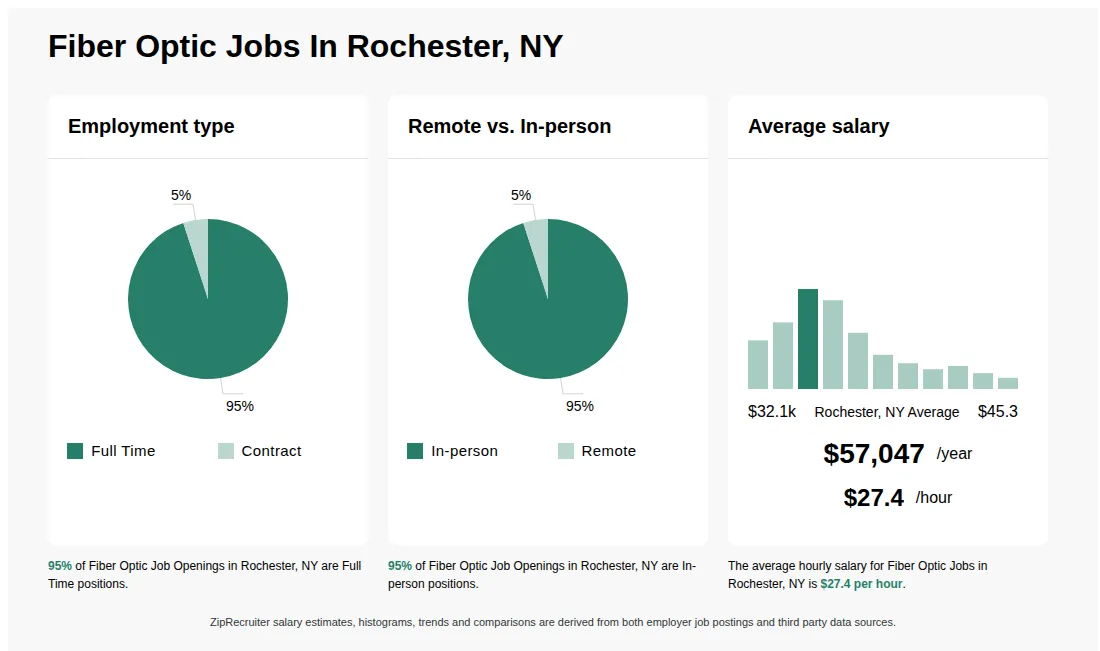
As of Jul 31, 2026, the average hourly pay for fiber optic in Rochester, NY is $27.43, according to ZipRecruiter salary data. Most workers in this role earn between $21.35 and $31.06 per hour, depending on experience, location, and employer.

What are fiber optic technicians?

Fiber optic technicians are professionals who install, maintain, and repair fiber optic cables and systems used for high-speed data transmission. They work with specialized equipment to splice, test, and troubleshoot fiber optic networks for telecommunications, internet, and other data services. Their work is essential for ensuring reliable connectivity in homes, businesses, and across large infrastructures. Fiber optic technicians must have technical knowledge, attention to detail, and safety awareness to handle delicate cables and advanced tools.

What are the key skills and qualifications needed to thrive as a Fiber Optic Technician, and why are they important?

To thrive as a Fiber Optic Technician, you need a solid understanding of fiber optic theory, cable installation, splicing, and troubleshooting, often supported by technical training or certification such as FOA or ETA. Familiarity with tools like OTDRs, fusion splicers, and fiber testers is crucial for accurately installing and maintaining networks. Attention to detail, problem-solving skills, and the ability to work independently or as part of a team are valuable soft skills in this role. These competencies ensure reliable, high-performance fiber optic networks that support essential communications infrastructure.

What is the difference between Fiber Optic Technician vs Cable Installer?

AspectFiber Optic TechnicianCable Installer
CertificationsFiber optic certifications (e.g., FOA, BICSI)General cabling certifications (e.g., OSHA, BICSI)
Work EnvironmentIndoor/outdoor, specialized for fiber optic networksIndoor/outdoor, various cable types
Industry UsageTelecommunications, internet providersTelecommunications, cable TV, internet
Job FocusInstalling, splicing, testing fiber optic cablesInstalling and connecting various cables

Fiber Optic Technicians specialize in installing and maintaining fiber optic cables, requiring specific certifications and working primarily in telecommunications. Cable Installers handle a broader range of cabling, including coaxial and Ethernet cables, often with general certifications. Both roles are essential in network infrastructure but differ in technical focus and certification requirements.

What are some common challenges Fiber Optic Technicians face in the field and how can they be addressed?

Fiber Optic Technicians often encounter challenges such as working in adverse weather conditions, troubleshooting signal loss, and maintaining safety standards when handling delicate cables. To address these issues, technicians typically rely on specialized tools for testing and diagnostics, follow strict safety protocols, and stay updated on the latest installation techniques. Teamwork and clear communication with project managers, engineers, and other technicians are also crucial for resolving complex problems efficiently and ensuring high-quality installations.
What are the most commonly searched types of Fiber Optic jobs in Rochester, NY? The most popular types of Fiber Optic jobs in Rochester, NY are:
What cities near Rochester, NY are hiring for Fiber Optic jobs? Cities near Rochester, NY with the most Fiber Optic job openings:
Infographic showing various Fiber Optic job openings in Rochester, NY as of July 2026, with employment types broken down into 94% Full Time, 3% Contract, and 3% Nights. Highlights an 97% In-person, and 3% Hybrid job distribution, with an average salary of $57,047 per year, or $27.4 per hour.

Aerial Fiber Optic Technician

NRDB Utilities, LLC

Ontario, NY • On-site

$18 - $45/hr

Full-time

Re-posted 23 days ago


Job description

  • Install, maintain, and repair aerial fiber optic cables on utility poles, towers, and aerial pathways.  
  • Inspect aerial infrastructure, including poles, anchors, and attachments, for safety and service reliability. 
  • Test fiber optic lines using specialized equipment to identify faults, signal loss, or connectivity issues. 
  • Collaborate with ground crews and project managers to coordinate installations and repairs. 
  • Climb poles or use bucket trucks to safely access aerial fiber routes following OSHA and company safety standards. 
  • Maintain accurate records of installations, repairs, and maintenance activities. 
  • Troubleshoot service outages and respond to customer or network issues in a timely manner. 
  • Operate hand tools, power tools, and testing equipment safely and effectively. 
  • Follow all safety, environmental, and regulatory guidelines while on-site.