1

Embedded Systems Architect Jobs (NOW HIRING)

Embedded Systems Architect

Houston, TX · Hybrid

$165.20K/yr

Embedded Systems Architect (W2 Only) Location: Houston, TX (Hybrid) Hybrid role - onsite in Houston, TX 4 days per week We are seeking a highly specialized Embedded Systems Architect to lead the ...

This role is ideal for an experienced embedded systems professional who combines hands-on firmware development expertise with strong system architecture knowledge, hardware/software integration ...

Strong experience in embedded systems development using C or C++. Hands-on experience with Real ... Architecture and Systems Thinking Ability to design systems that span device and cloud components ...

next page

Showing results 1-20

Embedded Systems Architect information

See salary details

$132K

$173.5K

How much do embedded systems architect jobs pay per year?

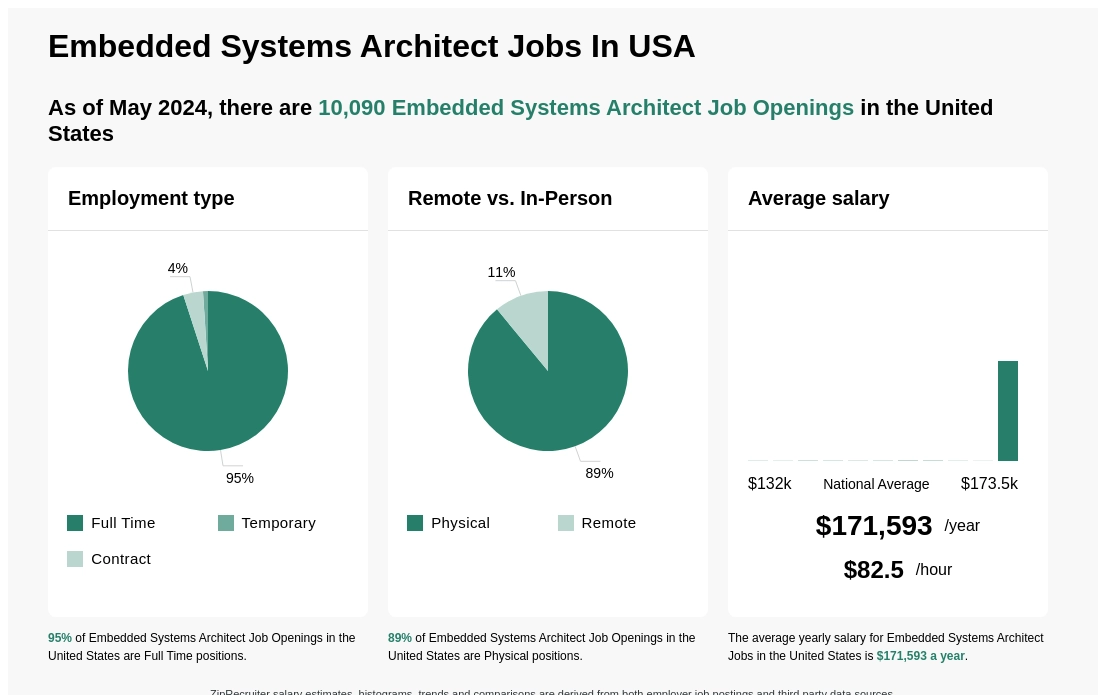
As of May 29, 2026, the average yearly pay for embedded systems architect in the United States is $171,593.00, according to ZipRecruiter salary data. Most workers in this role earn between $173,000.00 and $173,000.00 per year, depending on experience, location, and employer.

What are the key skills and qualifications needed to thrive as an Embedded Systems Architect, and why are they important?

To thrive as an Embedded Systems Architect, you need deep expertise in embedded software and hardware design, strong knowledge of microcontrollers, and a relevant degree in electrical engineering, computer engineering, or a related field. Familiarity with programming languages such as C/C++, real-time operating systems (RTOS), and experience with tools like MATLAB, Simulink, and various circuit design platforms are typically required. Strong problem-solving, communication, and leadership skills help you collaborate effectively and translate complex requirements into robust system architectures. These competencies are crucial to delivering efficient, reliable, and scalable embedded solutions that meet project and industry standards.

How does an Embedded Systems Architect typically collaborate with cross-functional teams during a project?

An Embedded Systems Architect works closely with cross-functional teams, including hardware engineers, software developers, and project managers, to ensure system integration and alignment with project goals. They often facilitate technical discussions, clarify system requirements, and resolve design trade-offs between hardware and software components. Regular collaboration involves design reviews, technical documentation, and providing guidance to ensure that deliverables meet both functional and performance standards. This collaborative environment is key to delivering robust and reliable embedded solutions.

What are Embedded Systems Architects?

Embedded Systems Architects are professionals who design and oversee the development of embedded systems—specialized computing systems that are part of larger devices, such as cars, medical equipment, or household appliances. They are responsible for defining system architecture, selecting hardware and software components, and ensuring that all parts work together efficiently and securely. Their role often involves collaborating with engineers, software developers, and project managers to deliver reliable and optimized embedded solutions. Embedded Systems Architects need a deep understanding of both hardware and software, as well as strong problem-solving and communication skills.

What is the difference between Embedded Systems Architect vs Embedded Software Engineer?

AspectEmbedded Systems Architect

Required CredentialsBachelor's or Master's in Electrical Engineering, Computer Engineering, or related fields; certifications like ARM or IoT certifications are common.

Work EnvironmentDesigning system architecture in R&D labs, manufacturing facilities, or product development teams.

Employer & Industry UsageUsed across industries like automotive, consumer electronics, aerospace, and industrial automation.

The Embedded Systems Architect focuses on designing and planning the overall system architecture, ensuring hardware and software integration. In contrast, the Embedded Software Engineer implements and tests the software components within that architecture. Both roles require technical expertise, but the architect has a broader strategic focus, while the engineer concentrates on coding and debugging.


More about Embedded Systems Architect jobs
What states have the most Embedded Systems Architect jobs? States with the most job openings for Embedded Systems Architect jobs include:
Infographic showing various Embedded Systems Architect job openings in the United States as of May 2026, with employment types broken down into 1% Locum Tenens, 91% Full Time, 4% Part Time, and 4% Contract. Highlights an 100% Physical job distribution, with an average salary of $171,593 per year, or $82.5 per hour.

Embedded Systems Architect

Zuplon

Houston, TX • Hybrid

$165.20K/yr

Other

Posted 20 days ago


Job description


Role: Embedded Systems Architect (W2 Only)

Location: Houston, TX (Hybrid)

Job Description:

Hybrid role - onsite in Houston, TX 4 days per week

We are seeking a highly specialized Embedded Systems Architect to lead the design and implementation of cloud-managed device platforms at scale. This role focuses on defining how connected devices are securely onboarded, provisioned, managed, updated, monitored, and controlled through cloud services, with embedded firmware serving as the foundational layer.

This is a hands-on architecture role spanning device, network, and cloud boundaries. You will own the design of device-cloud interaction patterns, including secure communication, identity and certificate management, remote lifecycle operations, and observability for large fleets of distributed devices.

While strong embedded firmware expertise is essential, the role extends beyond firmware development to include end-to-end device-cloud integration, ensuring secure, scalable, and enterprise-grade device lifecycle management.

Responsibilities

Device-Cloud Architecture:

- Own the end-to-end architecture for cloud-managed device platforms, covering device firmware, connectivity, and cloud integration.

- Define firmware architecture to enable reliable, secure cloud connectivity on constrained devices.

- Establish implementation patterns for embedded systems using C or C++ and Real-Time Operating Systems (RTOS) such as Zephyr.

- Define device-cloud interaction patterns (for example, Azure IoT Hub, Device Provisioning Service, Intune), ensuring scalability, security, and enterprise readiness.

- Lead architecture across key domains:- Device provisioning, identity, and certificate management

- Secure communication (TLS, mutual TLS, SCEP)

- Firmware and configuration update strategies (over-the-air updates)

- Observability, telemetry, logging, and diagnostics

- Remote device control and lifecycle operations

- Ensure alignment between device-side capabilities and cloud platform services, including constraints, protocols, and security models.

- Drive design decisions to optimize performance, reliability, and resource utilization in constrained environments.

Delivery, Execution, and Risk Management:

- Ensure successful end-to-end delivery of embedded and IoT solutions within complex enterprise environments.

- Actively support implementation, troubleshooting, and resolution of complex issues across firmware, connectivity, and cloud integration layers.

- Identify, assess, and mitigate technical risks across device, firmware, and integration components.

- Drive alignment between architecture and implementation, ensuring solutions are delivered as designed and meet quality, performance, and security expectations.

- Lead and support integration with cloud services such as Azure IoT Hub, Device Provisioning Service, and device management platforms.

Technical Leadership:

- Serve as the technical authority for embedded systems and device-cloud connectivity within the engagement.

- Provide hands-on guidance, mentorship, and architectural oversight to engineering teams.

- Establish and promote best practices in embedded development, including real-time constraints, memory management, and performance optimization.

- Support design and implementation decisions, ensuring alignment with architectural principles and system constraints.

- Contribute to engineering standards and best practices within the team or project.

- Balance hands-on involvement with architectural leadership as required.

Stakeholder and Client Engagement:

- Engage with client architects, product owners, and senior stakeholders to understand requirements and shape solution direction.

- Translate business and product requirements into scalable technical architectures and actionable delivery plans.

- Act as a trusted advisor on embedded systems and device-cloud architecture decisions.

- Support solution shaping and pre-sales activities in embedded and IoT domains as needed.

Qualifications:

Embedded Systems and Firmware

- Strong experience in embedded systems development using C or C++.

- Hands-on experience with Real-Time Operating Systems (RTOS) such as Zephyr, FreeRTOS, and ThreadX.

- Proven experience designing and implementing embedded or firmware architectures.

Networking and Secure Device Connectivity

- Solid understanding of networking fundamentals and protocols such as TCP/IP, HTTP, and MQTT.

- Practical experience implementing secure communication in embedded or constrained environments.

- Working knowledge of device identity and certificate-based authentication concepts.

Device-Cloud Integration

- Experience building or integrating cloud-connected devices.

- Strong understanding of core device-cloud interaction patterns.

Architecture and Systems Thinking

- Ability to design systems that span device and cloud components, balancing performance, reliability, and security.

- Demonstrated ability to make technical trade-offs in constrained environments.

Delivery and Execution

- Experience delivering embedded or IoT solutions through implementation and integration phases (not just design).

- Hands-on experience troubleshooting issues across firmware, networking, or integration layers.

- Ability to identify and mitigate technical risks during delivery.

Technical Leadership and Collaboration

- Experience providing technical guidance to engineering teams.

- Experience working in cross-functional environments.

- Ability to communicate technical concepts clearly to both technical and non-technical stakeholders.

Preferred Qualifications

- Experience with Azure IoT ecosystem.

- Experience with certificate lifecycle management at scale.

- Experience with hardware-backed security.

- Experience implementing enterprise networking features.

- Experience integrating devices into enterprise IT environments with strict security requirements.

- Experience implementing over-the-air (OTA) firmware updates.

- Experience with device-side logging, telemetry, and remote diagnostics.

- Experience with collaboration devices, docking stations, or similar enterprise hardware platforms.

- Familiarity with HP Poly or similar voice and video collaboration ecosystems.

- Ability to operate effectively in ambiguous, evolving problem spaces and drive clarity across device, network, and cloud domains.

- Demonstrated ownership mindset with a focus on delivering end-to-end outcomes and proactively resolving gaps.

- Ability to influence technical decisions across cross-functional teams without direct authority.