1

Embedded System Engineer Internship Jobs (NOW HIRING)

As a Embedded System Researcher, you will lead others in tasks, coordinate with customers on existing work, and lead complex problems through to completion. Your experience will be focused on ...

We are currently looking for an (engineering) machine design/control system support person for our Controls Division to be l o cated at our Tulsa, OK branch . Candidates will office in Tulsa OK.

Embedded System Researcher 3

Annapolis, MD ยท On-site

$125K - $183K/yr

Expert-level engineering experience with over 12 years of analyzing embedded systems * Experience researching and developing in an embedded systems world (VxWorks, ELDK, or custom OS) * Experience ...

Experience testing embedded systems and integrated hardware/software platforms. * Experience with ... Collaborate with cross-functional engineering teams to resolve technical issues and improve product ...

Experience testing embedded systems and integrated hardware/software platforms. * Experience with ... Collaborate with cross-functional engineering teams to resolve technical issues and improve product ...

next page

Showing results 1-20

Embedded System Engineer Internship information

See salary details

$62.5K

$137.3K

$192K

How much do embedded system engineer internship jobs pay per year?

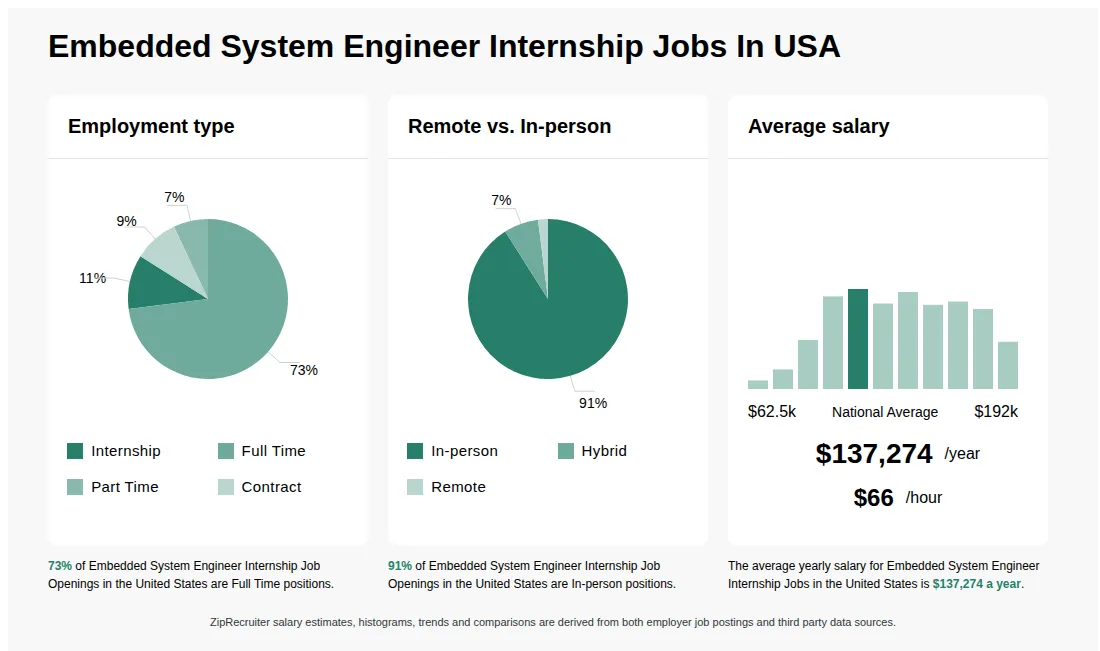
As of Jul 10, 2026, the average yearly pay for embedded system engineer internship in the United States is $137,274.00, according to ZipRecruiter salary data. Most workers in this role earn between $111,500.00 and $163,500.00 per year, depending on experience, location, and employer.

What are Embedded System Engineer Internships?

Embedded System Engineer Internships are temporary positions designed for students or recent graduates to gain practical experience in designing, developing, and testing embedded systems. Interns typically work with microcontrollers, sensors, and real-time operating systems to help build products like consumer electronics, automotive systems, or IoT devices. These internships provide valuable hands-on experience in both hardware and software aspects of embedded systems, making them an excellent starting point for a career in embedded engineering.

What is the difference between Embedded System Engineer Internship vs Embedded Software Developer Internship?

AspectEmbedded System Engineer InternshipEmbedded Software Developer Internship
Required CredentialsTypically pursuing or holding a degree in Electrical Engineering, Computer Engineering, or related fieldsSimilar educational background, often with focus on software development
Work EnvironmentHands-on hardware and firmware development, working with microcontrollers and embedded devicesPrimarily software coding, testing, and debugging embedded applications
Industry UsageUsed in industries like automotive, consumer electronics, and IoTCommon in tech companies, startups, and embedded systems firms
Search & Comparison IntentInterested in hardware-software integration roles in embedded systemsFocused on software development within embedded environments

While both internships involve embedded systems, the Embedded System Engineer Internship emphasizes hardware and firmware work, whereas the Embedded Software Developer Internship centers on software coding and debugging. Your choice depends on whether you prefer working with hardware components or software development within embedded systems.

What are the key skills and qualifications needed to thrive as an Embedded System Engineer Intern, and why are they important?

To thrive as an Embedded System Engineer Intern, you need a solid understanding of programming languages like C/C++, basic electronics, and embedded systems concepts, often supported by coursework in computer engineering or related fields. Familiarity with microcontroller platforms (such as ARM or Arduino), debugging tools, and version control systems like Git is typically expected. Strong problem-solving skills, attention to detail, and effective communication help you collaborate with teams and tackle complex technical challenges. These skills are crucial for successfully contributing to embedded projects and adapting quickly to real-world engineering environments.

What kinds of projects or tasks can I expect to work on during an Embedded System Engineer Internship?

As an Embedded System Engineer Intern, you will typically be involved in tasks such as assisting with firmware development, testing and debugging embedded software, and supporting hardware integration efforts. Interns often collaborate closely with experienced engineers, contributing to real-world projects like sensor interfacing, microcontroller programming, or system validation. Expect a combination of hands-on technical work and learning opportunities designed to build your understanding of embedded systems. This role also encourages teamwork and communication, as you may participate in code reviews, technical discussions, and project meetings.
More about Embedded System Engineer Internship jobs
What cities are hiring for Embedded System Engineer Internship jobs? Cities with the most Embedded System Engineer Internship job openings:
What are the most commonly searched types of Embedded System Engineer jobs? The most popular types of Embedded System Engineer jobs are:
What states have the most Embedded System Engineer Internship jobs? States with the most job openings for Embedded System Engineer Internship jobs include:
Embedded System Researcher

Embedded System Researcher

Link, LLC

Annapolis, MD โ€ข On-site

Full-time

Re-posted 11 days ago


Job description

Responsibilities: As a Embedded System Researcher, you will lead others in tasks, coordinate with customers on existing work, and lead complex problems through to completion. Your experience will be focused on embedded systems with demonstrated, proven experience in any of ARM, PPC, MIPS, or other embedded assembly languages.
Position Requirements:
โ€ข 12 yrs experience researching and developing in an embedded systems world (VxWorks, ELDK, or custom OS)
โ€ข Experience with Python, C, and ASM and development
โ€ข Experience with debugging tools (GDB)
โ€ข Demonstrated ability to self-drive research tasking and coordinate with customers on distilling larger tasks into meaningful milestones
We may use artificial intelligence (AI) tools to support parts of the hiring process, such as reviewing applications, analyzing resumes, or assessing responses and identifying potential inconsistencies or verification signals in application materials based on available information. These tools assist our recruitment team but do not replace human judgment. Final hiring decisions are ultimately made by humans. If you would like more information about how your data is processed, please contact us.