The progress the economy has made since the end of the Great Recession is undeniable. With 223,000 new jobs added to the economy just last month and the unemployment rate steadily falling, the evidence that we have moved beyond recovery into an expansion is growing by the day.
But are these positive signs enough to bolster the optimism of a Recession-stung nation? To answer that question, and to gain an understanding of how Americans perceive these positive trends, we surveyed 10,570 job seekers to get their perspective on the state of the economy and how they are navigating their current job search.
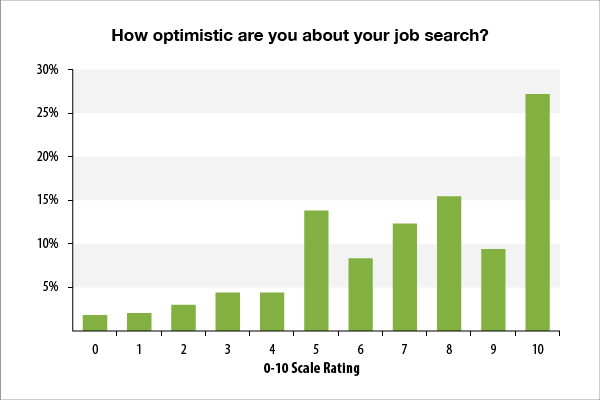
Overall, job seekers do seem somewhat confident in their ability to get hired: while 53% of candidates seeking a new role said they were not currently employed, 54% of all those surveyed selected a 7 or higher when asked to rate their level of optimism about their search on a 0-10 scale.
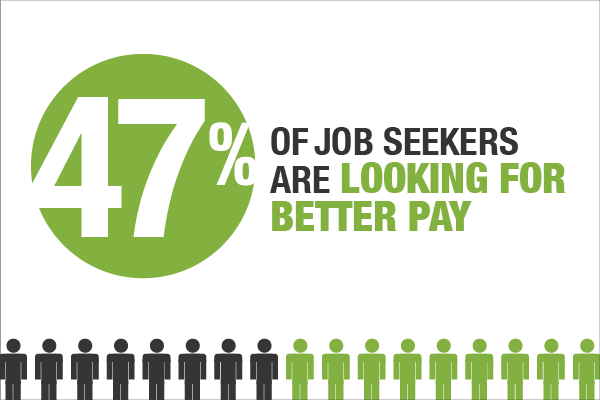
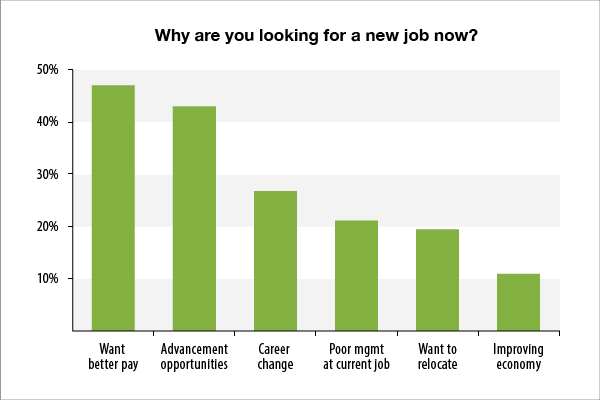
When asked why they were on the hunt for a new gig, the majority of job seekers responded that they wanted more, with 47% indicating that they were ‘looking for better pay,’ and 43% saying that they were seeking more ‘advancement opportunities.’
Other possible answers included the desire to change careers (chosen by 27% of job seekers), dissatisfaction with current management (21%), changing jobs as a result of relocation (20%), and confidence in the economy (12%).
Interestingly, while jobseekers have a relatively high level of optimism regarding their search, they do not appear confident in the economy overall. On a 0-10 scale, 22% rated the state of the current economy at a 5, more than any other number (only 2% felt the economy deserved a 10).
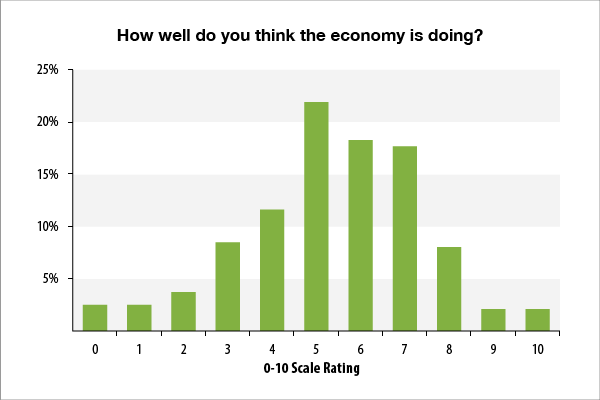
Underlining the tension between their personal and national outlooks, 53% of job seekers disagreed with the notion that the economy would ever fully recover from The Great Recession, and it’s clear where they lay the blame. Over half surveyed blamed the Government for the country’s economic woes, and an overwhelming 77% rated a 5 or lower when asked to rate their agreement with the assertion that “The Government cares about regular workers, and is trying to make things better for them.”
Business interests fared little better, ranking second highest as the instigators of the nation’s poor economic state. Tellingly, 78% disagreed with the notion that these businesses had worker’s best interests at heart. (This lack of faith in national institutions reflects a well documented trend of growing distrust of elites in general).
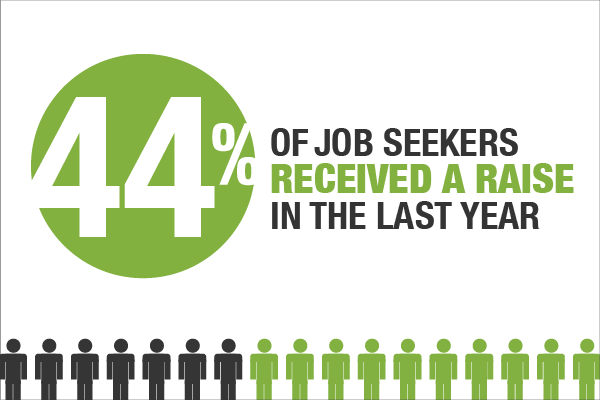
Adding to the general satisfaction are persistently stagnant wages. When asked how long it has been since their last raise, 47% of respondents said it had been more than a year (with 8% languishing more than 3 years and 5% more than five years without a raise), 44% said a year ago or less, and 10% told us they have never received a raise. Even those who received a pay increase were less than enthusiastic, with 59% rating their satisfaction with their raises at 5 or below on a scale of 0-10.
Turning away from structural economic issues, we asked jobseekers to tell us about their attitudes about education and how it relates to a successful job search.
When asked to rate ‘how important is a college degree in getting a good job’ on a 1-10 scale, the highest percentage of job seekers (26%) answered 10, with 60% rating the importance at 7 and above. That stated importance is reflected in self-reported educational achievement on the part of jobseekers, with an overwhelming majority of 77% saying that had at least some college level education, and 43% saying they had a 4 year degree or above.
Interestingly, despite the importance jobseekers place on secondary education, there is some evidence that it has actually become increasingly less likely to guarantee a position. In a recent study by the Association of American Colleges and Universities, for example, fewer than 2 in 5 employers reported confidence in the professional preparedness of college students.
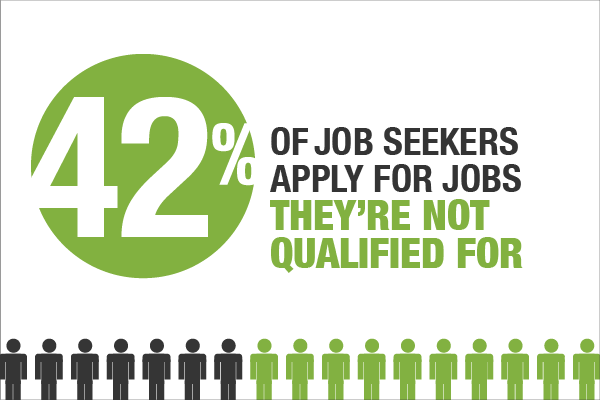
And finally, since we often hear employers say that unqualified candidates are clogging the application process, we asked jobseekers if they ever apply for jobs for which they are not qualified: 42% admitted that they did.
Overall, the results of our survey give us a solid sense of the mindset of the American jobseeker: They are optimistic about the likelihood of finding a job, but not about the long-term prospects of the economy at large. They believe in the benefits of a college education, and follow through on the belief by attending college whenever possible. They see the institutions of Government and Business as being out of sync with their best interests. They’re generally dissatisfied with their wages. Finally, they’re scarred by the Great Recession, an economic calamity which seems to have marked this generation as profoundly as the Great Depression affected Americans of the 1920’s and 1930’s.