1

Prop Design Jobs (NOW HIRING)

... prop use during rehearsals and performances. * 10% - Collaboration and service, working with Theatre Design and Production faculty and staff on operational planning, communication, and continuous ...

WI · On-site

A degree in Theatre Production, Design or another art related field is preferred. A minimum of one ... prop research, budgeting, purchasing, inventory, shop organization, and safe working practices is ...

The ideal client will have experience with prop design, carpentry, be handy with tools and not afraid to learn. Some of these ideal traits can be learned and some cannot. The ideal candidate is well ...

Assistant Prop Master

Henrico, VA · On-site

$50K - $65K/yr

Our extensive inventory, creative design capabilities, and commitment to quality make us a trusted ... MUST HAVE THEATER PROP MASTER EXPERIENCE. Responsibilities * Assist the Props Master in developing ...

next page

Showing results 1-20

Prop Design information

See salary details

$18

$50

$73

How much do prop design jobs pay per hour?

As of Sep 12, 2026, the average hourly pay for prop design in the United States is $50.69, according to ZipRecruiter salary data. Most workers in this role earn between $39.18 and $61.78 per hour, depending on experience, location, and employer.

What is prop design?

Prop design is the process of creating and developing objects that actors interact with on stage, in film, or on television. These objects, known as props, can range from everyday items like books and cups to fantastical creations for imaginative worlds. Prop designers work closely with directors, set designers, and other production staff to ensure props meet the story's needs, are safe for use, and fit the visual style of the production. Their work may involve sketching, building, painting, and sometimes sourcing items. Effective prop design helps bring authenticity and depth to a production.

What are the key skills and qualifications needed to thrive as a prop designer, and why are they important?

To thrive as a Prop Designer, you need strong artistic ability, spatial awareness, and a solid understanding of design principles, often supported by a degree in art, design, or a related field. Familiarity with digital design software (such as Adobe Creative Suite, SketchUp, or CAD), model-making tools, and sometimes 3D printing technologies is typically required. Creativity, attention to detail, and effective collaboration are vital soft skills for bringing concepts to life and working within larger creative teams. These skills ensure the creation of visually compelling, functional props that enhance storytelling and meet production needs.

What are some common challenges faced by prop designers when collaborating with directors and other creative departments?

Prop designers often collaborate closely with directors, set designers, and costume teams to ensure that props align with the overall vision of a production. A common challenge is balancing creative ideas with practical constraints like budget, materials availability, and time. Effective communication is essential, as last-minute script changes or design adjustments may require rapid problem-solving and flexibility. Building strong relationships with other departments helps streamline the process and ensures that props enhance the storytelling while meeting safety and functional requirements.

What is the difference between Prop Design vs Set Design?

AspectProp DesignSet Design
Primary FocusCreating and sourcing individual props used on setDesigning entire physical environments and backgrounds
Required SkillsProp sourcing, craftsmanship, attention to detailSet construction, spatial planning, scenic design
Work EnvironmentWorkshops, on-location, studioStudio, on-location, construction sites
Industry UsageFilm, TV, theater, commercialsFilm, TV, theater, events

Prop Design focuses on creating and sourcing individual objects that enhance storytelling, while Set Design involves designing entire environments. Both roles collaborate closely but serve different aspects of production design.

How do you become a prop designer?

To become a prop designer, develop skills in art, sculpture, and design, often through a degree in fine arts, design, or a related field. Gaining experience with tools like CAD software and building a strong portfolio are essential, along with understanding the production process and collaborating with set designers and directors.
More about Prop Design jobs

What cities are hiring for Prop Design jobs?

Cities with the most Prop Design job openings:

What states have the most Prop Design jobs?

States with the most job openings for Prop Design jobs include:

What are popular job titles related to Prop Design jobs?

For Prop Design jobs, the most frequently searched job titles are:

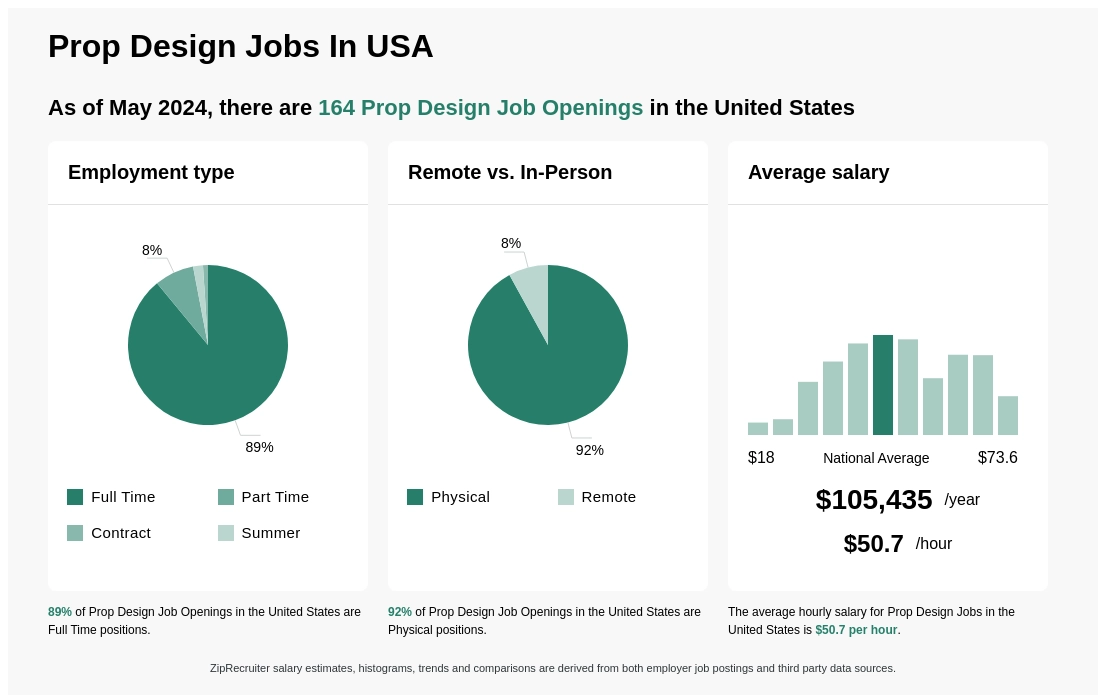
Infographic showing various Prop Design job openings in the United States as of September 2026, with employment types broken down into 1% Internship, 87% Full Time, 9% Part Time, and 3% Contract. Highlights an 81% Physical, 4% Hybrid, and 15% Remote job distribution, with an average salary of $105,435 per year, or $50.7 per hour.

Theater Tech and Set Design Specialist

San Francisco, CA • On-site

CHINESE AMERICAN INTERNATIONAL SCHOOL
Elementary and Secondary Schools • 51 - 200 employees

$28 - $30/hr

Full-time

Re-posted 5 days ago


Job description

Dates: June 8 – August 21, 2026
Training Week: June 8–12
Prep Period: May 11 – June 5 (up to 10 hrs/week)
Schedule: Monday–Friday, 8:15 AM – 4:30 PM
Pay Rate: $28–$30/hour

Position Overview:
The Theater Tech & Set Design Specialist is responsible for leading three 3-week theater tech & set design camps that culminate in campers running the stage operations for the Musical Theater performances. This includes leading campers through the process of set building, props, costumes, and basic backstage support. This position works collaboratively with the Musical Theater Specialists who are running the concurrent Musical Theater program to ensure that the on stage and back stage camps are in lockstep.

Key Responsibilities:

  • Plan and execute creative set and prop design in alignment with camp themes
  • Collaborate with Musical Theater Specialists to enhance performances
  • Teach basic theater production and design techniques to campers
  • Manage materials, tools, and safety protocols
  • Oversee performance logistics such as lighting, set changes, and tech rehearsal

Qualifications:

  • Experience in technical theater, set building, and/or theatrical design
  • Background working with children or in youth-serving educational settings
  • Ability to lead hands-on creative work and manage timelines independently