Climate change poses both environmental and economical threats that are more apparent today than ever.
In the past year alone, we’ve experienced an onslaught of record-breaking storms and natural disasters, the most recent being the winter “bomb cyclone” that hit last week. It blanketed the entire East Coast with heavy snow, freezing temperatures and hurricane-like winds.
Unusually dry terrain and powerful winds have allowed wildfires in California to burn hotter, spread wider, and last longer. The warming of the Atlantic Ocean has made hurricane winds stronger, and rising sea levels have exacerbated storm surges. For the first time in recorded history, we saw three Category 4 storms — Harvey, Irma, and Maria — make landfall in U.S. territory. And scientists warn that the severity and frequency of these natural disasters are only going to increase as climate change continues to rear its ugly head.
As the economy adjusts to these new normals, climate change presents a silver lining when it comes to job creation, which I see taking shape in two forms:
1. Jobs involved with mitigating climate change’s impact, or mending it after the fact.
As our infrastructure continues to fall victim to extreme weather changes, we can expect any work involving reconstruction efforts to be almost in constant demand.
For example, as of January 2017, 40% of homes damaged during Hurricane Sandy in New York City still had not been fully repaired, nearly five years after the storm first made landfall. Some predict that New York will experience catastrophic flooding of 7.5 feet or more—like Sandy—every five years, a phenomenon that used to only occur only once in a generation.
Rather than waiting for the next storm or wildfire to come, governments, businesses and families are—and will continue to—make investments to reduce potential damage. For instance, coastal cities are being given incentives to build more flood-resistant infrastructures, like seawalls, and New York City is working on plans for a barrier that could cost more than 3 billion dollars to construct.
These types of preventative projects will require urban planning, civil engineering, architectural design, manufacturing for building materials (such as steel) and of course, construction—translating to jobs, jobs, jobs and more jobs.
2. Jobs involved with curtailing climate change’s impact, or negating it completely.
While jobs related to reconstruction will see the most immediate and direct boost in demand from climate change, infrastructure projects are just temporary solutions to a much larger problem.
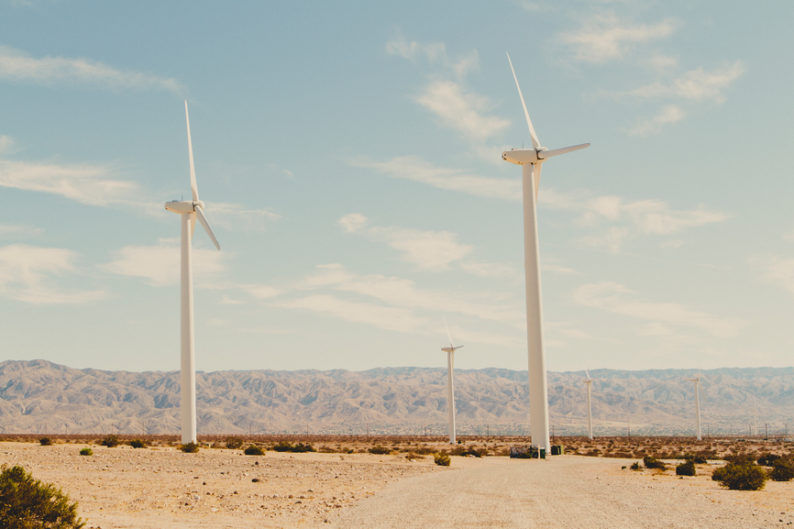
The renewable and clean energy sector is perhaps the most obvious industry aimed at longer-term solutions and is already creating millions of jobs. More people are now employed in clean energy jobs than in the fossil fuel industries.
There are also other technological developments in clean energy that are creating new jobs without displacing any old ones. This year, the first commercial carbon capture facility began operations, and many more companies will likely follow suit with a variety of different technologies, all of which will create new jobs.
But in addition to clean energy, an increased demand for creative environmental solutions will also open the door for entrepreneurialism as we begin to rebuild entire systems and frameworks.
As more and more people come face-to-face with the aftermath of the planet’s warming temperature, the battle against climate change will be top-of-mind for everyone—consumers, companies and government officials alike.
Coming to terms with the impact of climate change and figuring out how to live with its growing presence will impact jobs across all industries and in every part of the world. Some experts believe that climate change will touch just about every profession—and in ways we can’t begin to comprehend.
There’s no doubt that solving humanity’s biggest problem will be an all-hands-on-deck effort. As we enter this historic turning point, we’ll need workers at every level helping to preempt and respond to climate change in some way, shape or form.
By enlisting more people in the workforce to tackle this challenge, we can help ensure that both our economy and planet come out stronger on the other side.