The U.S. is on track to cut annual CO2 emissions by more than 93 million metric tons through a massive pandemic-induced shift to remote work.
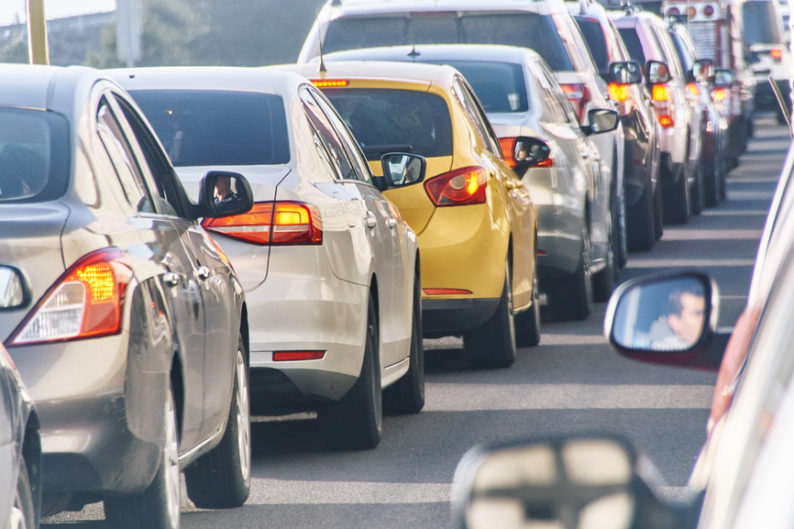
Post-Covid remote workers who have given up their daily commute are traveling a combined 890 million fewer miles per day, according to a recent report from Upwork. And the typical passenger vehicle emits 404 grams of CO2 per mile, according to the Environmental Protection Agency. So the reduction in commuting accounts for a 360,000 metric ton reduction in CO2 emissions per day, or 93 million metric ton reduction per year, assuming a 260-day work year.
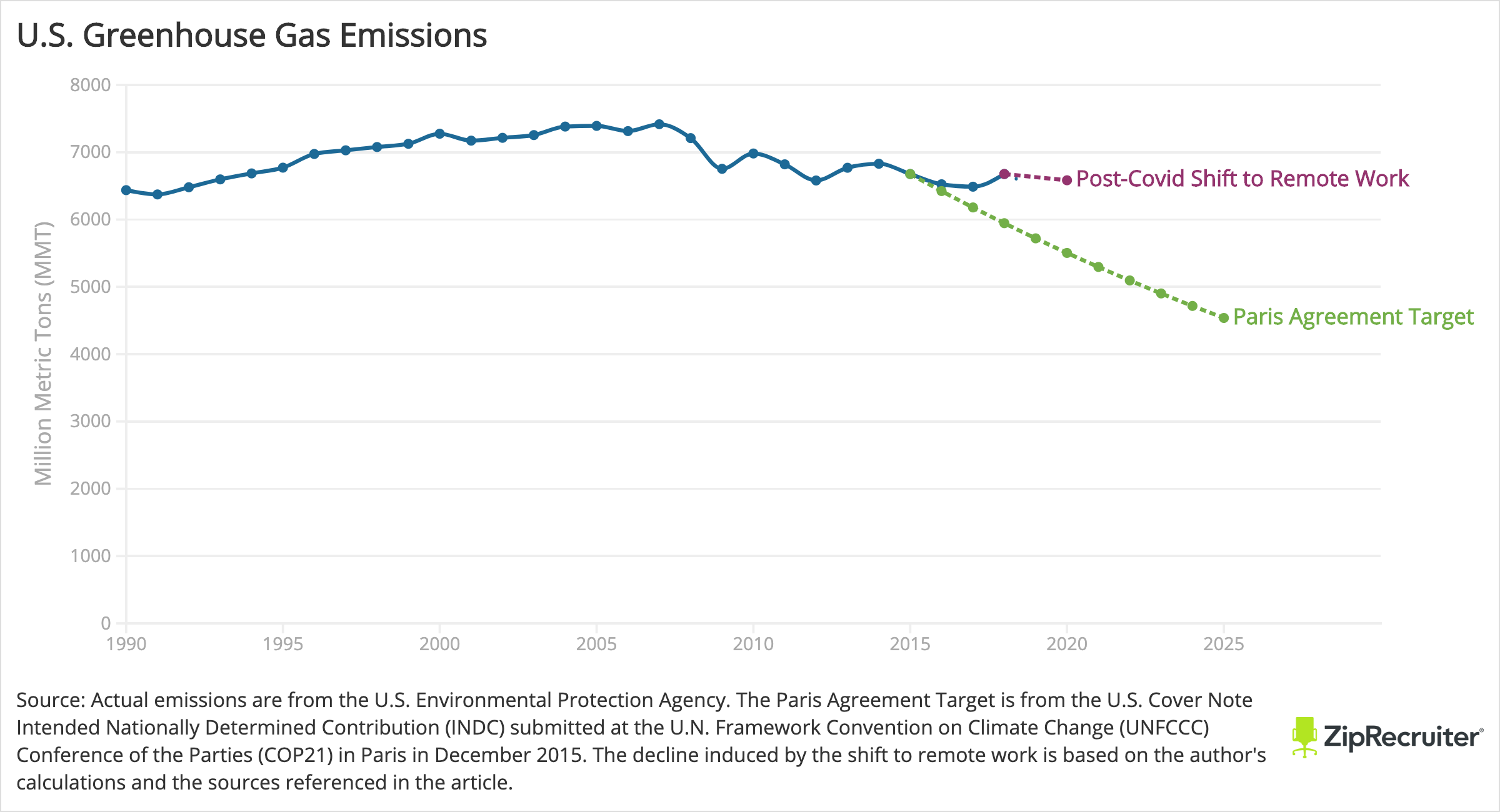
The Covid-related reduction would account for 5% of the annual emissions generated by the combustion of fossil fuels in the transportation sector (about 1,800 metric tons in total), and 1.4% of total U.S. emissions (6,677 metric tons as of 2018).
Under the 2015 U.S. Paris Climate Agreement (from which the Trump Administration withdrew in 2017), the U.S. had committed to reduce annual emissions of CO2 and CO2 equivalents by 26%-28% from 2005 levels, or to between 4,415 million and 4,538 million metric tons by 2025.
To fall within the target range, the U.S. would need to cut annual emissions by 2,140 million metric tons in the next five years—a reduction 23 times larger than that produced by the dramatic shift to remote work.
We don’t know yet what the net effect on overall emissions will be from the pandemic, which affected almost every aspect of daily life and caused the economy to contract by 9.5% in the second quarter.