
Older workers around the world may need to stay on the job longer so that massive shortfalls in public pension plans don’t balloon further. But our best chance at averting financial crisis may hurt millennials’ careers in the short term.
The sharp rise in employment among older Americans, particularly in high-skill jobs, is harming job prospects for younger Americans, according to a study presented earlier this month at a conference of thousands of the nation’s leading economists.
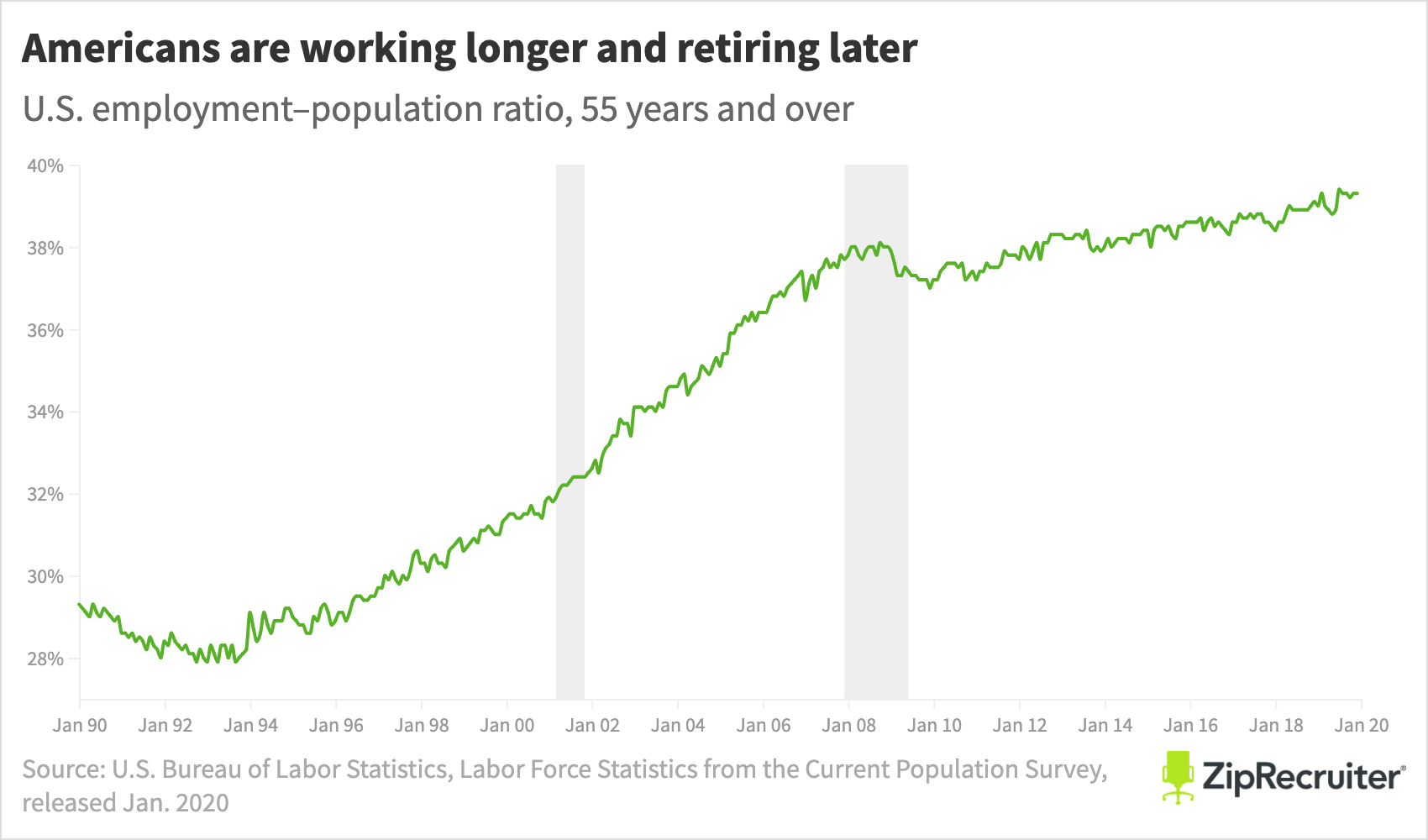
The retirement slowdown could mean slower promotions for young workers
Author Paul Mohnen finds that a retirement slowdown is reducing the share of younger workers in high-paying jobs that require college degrees and raising the share of younger workers in lower-paying jobs that require less education. That is increasing the share of younger workers who are over-educated relative to their jobs. This “occupational downgrading,” as he calls it, is putting downward pressure on millennials’ wages.
Within businesses, there is some evidence millennials are experiencing “career downgrading,” too. Delayed retirements are having a negative effect on youth hiring and promotions (e.g., see here and here).
More broadly, U.S. government agencies see similar trends ahead. The U.S. Bureau of Labor Statistics (BLS), for example, projects that the labor force participation rate for those aged 16 to 24 will decline over the coming decade, partly due to “displaced opportunities as older workers fill jobs historically held by younger workers.”
Younger, more-educated job seekers express the most frustration with job search
Those trends may partly explain ZipRecruiter’s finding in its 2019 Annual Job Seeker Survey that highly educated young job seekers are often the ones experiencing the greatest disappointment and frustration on the job search. They are more likely than less-educated job seekers to say their job search took longer than expected and that they had to lower their salary expectations to find a job.
Last week, Harvard economist Edward Glaeser warned that many troubles plaguing millennials are the fault of policies (e.g., on housing, pensions, and healthcare benefits) that are benefiting older Americans at the expense of younger workers. Rising frustration among young job seekers and potential home-buyers could easily give way to inter-generational resentment.
Rising entrepreneurship could be the antidote to a clash of generations
There are no easy solutions. But innovation and entrepreneurship could help us avoid zero-sum thinking. Economist David Frederick Schloss urged people in 1891—and economist David Autor frequently reminds us today—to avoid the lump of labor fallacy. That is the misconception that there is only a fixed number of jobs in an economy and that one worker’s gain is another’s loss. Youth employment opportunities do not depend on millennials and Gen-Zers winning some clash of generations. Indeed, population aging is driving massive job growth in healthcare and creating job opportunities in several markets for new goods and services.
Millennials who find themselves stuck in jobs for which they are over-educated or where promotion rates are low may find success exploring alternative career paths. Freelance work can help one build a professional reputation and jumpstart one’s career progression, for example.
Starting a business may be another attractive option. There are affordable business services and apps for every step of the process these days, from setting up business websites and phone services to online payment systems and email alerts. Funding is also readily available in a low-interest environment where yield-thirsty investors are throwing money at startups.
Cultivating a culture of entrepreneurship may be the secret to creating opportunities for both older and younger workers alike.